
 French Guiana

Packing list for French Guiana, travel insurance for French Guiana and taking your belongings
What to take to French Guiana: brief
To pack and check:
- Documents: French Guiana is part of the European Union. For EU/EEA citizens, a valid identity card (ID card) or passport is sufficient to enter the country (though a passport is required if you are also visiting neighbouring countries such as Suriname or Brazil; other nationalities should check entry rules before departure). For many other nationalities, a passport with at least 3 months validity after departure is required. No visa is required for EU citizens. Please note: a yellow fever vaccination (and the international yellow vaccination certificate) is mandatory for all travellers aged 1 year and older to enter French Guiana.
- Money: because French Guiana is an overseas department of France, the currency is simply the euro (EUR). ATMs and payment terminals (contactless and by debit/credit card) are readily available in Cayenne, Kourou and Saint-Laurent-du-Maroni. It is still handy to bring plenty of cash if you are heading into the interior, smaller villages along the rivers or the Îles du Salut.
- Clothing: lightweight, breathable and quick-drying clothing for the warm, very humid tropical rainforest climate. If you are heading into the rainforest or taking a boat trip along the rivers, bring airy long sleeves and long trousers (for protection against mosquitoes and branches) and a good lightweight rain jacket or poncho, as a tropical downpour can strike at any moment.
- Shoes: sturdy hiking shoes or trail runners with good grip for muddy rainforest trails (such as in the Trésor Reserve or around Saül), and airy sandals or flip-flops for around your accommodation and on the islands.
- Personal care and hygiene: reef-friendly sunscreen with a high SPF, aftersun, sunglasses and SPF lip balm.
- Packing and protection: a small daypack for excursions, and waterproof dry bags or zip-lock bags to keep your electronics, documents and spare clothing dry during trips in wooden pirogue canoes and heavy rain showers.
- Insects and animals: a strong insect repellent containing at least 30% to 50% DEET, picaridin or oil of lemon eucalyptus, plus an impregnated mosquito net if you are staying overnight in basic hammock camps (carbets) in the jungle.
- Outdoor gear and useful extras: a reusable water bottle (in cities such as Cayenne and Kourou, tap water is purified and safe to drink, though a water filter or water purification tablets are essential for jungle trips) and a cap or sun hat.
- Medication and first-aid kit: personal medication, malaria prophylaxis if needed (especially for travel deeper into the interior and along the rivers, consult a travel clinic or doctor beforehand), ORS, plasters, wound disinfectant, medication for diarrhoea, antifungal cream and ointment for insect bites.
- Technology and equipment: a travel adapter for sockets type C, D and E. A power bank and a torch will also come in handy.
To consider:
- Your own hammock with an integrated mosquito net if you plan to sleep in carbets (open jungle shelters).
- Quick-drying microfibre towels and extra socks for humid jungle hikes.
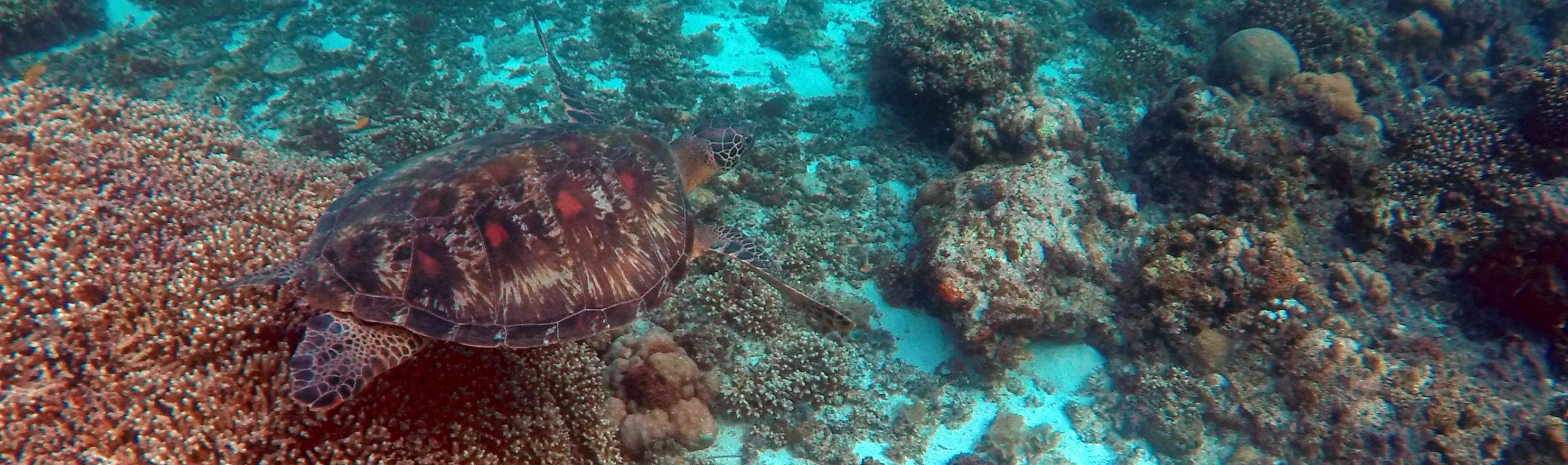
- Binoculars for spotting sea turtles (on the beaches of Awala-Yalimapo), monkeys and tropical birds.
Are there dangerous insects and animals in French Guiana?
Are there mosquitoes in French Guiana?
- Yes, mosquitoes are very common in French Guiana, both in the coastal towns and in the swamps and dense rainforest. Due to the tropical climate, they are active year-round, with a peak during the rainy seasons (December to July).
- In French Guiana, mosquitoes can transmit diseases such as dengue, chikungunya, zika and yellow fever, and in the interior (especially along the rivers and near gold mining areas) malaria also occurs.
- Because the mosquitoes that spread dengue and yellow fever also bite during the day, protection throughout the day is necessary. Good protection consists of covering clothing, applying DEET or picaridin and sleeping under a mosquito net.
- Read more about mosquitoes.
- Read more about the use of DEET, as well as other ways to protect yourself against mosquitoes and insects.
Are there sand flies and biting midges in French Guiana?
- Along beaches, near river mouths and in mangrove areas, small biting flies occur (sand flies or mout-mout), and in the rainforest of French Guiana, these sand flies can also transmit leishmaniasis. Along the coast, their bites mainly cause annoying, intensely itchy bumps.
- They are mainly active around sunrise and sunset. Applying insect repellent thoroughly, wearing long, airy clothing and sitting on a towel or chair instead of directly on the sand help prevent bites.
- Sand fleas (puce-chique) can also be an issue in French Guiana as they can cause tungiasis. This tiny flea lives in dry, warm sand and dusty soil, such as on beaches and along rivers.
- Fortunately, they can only jump about 20 centimetres high. Avoiding walking barefoot on beaches and unpaved paths, wearing closed shoes with socks, using a beach towel or chair instead of sitting directly in the sand and washing and checking your feet thoroughly in the evening virtually eliminates the risk of infestation.
- Read more about sand flies.
- Read more about protection against sand flies and sand fleas.
Are there ticks in French Guiana?
- Ticks occur in the rainforest, scrubland and tall grass. They can transmit diseases, though little is still known about this here.
- Closed shoes, long trousers (tucked into your socks) and insect repellent during hikes through the jungle are good protective measures. It is also always a good idea to check your body and clothing thoroughly afterwards.
- Read more about ticks.
- Read more about protection against ticks and leeches.
Can you buy DEET or other mosquito repellents in French Guiana?
- Yes, in Cayenne, Kourou and Saint-Laurent-du-Maroni, there are well-stocked French pharmacies (pharmacies) and large supermarkets (such as Hyper U and Carrefour) where you can buy various mosquito repellents (including well-known brands containing DEET and picaridin).
- Prices are often somewhat higher than in Europe due to import costs, and there is barely any supply in remote villages in the interior. Bringing a first bottle with you from home is therefore always handy.
Can you buy weed or a joint in French Guiana, or bring it into the country?
- No, it is definitely not permitted. Because French Guiana falls under French law, cannabis is completely illegal here, for both recreational and medical use.
- Possession, use, buying, selling and importing are criminal offences, and if you do it anyway, the consequences include heavy fines, confiscation and possible imprisonment.
- Login of registreer om te kunnen reageren
- 20 keer gelezen