Volunteer abroad and around

Checklists, Tips, Organizations, Projects & Vacancies

Image

Table of content of this page

Image

Intro

Volunteer work abroad

Content a.o.

Volunteer work abroad: Orientation

  • What is volunteering abroad?
  • Why should you volunteer abroad?
  • What do you need if you want to do volunteer work abroad?
  • Where is the best place to volunteer abroad?
  • To what extent are you insured for the risks of volunteering abroad?

Doing a volunteer work abroad: Deepening


More supporting content:
Volunteering abroad: what is it, why should you do it and where is the best place to go?

Volunteering abroad: what is it, why should you do it and where is the best place to go?

What is volunteer work abroad?

  • Volunteer work abroad means that you work abroad for a certain period of time at a foreign project or organization to help, learn or transfer knowledge.
  • You usually do not receive any compensation for your work in the form of salary, expense allowance or room and board.
  • Projects that have little or no income themselves will generally ask volunteers for compensation for the guidance or for the room and board provided.
  • In the case of an intermediary organization, this compensation can also be made via the intermediary organization.

Why should you volunteer abroad?

  • To help others with your efforts and skills.
  • To support projects or goals that you consider important in your life.
  • To gain experience in your own field of work, or in the sector where you may want to work later.
  • To see yourself at work in a different environment.
  • To be able to work in another area and see if you like it.
  • To use as a stepping stone to a local job with salary.
  • Because you don't think it's necessary for a project to incur extra costs for your presence while they really need every dime.
  • Because you have already raised money for the project or organization where you will be working

What do you need if you want to do volunteer work abroad?

  • Flexibility: you already need some form of flexibility, the rest you gain during your stay abroad.
  • Ability to communicate: depending on the type of work, you will need to have a reasonable to good command of the local language.
  • Independence and/or self-confidence: you already need a certain form of independence, and this will increase your self-confidence.
  • Being environmentally aware: an important element for your stay abroad.
  • Collaboration: also abroad it is important that you learn, or are able to, collaborate when you work with others.
  • Be organizationally aware.
  • Empathy.

Where is the best place to volunteer abroad?

  • If you are looking for social volunteer work: Curaçao - Ghana - Guatemala - India - Nepal - South Africa
  • If you are looking for corporate volunteer work: Australia - Curaçao - Spain - United States of America
  • If you are looking for volunteer work caring for or protecting animals: Costa Rica - Curaçao - Ecuador - Indonesia - South Africa
  • If you are younger than 18 years old: Spanish language course with volunteer work in Spain - or volunteer work for young people in Malawi, Uganda or South Africa
  • If you are looking for volunteer work and are traveling for the first time as a 'woman alone': Australia - New Zealand - Argentina - Ecuador - Costa Rica - Thailand - Indonesia. - Nepal - Ghana
  • If you want to gain experience 'as a woman alone', go to: Bolivia - Peru - Guatemala - Nicaragua - China and Hong Kong - South Africa - Kenya - Malawi

To what extent are you insured for the risks of volunteering abroad?

  • There may be several reasons why you need separate insurance when volunteering abroad, or at least you should carefully check your insured situation.
    • Local organizations usually offer no, or very limited, insurance.
    • There is a risk of accidents, for example because you are doing work with which you have little experience.
    • During your volunteer work abroad where you receive financial compensation (or, for example, food and housing), your health insurance coverage will potentially lapse. You will then need special insurance to remain insured against illness and accidents.
  • Read more about insuring volunteer work abroad.
More supporting content:
Activities abroad: for intern, volunteer and work with environment, farming, nature and animal care abroad

Activities abroad: for intern, volunteer and work with environment, farming, nature and animal care abroad

Beach Cleanups and trash hunting abroad: what is it, why should you do it, and where is the best place to go?

Beach Cleanups and trash hunting abroad: what is it, why should you do it, and where is the best place to go?

What is trash hunting and beach cleanup abroad and why is it done?

  • Litter is a problem that exists worldwide, from the north cape to cape horn and from tropical beaches to the slopes of Everest
  • During trash hunting or cleanups, a specific area is chosen to takeaway all plastic trash and other waste.
  • Depending on the location, the waste consists of household waste, PET bottles, leftovers from fishing, tourist trash or floating debris from the other side of the world
  • Cleaning up litter can be intended to protect wildlife, to give nature another chance or to make a place so beautiful that visitors will want to visit it again.
  • Most cleanups are organised by local citizen initiatives, foundations and action groups and joining them is free

What does working in a cleanup project involve?

  • During most cleanups you will go out with a group of volunteers with a pile of garbage bags and work gloves.
  • When cleaning up waste on islands, isolated beaches or between mangroves you will often do your cleanup work from a boat.
  • In reef cleanups you will go into the water with a snorkel or diving gear depending on the depth of the water
  • Sometimes a competitive element is added to an activity, where groups compete against each other to collect as many kilos of waste as possible.
  • Some environmentally conscious tour agencies offer discounts for people who are willing to pick up trash along hiking or climbing trails
  • No training or experience is required for this work, the much bending and the large amounts of waste make this work quite hard so a reasonable to good condition is desirable

What do you get out of it?

  • Involvement: it strengthens your sense of involvement in tackling pollution and protecting nature in a very hands on way.
  • Experience: for a large part of the cleanups you will be active in a location where you as a tourist will not quickly come. By working with a group of committed volunteers you will experience the environment more strongly than normal
  • New contacts: the low-key nature of the activity ensures that a diverse audience participates. It is a way for outsiders to get to know the locals or for expats to meet other involved citizens

What are the best places to go join a beach cleanup?

  • Indonesia
  • Costa Rica
  • Greece
  • Cape verde
  • Hawaii

What are the best places to join other types of cleanups?

  • Amazon river cleanup: Brazil
  • Inca trail or El misti vulcano trail cleanup near Arequipa, Peru
  • Norwegian fjords cleanup
  • Mangrove cleanups in Jamaica, Bonaire or the Philippines
Grape- or fruit picking: what is it, why should you do it and where is the best place to go?

Grape- or fruit picking: what is it, why should you do it and where is the best place to go?

    What is grape picking?

    • Grape picking is cutting bunches of grapes from the grapevine or vine. The bunches of grapes are removed from the grape plants in one piece and then distributed over the crates.
    • You often work in an international team from different countries.
    • The grape harvest is often a relatively short period, the timing of which depends on the local weather; it can sometimes be difficult to plan to arrive at the right wine region at exactly the right time.

    What is fruit picking?

    • Fruit picking is done in orchards where apples, cherries, olives, plums, oranges or other fruit are picked from the branches or from the ground.
    • Harvesting exotic crops such as cocoa, kiwi, coffee berries and bananas also falls under fruit picking.
    • Depending on the fruit you are harvesting, you may sometimes have to climb trees or steps or bend down a lot or even crawl.
    • Fruit picking can be done in all kinds of places all over the world. If you organize it well and know when to be where, you can pick fruit all year round in Europe or the world.
    • To prepare fruit for picking, a grower often has to do a lot of preparatory work, such as pruning, thinning and weeding. These activities in fruit growing also offer opportunities if you want to work abroad.
    • Some experience in this area can make the work more fun, and also a lot more lucrative if your payment depends on how much you pick.

    What are the working conditions?

    • In most jobs as a fruit picker, you are paid based on the amount of fruit you pick. However, there is usually a set production level that you must achieve as a minimum, especially if the farmer provides a place to sleep and food for you.
    • Try not to feel too discouraged at the end of the first day or week if it turns out that some experienced employees have picked three times as much as you. You can always try to copy their technique or ask for advice. After a week or two, your earnings and self-confidence will certainly have increased.
    • You can often stay cheaply at a nearby campsite or for free at the farmer's own place
    • How physically demanding the work is depends on the crop you pick and what exactly your duties are around the harvest.
    • You usually have to be at least 18 years old.

    Why to pick fruits or grapes?

    • To stimulate your sense of involvement: sometimes you work very intensively on a farm for a long time with the same people, you often also sleep in a room with them: you have to like that, but you also make friends for life.
    • To make the world around you more sustainable: by looking for work in organic farming or permaculture.
    • To be profitable in a creative way: Some small farmers will not be able to pay you a wage, but offer a place to sleep and food in exchange for work. To gain new experiences: You experience much more during your stay on the farm and when you go to work than when you would travel around alone.
    • To increase your self-awareness: further away from your familiar environment you discover more quickly what you can actually do and what you actually want. By going to work you encounter yourself more often, you get to know yourself better and accept who you are and want to be.
    • To test your environmental awareness: by living and working in rural areas, you experience a foreign culture in a completely different and more authentic way than when you work in the tourism sector, for example.

    Where can you pick grapes and fruit abroad?

    • Australia: fruit picking
    • England: fruit picking, especially in southern England
    • France: grape picking, fruit picking
    • Georgia: fruit picking
    • Greece: olive picking
    • Italy: grape picking, fruit picking
    • Jordan: fruit and olive picking
    • New Zealand: fruit picking
    • Spain: grape picking, fruit picking, olive picking
    • Thailand: fruit picking
    • Switzerland: fruit picking

    What do you need as a grape or fruit picker?

    • Professionalism: you often have to work hard and hard, which is why the average slacker usually doesn't last long on a farm or nursery
    • Flexibility: the weather conditions and the growth of plants don't always go according to plan, which means that your flexibility will often be called upon
    • Ability to work together: being able to or learning to work together with a group of seasonal workers or with the farm family will always be necessary

    To what extent are you insured for the risks as a fruit and grape picker?

    There may be several reasons why you need separate insurance when picking fruit or grapes abroad

    • Your local health insurance normally lapses. You then need special insurance to remain insured against illness and accidents.
    • Local employers usually do not offer any, or only limited, supplementary insurance.
    • The risk of accidents is somewhat greater on farms and in the fruit growing business than in other sectors.
    • A number of specialized insurances offer opportunities to do (temporary) paid work abroad where you run a bit more risk, such as working in orchards or vineyards.

    Read more

    Protecting and caring for animals abroad: what is it, why would you do it, and where is the best place to go?

    Protecting and caring for animals abroad: what is it, why would you do it, and where is the best place to go?

    What is working with animals abroad?

    • Working with animals abroad means that you actively work for the protection or care of one or more animal species.
    • The work can be divided into working with animals in their natural environment and working with animals in shelters. In addition, there are often activities to be done in the field of communication, education or, for example, fundraising.
    • What is protecting animals in the natural environment of the animal?
    • Protecting animals abroad in the natural environment (habitat) of the animal means that you do activities that relate to improving the living environment. Or that you help with research such as measurements, counts or behavioral observations.
    • What is caring for animals in shelters and zoos?
    • Caring for animals abroad in shelters means that you do activities that relate to providing food, carrying out fence checks, cleaning cages and monitoring their health.

    Why would you protect and care for animals abroad?

    • Helpfulness: whether you help another person or an animal in need: you get more back for the rewarding work than you put into it.
    • Involvement: it strengthens your sense of involvement in the protection of nature and the animal world and also with other animal lovers.
    • Experience: the chance that you will experience something you have never done before, that you will be pulled out of your comfort zone and that you will have an unforgettable experience is considerable.
    • Stability and stress reduction: animals can have a strong influence on you when it comes to stress reduction; well-known examples are horses and dolphins. Other animals can be a good indicator of the extent to which you are already stress-resistant.
    • Freedom: especially when you are working in the middle of nature, you will notice the difference with the life you sometimes lead at home.

    What do you need or can you learn if you are going to protect and care for animals abroad?

    • Being environmentally aware: for example by taking your environment into account, carefully storing your waste, leaving animals alone in their own habitat. Analytical skills: you will often have to analyse the behaviour of animals well. Sometimes to prevent danger, and sometimes because it is part of your work. In this way, you often also strengthen your own analytical skills.
    • Being aware of the organisation: animal and nature protection organisations, and animal shelters, are often run by a special breed of very committed people. In addition, these are organisations that often have few resources and have to fight against local bureaucracy.
    • Empathy: being aware of these circumstances is sometimes half the battle if you want to understand the behaviour of the employees of a project, or your direct co-helpers.

    To what extent are you insured for the risks?

    • All over the world there are reserves, animal shelters and zoos where you can roll up your sleeves as an intern or volunteer.
    • In addition to 'cute' or 'impressive', 'unpredictable' is also a word that you can attribute to (wild) animals.
    • Working with wildlife (and with animals in general) is therefore not without its risks. If a cute monkey suddenly turns out to be able to bite viciously, this can cause nasty injuries and even illnesses.
    • Because many insurers exclude working with animals from coverage, it is important to handle this carefully.
    • Read more: Travel insurances and insurances for long term abroad - Theme
    • Read more: Werken met dieren in het buitenland verzekeren (NL)

    Protecting animals abroad: what is the best place to go?

    • Australia: marsupials, horses, koalas
    • China: giant pandas, dogs and cats
    • Costa Rica: monkeys, turtles
    • Curaçao: dolphins, birds, dogs, cats
    • Ecuador: felines, capuchin monkeys and kink-tailed bears
    • Egypt: donkeys, horses, dogs and cats
    • Philippines: monkeys
    • Greece: sea turtles, dogs
    • India: dogs and cats
    • Indonesia: orangutans, gibbons, street dogs, birds of prey
    • Cameroon: chimpanzees
    • Malta: birds
    • Madagascar: lemurs, fish
    • Mexico: sea turtles.
    • Mongolia: wild mountain sheep, Prezewalski horses
    • Namibia: cheetahs, horses, wild cats
    • New Zealand: kiwis (the birds)
    • Uganda: rhinos
    • Portugal: Iberian wolves
    • Spain: stray dogs
    • Sri Lanka: elephants, sea turtles
    • Suriname: dogs
    • Thailand: gibbons, elephants
    • United States: wolves, horses
    • Zambia: chimpanzees, lions
    • Zimbabwe: lions, wild dogs
    • South Africa: monkeys, white sharks, lions, rhinos, penguins

    How does the preparation for working with animals abroad work in short?

    • Accommodation: In many nature reserves you can sleep in ranger accommodations, mountain huts, etc., but bringing your own tent often provides a lot more privacy (but keep an eye on the animals). If you work at an animal shelter, for example, your accommodation will often be less primitive.
    • Visas and permits: For some areas you need a special permit. Check this well in advance.
    • Currency: Take extra precautions if you are going to remote areas.
    • Safety & Troubleshooting: safety obviously differs per area you go to, so check the situation carefully with regard to possible rebels, weather and seasonal conditions, routes, presence of wild animals, etc. When working with animals in their natural environment, the environment often offers more risk than the animals you are examining. If you are going to work with animals in a form of captivity, the species you are working with determines the risks to a certain extent.
    • Vaccinations & Health: If you are going into nature or working with animals, make sure you get specialized advice from a travel doctor or the Travel Clinic. Also check the information about the rabies and tick encephalitis vaccination.
    • Insurance & Emergency Centers: when working with animals, an insurance that has taken into account the risks and local circumstances is actually the only luxury that is recommended.
    Protecting sea turtles: what is it, where can you do it and are you insured?

    Protecting sea turtles: what is it, where can you do it and are you insured?

    Image

    Why protect sea turtles abroad?

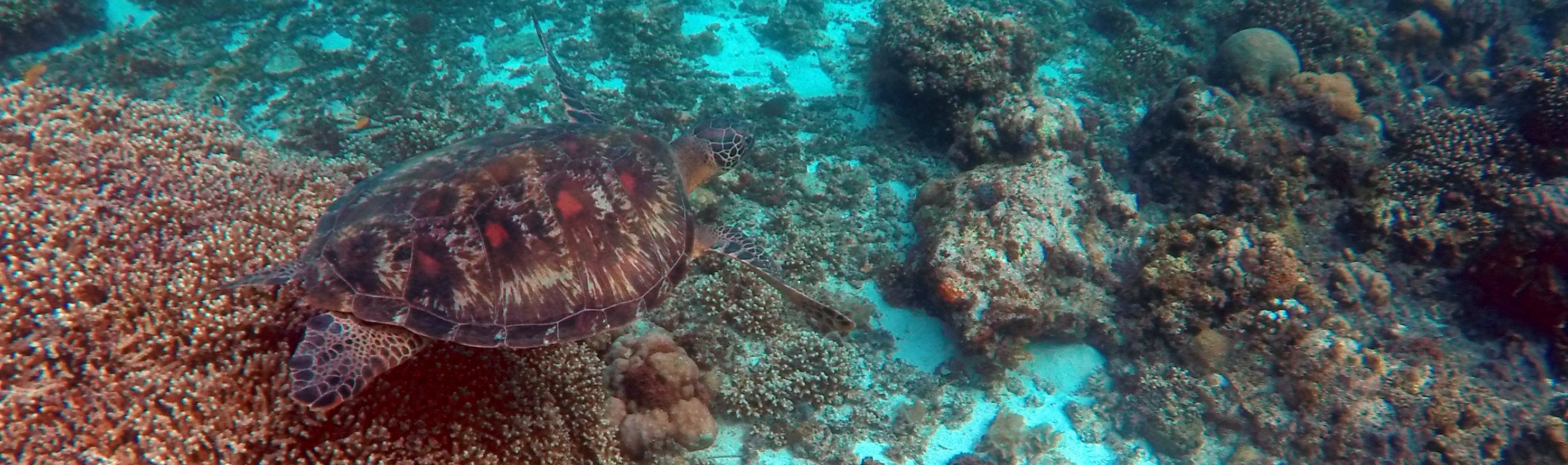
    • All seven species of sea turtles are (seriously) endangered: the Flatback sea turtle, Green sea turtle, Hawksbill sea turtle, Kemp's sea turtle, Leatherback sea turtle, Loggerhead sea turtle and Dwarf sea turtle can use your help.
    • By protecting sea turtles the local ecosystem is generally also better protected and more balanced

    Protecting sea turtles: what does it involve?

    • Protecting the eggs via fencing, for example
    • Counting turtle eggs
    • Taking care of injured turtles
    • Building nesting sites
    • Collecting data
    • Education at community centers, local schools and at tourist locations to raise awareness

    Protecting sea turtles: what do you get out of it?

    • A special time among engaged animal lovers
    • Knowledge of a special species
    • Images of sometimes thousands of tiny turtles

    Protecting sea turtles: what to bring?

    • Love of nature and animals
    • Flexible sleep schedule
    • Limited sensitivity to less pleasant smells
    • In some cases, considerable stamina (the laying sites are sometimes a bit further away on remote beaches

    Protecting sea turtles: do you need to be insured?

    Where can you work with sea turtles?

    • Sea turtles can be found in almost all oceans, except for the very cold areas and the polar regions. Most sea turtle protection, rescue and rehabilitation centers are located near nesting sites
    • The best places to find internships, jobs or volunteer projects with sea turtles are:
    • Australia: at the Great Barrier Reef or Cook Island
    • Costa Rica: at Tortuguero National Park
    • Ecuador: at the Galapagos Islands, including turtoises
    • Greece: several projects around the peninsula
    • Indonesia: near Bunaken. Pulau Weh or Raja Ampat
    • Malaysia: at Sipidan or the Perhantians
    • Mexico: near Playa del Carmen
    • Nicaragua: at the La Flor reserve
    • Oman: at Musandam peninsula

    Where can you find checklists for your travel, stay or work?

    Reforestation and tree planting abroad: what is it, why should you do it, and where is the best place to go?

    Reforestation and tree planting abroad: what is it, why should you do it, and where is the best place to go?

    What is reforestation and tree planting abroad and why is it done?

    • Reforestation involves planting trees and shrubs in places where they have previously disappeared due to logging, flooding or forest fires.
    • In many areas, planting trees helps to absorb or reduce the effects of climate change.
    • In coastal areas, mangrove forests are planted to break waves, prevent land from being washed away and provide fish with a place to read.
    • In dry areas, new trees provide shade, prevent erosion and desertification of the landscape.
    • In reforestation projects and activities, attention is often also paid to restoring biodiversity by using various local tree species, which benefits local animal species.
    • Many projects have their own nursery where small trees are grown from seeds.

    What does working in a reforestation project involve?

    • You can help care for the young trees (seedlings) at the nursery.
    • You plant the small trees at selected locations.
    • You care for the trees after they have been planted, for example by weeding, watering or placing protection against cattle and other grazers.
    • You teach local communities about biodiversity, the benefits of reforestation for the local economy, for example.
    • If you have a background in horticulture, forestry or water management, you can help train local employees or, for example, carry out a research internship on the results of the project.

    What do you get out of it?

    • Involvement: it strengthens your sense of involvement in tackling climate change, protecting nature and the plant world and also with other nature lovers
    • Experience: the chance that you experience something you have never done before, that you are pulled out of your comfort zone and that you gain an unforgettable experience is considerable
    • Freedom: especially when you are working in the middle of nature, you notice the difference with the life you sometimes lead at home

    What do you need or can you learn if you are going to plant and care for trees abroad?

    • Being environmentally aware: for example, by taking your surroundings into account, carefully storing your waste, minimizing water use and understanding the complex relationship between soil, plants and people.
    • Being organizationally aware: environmental clubs and nature conservation organizations are often run by a special breed of very committed people. In addition, these are organizations that often have few resources and have to fight against local bureaucracy.
    • Empathy: being aware of those circumstances is sometimes half the battle if you want to understand the behavior of the employees of a project, or your direct fellow helpers.

    What are the best places to go to slow or reverse desertification?

    • Spain
    • Egypt 
    • Morocco
    • Kenya

    What are the best places to go to restore mangrove forests?

    • Bonaire
    • Sri Lanka
    • Madagascar

    What are the best places to go to restore rainforests?

    • Brazil
    • Ecuador
    • Panama
    • Indonesia
    Volunteering abroad: what is it, why should you do it and where is the best place to go?

    Volunteering abroad: what is it, why should you do it and where is the best place to go?

    What is volunteer work abroad?

    • Volunteer work abroad means that you work abroad for a certain period of time at a foreign project or organization to help, learn or transfer knowledge.
    • You usually do not receive any compensation for your work in the form of salary, expense allowance or room and board.
    • Projects that have little or no income themselves will generally ask volunteers for compensation for the guidance or for the room and board provided.
    • In the case of an intermediary organization, this compensation can also be made via the intermediary organization.

    Why should you volunteer abroad?

    • To help others with your efforts and skills.
    • To support projects or goals that you consider important in your life.
    • To gain experience in your own field of work, or in the sector where you may want to work later.
    • To see yourself at work in a different environment.
    • To be able to work in another area and see if you like it.
    • To use as a stepping stone to a local job with salary.
    • Because you don't think it's necessary for a project to incur extra costs for your presence while they really need every dime.
    • Because you have already raised money for the project or organization where you will be working

    What do you need if you want to do volunteer work abroad?

    • Flexibility: you already need some form of flexibility, the rest you gain during your stay abroad.
    • Ability to communicate: depending on the type of work, you will need to have a reasonable to good command of the local language.
    • Independence and/or self-confidence: you already need a certain form of independence, and this will increase your self-confidence.
    • Being environmentally aware: an important element for your stay abroad.
    • Collaboration: also abroad it is important that you learn, or are able to, collaborate when you work with others.
    • Be organizationally aware.
    • Empathy.

    Where is the best place to volunteer abroad?

    • If you are looking for social volunteer work: Curaçao - Ghana - Guatemala - India - Nepal - South Africa
    • If you are looking for corporate volunteer work: Australia - Curaçao - Spain - United States of America
    • If you are looking for volunteer work caring for or protecting animals: Costa Rica - Curaçao - Ecuador - Indonesia - South Africa
    • If you are younger than 18 years old: Spanish language course with volunteer work in Spain - or volunteer work for young people in Malawi, Uganda or South Africa
    • If you are looking for volunteer work and are traveling for the first time as a 'woman alone': Australia - New Zealand - Argentina - Ecuador - Costa Rica - Thailand - Indonesia. - Nepal - Ghana
    • If you want to gain experience 'as a woman alone', go to: Bolivia - Peru - Guatemala - Nicaragua - China and Hong Kong - South Africa - Kenya - Malawi

    To what extent are you insured for the risks of volunteering abroad?

    • There may be several reasons why you need separate insurance when volunteering abroad, or at least you should carefully check your insured situation.
      • Local organizations usually offer no, or very limited, insurance.
      • There is a risk of accidents, for example because you are doing work with which you have little experience.
      • During your volunteer work abroad where you receive financial compensation (or, for example, food and housing), your health insurance coverage will potentially lapse. You will then need special insurance to remain insured against illness and accidents.
    • Read more about insuring volunteer work abroad.
    Working on a farm abroad: what is it, where is the best place to go, and are you insured?

    Working on a farm abroad: what is it, where is the best place to go, and are you insured?

    What does working on a farm abroad involve?

    • Working on a farm means that you work temporarily as a seasonal or summer worker for an agricultural company. This can range from working as a fruit picker in France to herding cattle in Australia and from milking organic goats in Chile to working together within a permaculture community in the tropics.
    • Employment: There is always a chance of work if you knock on a farmer's door. Many farms, especially in Europe, but certainly also in Australia and New Zealand, are usually looking for assistance, especially during the busy seasons. Small-scale farms often have work for unskilled (or non-agriculturally trained) people and will also be more open to a construction with room and board.
    • Activities: There is a huge variety of seasonal jobs within agriculture and livestock farming. It can help to have experience with driving a tractor, horse riding or other work on a farm, or to have at least some feeling for working with machinery or farm animals.

    Why should you work on a farm abroad?

    • To stimulate your sense of involvement: sometimes you work very intensively with the same people on a farm for a long time, you often also sleep in a room with them: you have to like that, but you also make friends for life.
    • To make the world around you more sustainable: by looking for work in organic farming, permaculture, or for example in the production of goat cheese, you can nicely combine your work and interests.
    • To be profitable in a creative way: Some small farmers will not be able to pay you a wage, but offer a place to sleep and food in exchange for work.
    • To gain new experiences: During your stay on a farm and when you go to work, you experience much more than if you were to travel around alone.
    • To increase your self-awareness: further away from your familiar environment, you discover more quickly what you can actually do and what you actually want. By going to work, you encounter yourself more often, you get to know yourself better and accept who you are and want to be. To test your environmental awareness: living and working in rural areas allows you to experience a foreign culture in a completely different and more authentic way than, for example, working in tourism.

    Where is the best place to go for farm work abroad?

    • Australia: working holiday, agricultural work, fruit picking
    • Canada: working holiday, agricultural work
    • Chile: fruit picking, livestock farming
    • France: agricultural work, fruit picking, grape picking
    • Italy: agricultural work, fruit picking
    • Ecuador: tropical agriculture, coffee, cocoa and permaculture
    • New Zealand: working holiday, fruit picking, agricultural work
    • Spain: olive picking, viticulture
    • South Africa: ecolodges, ranches

    What do you need if you want to work on a farm?

    • Professionalism: you often have to work hard and hard, which is why the average slacker usually doesn't last long on a farm. Flexibility weather conditions, animal behaviour and plant growth do not always go according to plan, which means that your flexibility will often be called upon.
    • Collaborative skills: being able to learn to work together with a group of seasonal workers or with the farm family will always be necessary.

    To what extent are you insured for the risks of working on a farm or in livestock farming

      What are the Worldsupporter goals related to volunteer work abroad?

      Spotlight organizations: volunteering abroad

      Spotlight organizations: volunteering abroad

      Image

      Spotlight organizations: volunteering abroad

      Beyond South America: internships, volunteering and language courses
      Go Pure! Vrijwilligerswerk in het buitenland

      Go Pure! Vrijwilligerswerk in het buitenland

      Image

      Wil jij vrijwilligerswerk doen in Azië en een steentje bijdragen? Een steentje dat voor mensen in Azië een groot verschil kan maken? Houd jij ervan om mee te helpen aan een betere toekomst? Go Pure werkt in Cambodja, Thailand, Indonesië, Sri Lanka, Nepal, Vietnam en Mauritius met duurzame en kleinschalige projecten.

      Heb jij altijd al met dieren willen werken?

      ......Read more on this page
      Let's Go Africa: Internships and Volunteering

      Let's Go Africa: Internships and Volunteering

      Image

      Let’s Go Africa is a small scale, personal and innovative mediation agency with a unique placement programme for everyone that wants to experience a meaningful internship, minor or volunteer work in Africa. Noor and Roel van Hout have extensive work and life experience in Africa since 2006 and focus on long term development that is empowered by the people

      ......Read more on this page
      Merazonia Wildlife Rescue Centre
      Travel2Connect

      Travel2Connect

      Image

      Travel2Connect zet vrijwilligers van alle leeftijden, en studenten in op verschillende zorg- en welzijnsprojecten in Gambia. Travel2Connect is een kleine organisatie, met aandacht voor persoonlijke begeleiding. Het idee van Travel2Connect is ontstaan doordat oprichtster vanaf 2007 met veel passie, en met nederlandse en lokale vrienden heeft gewerkt aan een aantal projecten voor de kansarme bevolking van Gambia.

      Wereldstap: for gap year and voluntary work on Curaçao

      Wereldstap: for gap year and voluntary work on Curaçao

      Image
      Since 2000, Wereldstage has been arranging internships, project placements and graduation assignments for students in Curaçao. Over the years, various other programs and services have been added, such as gap year programs, volunteer job placement, job placement and the guidance of professionals who work temporarily in Curaçao. The service focuses on good preparation for your departure
      ......Read more on this page
      Vrijwillig Wereldwijd: Vrijwilligersprojecten

      Vrijwillig Wereldwijd: Vrijwilligersprojecten

      Image

      Vrijwillig Wereldwijd is een kleinschalige organisatie die de mooiste lokale projecten in meer dan 10 landen ondersteunt op de continenten: Afrika, Zuid-Amerika, Azië en Europa. Ze zijn er van overtuigd dat vrijwilligerswerk in het buitenland kunnen leiden tot een geweldige win-win situatie. Door middel van een goede begeleiding en jarenlange ervaring doen ze er alles aan om deze belofte waar

      ......Read more on this page
      Supporting content:
      Why pay for volunteer work?

      Why pay for volunteer work?

      Why pay for volunteer work?

      • Not everyone always realizes that a contribution is generally requested for volunteer work, local room and board, or supervision.
      • As a volunteer, you go to a certain country or choose a certain organization because you want to support the people there.
      • Local organizations or projects often struggle to make ends meet. They already have enough problems providing their own employees or the project with the necessary resources.
      • They often have no financial means at all to accommodate, transport, and support volunteers.
      • They are happy to have volunteers, but often value permanent employees more. This is often more useful to them, because volunteers come and go.
      • With your contribution, you support the project so that they can, for example, buy extra beds for a shelter, purchase teaching materials, or simply pay the energy bill.
      • Organizations that do not ask for a contribution are more likely to create unfair competition. After all, you are taking the place of a local employee.

      Why pay for board and lodging when volunteering abroad?

      • When you stay with a host family, they incur much higher costs than usual, such as extra water, gas, and electricity, and three meals a day. Many host families simply cannot afford this without a contribution.
      • When the project has a spare bed, they prefer to give it to a permanent local employee or, for example, an extra child who can be taken in.
      • When you stay with a host family, you are also supporting a local family, which then receives a little more income and spends money on local shops
      • Despite the fee you pay, you are a guest of a family and your host family is not ‘employed’ by you.

      What kind of volunteering abroad without personal contribution (free) exist?

      • Free volunteer work consists of projects and jobs that do not require a personal contribution, but which include room and board or even a small daily allowance. This type of project is often listed on WorldSupporter in the ‘paid work’ category, because compensation in kind can also be considered a salary.
      • In general, these are projects with a more business-like setup, such as helping out at a hostel, language school, travel organization, or farm. Please note that if you do not pay a personal contribution but do have to pay for your own accommodation and food, it may sometimes be more expensive than volunteering where you do have to pay a personal contribution but are allowed to stay on the project site, for example. Ultimately, it is the total costs you incur per day that matter.

      What should you keep in mind when deciding whether to pay a daily contribution for volunteer work abroad?

      • Do you have sufficient funds? Then choose a reliable project or organization that has proven in the past that it has a long-term vision.
      • Ask yourself whether you want to spend a little more money on quality, or whether you prefer a cheaper option that offers slightly lower quality or sustainability.
      • If you don't have any money, then work for an organization that charges low fees but is committed to sustainability.
      • You often pay a contribution so that a project can continue to exist. A project or organization is often dependent on sponsors and sometimes has difficulty making ends meet. Sometimes there is a minimum sponsorship contribution in addition to the direct costs for your room and board. You can raise this amount through crowdfunding among family and friends to limit the costs for yourself.
      • You decide to volunteer in order to contribute to a project and a country. You choose a particular project because it appeals to you or because you would like to support it. It would be a shame if the organization behind that project spent all its funds on your accommodation. It would be even more unfortunate if the project could no longer afford to continue due to insufficient funding. That is why an organization expects volunteers to contribute to the project financially. By doing so, you help ensure the project's survival.
      • If you are very independent and want to arrange everything yourself, an intermediary organization may not be the best choice.
      • Keep in mind that volunteer work with (wild) animals is often more expensive. 
      Volunteering abroad: selection of suggestions, stories and tips by WorldSupporters

      Volunteering abroad: selection of suggestions, stories and tips by WorldSupporters

      Selected suggestions, stories and tips by WorldSupporters about volunteering abroad

      Afraid of your big travels? Start with volunteering!

      Afraid of your big travels? Start with volunteering!

      Image


      Volunteer work opportunities have been booming in the past decades. From short-term options to long-term, from nearby to far away and from expensive to free. This range of choices can sometimes make it difficult to decide on where to begin searching and what to do in the end. In my future blog posts I will write more about this. Today, however, I will focus on the benefits of starting at a volunteer project when you want to travel in a country. 

      When I was 18, I decided to travel to Borneo, Malaysia. It would be the first trip on my own and I didn't know where to start. There were so many places to visit and so many things to do. However, what worried me most was having no idea what I was getting myself into. I had never been to Asia. Of course, I had done a little bit of research since I decided where I wanted to go, but to say that I knew what I should be expecting would be a big exaggeration. I was getting more and more nervous and doubted my decision to go, but I already told everyone and saved money for six months to pay for it all so canceling wasn't really an option for me. This got me thinking. What could I do to relieve some of the pressure and to have some control? After browsing for a while on the internet, I knew what I wanted to do, and it actually totally suited my dream of going to Borneo; I was going to volunteer in the rainforest with a local community, in an area with orangutans. I found this opportunity through a Dutch organisation called Activity International (https://activityinternational.nl/) where, at the time, the offered the opportunity to work at a local eco-tourism and forest restoration project. While I will get into the details of the price in a later blog, I do want to mention that prices at this organisation are high and that, if I understood correctly, about half of the money went to the Dutch organisation and half to the locals, which in my opinion is not fair. 

      When I finally arranged everything (paying, flight tickets, document signing etc), I felt much more secure about going to Malaysia. Even though I was still worried, now I knew that someone would be at the small airport of Sandakan to pick me up and drive me to a community where I would have a place to stay. I won't go into the details of my stay there, but I will tell you what the advantages are of planning such a volunteering period before the start of your real travels. 

      By doing this you are often provided with simple things which otherwise might worry you beforehand, such as airport transfers, food, accommodation, someone who speaks the language. This provides you with the opportunity to relax a bit and focus on other, more fun things. When you arrive at the volunteer place, you will probably experience a big culture shock (the severity of it depending on where you go and on how much you've traveled before of course). However, you might expect it to be bigger when going to a country and being all by yourself from day 1. When I got to the volunteer project, I was received with open arms and met the other volunteers. I experienced a severe culture shock for the first two weeks, but having the other volunteers around me really helped. Together we talked about the work, the culture and we just had fun. This gave me the opportunity to share my first experiences with other people and to feel like I always had support. 

      Next to feeling a sense of security before and during the volunteering, there were also other advantages. One of the biggest being, in my opinion, getting to truely know the culture. Of course, this again depends on the type of project you join, but in my case I truly felt like part of the community. I had to follow their rules (no shoulders or knees showing) and I had to learn their language a little bit. While it sometimes was intense, I got to know the culture in a way that I wouldn't have if I just went travelling. While volunteering at a local community project you immerse yourself in their way of living. By doing this, my worries about travelling and cultural ajustment in Malaysia disappeared. 

      Another great advantage of volunteering at local communities is that they have the best knowledge on their country. I got some great advice on where to go, what to do and how to travel. They told me about places I hadn't heard of before and one of the people from the community even invited me to join another project in the jungle for a couple of days, which gave me an awesome opportunity I would otherwise have never had. 

      Lastly, you can make friends for life. It's a great way to meet all kinds of people, from all over the world. This is great if you want to visit their countries since they will again provide you with the best recommendations, but it can also result in free places to stay and interesting friends. 

      Well, I would recommend volunteering to get to know the country, the people and to adjust properly to a new lifestyle. They can benefit from your financial contributions as well. However, I do want to press the importance of finding a good, sustainable and fair volunteer project. SInce nowadays volunteer programmes can become a kind of business which is not always in the interest of nature or culture. This, I will discuss in a future blog post as well. Hopefully I helped you a bit in taking a decision on whether to volunteer or not, or just provided you with some information. If there are any remaining questions or comments, don't hesitate to respond!

      Cheers, 
      Hannah

      My experiences as a volunteer in Beijing

      My experiences as a volunteer in Beijing

      Image

      It has already been almost two weeks ago since I left Beijing. Right now I am starting a new and totally different adventure as I am going to spend one semester as an exchange student in Taipei! Although I am excited to be in a new and different place on this incredible island, I still constantly think of the wonderful time I had in Beijing. Not only was it a great experience to live in the bustling city for a month, but on top of that, I have made some very great and interesting friends during this memorable experience, volunteering abroad for the first time. 

      Together with China Inside, I visited three different NGO's in and around Beijing:

      Huiling, a day care center for intellectually disabled people;

      a home for children whos parents are detained;

      a retail store which was created for people to donate their belongings so they could resell it and give all the profits to the numerous charity that this store gives aid to. 

      By visiting these different NGO's and taking photos and witnessing what each of these projects try to achieve, I have created a flyer for China Inside. Our next step is to send these flyers back home to Holland with the goal of inspiring other young people like me to take a chance at coming to Beijing to work as a volunteer with China Inside. 

      What was most special about visiting these different NGO's is that all these projects have a very strong emotional value, and by learning about how these projects initiated, I have gained a lot of admiration for the people behind these projects. 

      As a MilleniumDo-er, I think it is difficult to say how I contributed to achieving the millenium goals. Hopefully, by creating these flyers and reaching more people and even telling people about my own experiences, this will inspire others and piece by piece achieve a little extra effort towards the MilleniumGoals. For instance, the home for children of detainees shows a wonderful example of efforts to reduce Child Mortality. This village forms a home for numerous children that will otherwise have no parents to take care of them and are left homeless at a very young age. Together with Beijing Huiling, I found these two projects very special as they are set up to support groups that have less in society and would otherwise not have gained any or very little attention. The retail store really pays attention to all kinds of different projects and problems in society by giving financial aid to numerous ones in Beijing and other parts of China.

      Finally I would like to say that I find it very special that China Inside had brought me to work at such an unusual project as Beijing Huiling. The trainees here at Huiling belong to a group in society which do not gain a lot of attention in general and it is especially in China, difficult for them to have a 'regular' life like everybody else. This is really a cheerful place and I very much enjoyed getting to know the trainees. Especially after spending most of my time at Beijing Huiling, being a volunteer there for about five days a week, I will certainly miss joining in on all the activities with them. 

      Being a volunteer has made travelling a lot more interesting and unusual for me. I wanted to come to Beijing to see the city and to learn more about the language and culture and volunteering here has really enhanced that experience. For me, this was the best way to get to know the locals and I hope to repeat this experience again!


      Volunteer work in Cape Town

      Volunteer work in Cape Town

      Image

      For five weeks I was in Cape Town to do volunteer work with a friend. We worked in the Shine centre for three weeks. The Shine centre is an organization that promotes literacy in English schools. The children that go to the centre learn in English as their second language. When we arrived in the beginning of October we worked at a primary school in Sea Point. After two weeks we went to the Shine Centre. We felt really welcome when we came there. When we came in we saw posters and phrases on the wall, books and colorful chairs. On our first day we got the introduction by Karen. She showed us informative movies and explained how they work at the Shine Centre. After that we were excited to start our sessions. There were no kids on our first day because of an important test for the grade three kids. But we could immediately help with something else. That day the optician came with new glasses for the children. We went to pick up the children who got new glasses. She showed us the schools that were situated at Zonnebloem. When the children were at the centre, they got their new glasses. The kids were so happy. We saw how special this was for them.

      The next day we started at the Shine Centre. We watched a session with Karen and Athenkosi. It was great to see how Athenkosi was learning by playing word games. He enjoyed the session and showed Karen how many words he already knew. The next session it was our own turn. We each got a child assigned to assist during that session. Everything was new for us so we were hoping to do a good job. We just finished school for primary school teacher and with that background we came a long way during that session. After this day we could really start the volunteer work at the Shine Centre.
      For three weeks we did two sessions a day. We got to know the other volunteers. It was really nice to talk with them. You hear all these different stories how the volunteers are, what they do and how they came to work at the Centre. They were also interested in our story. Because we often had the same children in the sessions, we also got to know the children better. We also learned which books they like and how their personalities are. We got attached to the children we helped. When the children came in for the session you saw them looking for a familiar face. When they saw you they gave a big smile or a hug. It felt great to know that they enjoy working with you and are looking forward to that session.

      Time went so fast and before we knew it, it was the last week at the Centre. When we were home, in the Netherlands we raised money for the project. We asked the centre what they needed. They said they always need new books for the children, so that’s what we bought. We went to different bookstores and looked for new books. We loved being in the bookstores and looking for books which would fit the centre best. We read all the books and were there for hours. We needed a couple of days to bring the different books to the centre because there were so many.
      We also got another idea for our last day. One day a volunteer brought strawberries to the centre. The children got one. It was so special for them because many of the children didn’t even know what a strawberry was. We thought maybe they don’t know other types of fruit as well. So we went to the supermarket and bought lots of fruit, cups, forks and napkins.

      Then the last day arrived. We arrived early that day because there were a lot of things to do. We displayed the books we bought over two tables and made pictures of it.
      Then the other volunteers came in. Their reactions were so positive. It was nice to hear that we did a good job picking out the books and they couldn’t wait to read them with the children. Then we got a certificate and a letter of reference from Karen. We felt really appreciated.
      During the last sessions we asked the children to help us with handing out the fruit. Every child got a cup of fruit. We saw on the expressions that they really liked it! You could read from their faces what tasted sour and what was sweet. Some of the other volunteers talked about the fruit with the children. What is the name of the fruit is and what the taste is called.

      At the end of the day we said goodbye to the volunteers. It was a strange feeling to say goodbye because we were there just for three weeks. It felt way too short for us. The Shine Centre is an organization that does great work, with volunteers that makes you want to stay longer. And I know that we will come back if we get the chance in the future.

      Volunteering in Japan

      Volunteering in Japan

      Image

      When looking for volunteering opportunities you can find an overload on the web, from free to paid. In this blog I will try to give an overview of free volunteering opportunities in Japan. Of course there might be many other opportunities, but this blog can be a first step in finding the best options for you and you can use it as a starting point for further research. 

      1. WWOOF
      WWOOF offers worldwide opportunities for organic farming, so as well in Japan. The farmers can list the opportunities themselves so it can be really small-scale, but farms can also be huge. You have to pay around 55 euros to join the community for a year, but then you can apply for all the opportunities on there. Often you will get free accommodation and food, sometimes you even get paid (probably not in Japan though). I have never done it myself, but I have heard many good stories. It's a great way to get to know the local culture, lands and food! So if you're into farming, definitely try it out!

      Website: https://www.wwoofjapan.com/main/index.php?lang=en

      2. WorkAway
      WorkAway is something similar to WWOOF, however, it is a platform not just for farming, but for all kinds of work. Offers range from working in a hostel to teaching English to children of just one family. The range of job types is huge, which can make it really fun. However, it can be important to check reviews since some jobs or environments might not suit you. Sometimes you get free accommodation, sometimes free food, but getting paid never really happens I think. I have found some great opportunities in Japan so I would definitely recommend you to check it :). You have to pay a fee of 32 euros a year for a single person and 42 euros a year as a couple. You can even buy workaway as a gift for someone going to japan and wanting to volunteer. 

      Website: https://www.workaway.info/

      3. Volunteering at an animal shelter
      The first time I went to Japan, I was looking for cheap volunteering opportunities. Since I love animals I decided to look for animal shelters in Japan and ask them whether volunteering there was possible. I ended up volunteering for a week at Animal Refuge Kansai (ARK). It was an amazing, rewarding experience. Animal care is not that big in Japan. While many Japanese people love (dressing up) animals, especially when they are young, when the animals get bigger, they often are abandoned since they don't fit in the house anymore, are not cute anymore or are too dirty. Of course, this only counts for a part of japanese people (I also know many Japanese that would never ever do this), it does happen and the couple of animal shelters present have to take care of all these abandoned animals. ARK animal shelter is owned by an English lady who has a passion for animals and who works together with an almost all Japanese staff. When I was there (7 years ago already) she lived in the middle of the shelter and I stayed with her. However, usually you will stay at the volunteering house for free if you work every day. The work consists of walking the dogs, cleaning and socialising the animals. I truely enjoyed it! This is also a good opportunity if you just want to volunteer for one day! They won't let you stay, but if you have a car you can visit them in the morning and walk the dogs or play with the cats I believe. They also have an office in Tokyo, but I think they won't offer you free accommodation if you volunteer there. Sometimes they also need volunteers for translating, social media promotion etc. 

      p.s. they have some beautiful animals in the shelter and they are up for adoption, even if you live on the other side of the world. 

      Website: http://www.arkbark.net/en/

      Another place where you can volunteer is Japan Cat Network. They need help at their two animal shelters, with the events in Japan and you can even help out from home through social media. Even though their name suggests that they only have cats, they also have dogs at their shelter that need help. The animals are truely beautiful and working with them would certainly be fun. 

      Website: https://japancatnetwork.org/volunteer

      4. Disaster relief volunteering
      I don't know so much about this topic. What I did read is that giving money to local organisations working on disaster relief is still one of the most important things. But if you do want to help out on the ground I would like to refer you to this blog: https://disasterjapan.wordpress.com/volunteering-in-japan/
      They know a lot more about this topic and the website is regularly updated I believe. So check it out if you're interested in this type of volunteering. 

      Well, I hope you have enough options now to start with! Volunteering in Japan is a unique experience. However, do keep in mind the behavioural code and politeness a bit to make sure that you have the best volunteering opportunity! 

      Any questions? Let me know!

      Volunteering at Ocean Adventure Subic Bay

      Volunteering at Ocean Adventure Subic Bay

      Image

      Recently I participated as a volunteer at Ocean Adventure Subic Bay.

      Ocean Adventure is the first and only Open Water Marine Theme Park in Southeast Asia. It has become one of the premiere attractions in Subic Bay, Philippines as well as all of Southeast Asia. Ocean Adventure has demonstrated history of providing environmental awareness education combined with wholesome entertainment. Ocean Adventure’s advocacy for environmental protection and its corporate social responsibility programs are second to none.

      You can check theirs blogs, support them by liking on Facebook, visit the park or join the conservation program

      Finding free and local volunteering opportunities

      Finding free and local volunteering opportunities

      Image

      Hi everyone!

      Today I want to talk about volunteering. Not just any volunteering, but volunteering with small organisations/individual people.

      In the past few years, conventional volunteering through for example large organisations has been receiving a lot of criticism. The main example being volunteer schemes at orphanages in Africa, where kids meet new volunteers every week, get attached and then have to say goodbye, which could, for example, evoke attachment issues (read more about it here: https://www.theguardian.com/commentisfree/2010/nov/14/orphans-cambodia-aids-holidays-madonna). Of course, volunteering through big organisations is not just bad, there are a lot of examples in which it can really help because manpower and money is simply needed to get things of the ground, or to continue with an important ongoing project. This was also the case with the volunteering I did 7 years ago. The first time I volunteered, I found an opportunity through a big Dutch organisation. Since I was really enthusiastic to go to Borneo, and with my little experience this was the only opportunity I could find, I paid 1700 euro’s for 6 weeks of volunteering. When I was in Borneo and talked about this with the local organisation, they told me that of this money, they received around 700-800 euros. I was extremely surprised, since the Dutch organisation hardly did anything for me, expect for providing some information on the organisation and visa arrangement. Since then, I decided I would try to find my own volunteering opportunities. .

      At the same time, a lot of individual people/organisations/companies have started to see the benefits of having volunteers. Volunteers provide them with manpower and skills which they might otherwise not have. These volunteer opportunities are often free and even offer free accommodation as well. Such organisations can be found on websites such as WWOOF.net (organic farming), workaway.info and helpstay.com.

      Furthermore, often organisations just provide volunteer opportunities through their own website. If you know which country you want to visit and what kind of volunteer work you want to do, it can therefore be very beneficial to check if there are organisations in the country that focus on this. Sometimes you will then also find free volunteering opportunities since organisations are smaller and/or don’t really have a big volunteering scheme as a source of income. This is, for example, how I found my volunteering opportunity with Animal Refuge Kansai (ARK) in Japan. Read more about it here. Otherwise you might find opportunities that you have to pay for, but at least you know where all the money goes and that it directly contributes to the cause you support (in most cases, but if you want to be sure it can never hurt to ask to organisation what exactly they do with your money!). 

      Well, the message I hope comes across, is that it's not always the best to choose for the volunteering opportunities that you find straight away. You might pay a lot of money, which doesn't all go directly to the right organisation, and you might not contribute as much as you would like to. It's a good thing to really take the time to look for good volunteering opportunities, it is fun to do and often feels more rewarding! So take your time, go all out on the internet and find some amazing opportunities! 

      Cheers, 

      Hannah

      Trash hunting and beach cleanups: volunteer opportunities around the world

      Trash hunting and beach cleanups: volunteer opportunities around the world

      trash hunting volunteers

      All around the globe involved citizens and environmental activists have set up weekly, monthly or annual cleanup actions. They all operate under different names and have a focus on local trash issues: beach cleanups, river cleanups, cleanups of hiking or climbing trails or the cleanups of local neighborhoods.

      When visiting another country, as a tourist, student, intern or expat, joining a local cleanup adds impact to your visit, but also creates an opportunity to talk with locals outside beaten tourist trail.

      Below I list some initiatives and projects that you can join, for a day or even a full

      .......read more
      Access: 
      Public
      Volunteering abroad: selections of blogs and opinions by WorldSupporters about the good and the bad of volunteering abroad

      Volunteering abroad: selections of blogs and opinions by WorldSupporters about the good and the bad of volunteering abroad

      selections of blogs and opinions by WorldSupporters about discussions around volunteering abroad

      Volunteer work should be selfish

      Volunteer work should be selfish

      Image

      Your intentions of doing volunteer work abroad should be selfish.Yes, I said it.

      I believe that you should go into your volunteer work with the slightly selfish reason: your own development by learning from the people, the cultures, the languages that you are going to experience. This way, you open yourself up to all the beauty that the place you're going to has to offer. I personally believe that it is not the best thing for a person to go to a place, unknown to them, thinking that they will "just" share their knowledge and not thinking they'll gain knowledge. This way of going into your volunteer work can be such a huge obstacle to the fluency of your communication to others, the positivity of your work and to your own development. While volunteer work can be so amazingly inspiring to everybody involved, including you. 

      When you are happy, you share this happiness automatically with others: and the world becomes a better place.


      Let me know what you think. Do you agree with me? Or disagree? I'd love to hear.

      Who profits most of volunteer work?

      Who profits most of volunteer work?

      Image

      Many of you might have read the recent articles criticizing the popularity of volunteer work amongst white teenagers nowadays. After the launch of this article, several more popped up, and they are interesting to read. However, these articles, as well as the ones supporting volunteer work, give a ‘one-sided’ view on the matter. The critical articles point out very truthfully, that white teenagers go to developing countries because it sounds good on their Curriculum Vitae. This is true, but this is not the only reason they go abroad.

      Teenagers learn a lot from volunteer work abroad: they see with their own eyes how other cultures work, they learn to become independent, to speak other languages, to make friends and to get to know themselves. Still, there are a bunch of ignorant youngsters that shut their eyes for the huge garbage belts they drive past, caused by the excessive consumption of the Western world, and their shipping to Africa because they do not want to cope with their own waste.

      Another group of teenagers becomes so emotional upon seeing these poor children that they instantly give away a variety of things which are either not needed, or a form of charity. And charity is not good. There is a variety of reasons why not but the most important one is that we should not make them dependant on us white people. We should either buy the things we give them in their countries so that their economies profit from us relatively rich teenagers. Or we can ask them a small favour and then give something in return. Because if we always give them something, without asking something back (this is called charity), these people will learn to depend on white people, and will start begging for money while they could be at work. I have experienced people like these myself.

      White people are often not aware of the consequences of giving away things without reason. Obviously, if people are really starving, it would be morally good to give them some rice and vegetables, but we could instead, give them fertilizer, seeds, instructions and a water bucket to make them grow the food themselves. Thereby giving them a source of income as well as something to be proud of instead of giving a short-term solution.

      Indeed, there should be a change in volunteer work abroad. It should be organized by locals, for locals. We ought to move away from the image of a white Western leader with a group of black workers. Instead we should work together. A local project could employ both local volunteers as well as international volunteers, who then learn from each other. Money should not just be given as money, it should be given as microcredits, in the form of animals as the organization Heifer does, or it could be given in the form of a training. This would benefit the whole community, not just the individual.

      The current trend that teenagers go to a faraway developing country during 10 days is, in the name of volunteer work, is, in my opinion, not exactly the right thing to do. This is not how volunteer work was intended to be. Most of these days, the teenagers go sightseeing while their parents paid hundreds of euros for their dense educative programme. The teenagers tour around the country, never entirely engaging with the local culture as they are always in a big white group together and only for a short period of time at one place.

      I have experienced that if you are somewhere with a smaller group, for a longer time, you can experience a culture much better, getting to know it from within as well as really emerging yourself in it. At the same time, you get to know your fellow volunteers like brothers and sisters, you start taking responsibility, you learn the local language and you understand the deeper meaning of cultural norms and values. Ultimately you find your weaknesses and strengths, which can be quite confronting. The difference between going for 10 days and a month, is that instead of looking at a project, you get involved.

      After all, it is the poorest of the poor that need our help. We should not stop doing volunteer work, as it both helps far away communities as well as creating awareness in Western countries. But it should not benefit us more than the people abroad. And it definitely should not go as far as poor families selling their children in order to create work for volunteers in an orphan centre.

      - My sister participated in a speeching competition at her secondary (bilingual) school and she used part of my ideas to base her speech on. I helped her writing her speech which is why some of the text above might sound familiar if you have read her speech on freyaenanne.waarbenjij.nu


      Voluntourism: good or bad?

      Voluntourism: good or bad?

      Image

      The industry for combining volunteering with travel (or ‘voluntourism’) is booming. But the sector is also controversial, accused of irresponsibility promoting the idea that tourists can make a real difference to development by spending a few weeks of their time at a project.

      Pro voluntourism

      • no one else is there 'to make a difference'
      • volunteers stimulate local income by spending their money in local communities, hostels, restaurants, tour companies etc.
      • volunteers return from their trip to 'spread the word'
      • by voluntourism (young) people develop global and intercultural competencies, to be used at (future) jobs in socially involved companies

      Against voluntourism

      • volunteers do the work that other local people can and/or should do
      • voluntourism hinders (local) government to facilitate real development programs
      • volunteers have little or no experience in the work they are carrying out
      • volunteers should donate their money into projects, instead of spending their money on flights, insurances and hotels

      Share your thoughts

      • what is your idea on voluntourism? Do you have other "pro's" or "con's"?
      • in what way(s) should voluntourism be organized to have a positive effect on local communities?
      • is it achievable at all to stop young people travelling around the world to help out other (young) people?
      • what are ethical considerations a volunteer should be aware of when choosing to go on a volunteer trip?
      Why should you take out specialized travel insurance for volunteering abroad?

      Why should you take out specialized travel insurance for volunteering abroad?

      What is insurance for volunteering abroad?

      • Insuring volunteer work abroad means taking out insurance that continues to provide coverage while you are working as a volunteer abroad

      Why should you take out specialized travel insurance for voluntary work abroad?

      • There may be several reasons why you need separate insurance when volunteering abroad.
      • During specific activities abroad, additional requirements may apply if your work involves extra risks. Only specific insurance policies offer coverage during these activities.
      • The risk of accidents is sometimes higher during your work, for example because you are doing work you have little experience with or because of the nature of the work.
      • Local projects or employers generally offer no or limited insurance that provides insufficient coverage during your work.
      • When volunteering abroad and receiving minor financial compensation (or, for example, food or housing), your home country's health insurance coverage will potentially lapse. You will then need special insurance to remain insured for illness and accidents.
      • Regular travel insurance policies generally provide coverage for trips of a limited number of days. If your trip or stay abroad exceeds the maximum number of days, this generally means that for the entire travel period, you will not be covered.
      • Regular travel insurance policies generally only provide coverage for recreational travel without voluntary work activities. If you engage in activities other than recreational activities (such as volunteer work), this generally means that for the entire travel period, you will not be covered.

      What is important to insure when you are going to work as a volunteer abroad?

      • That you have insurance that is valid in the country or countries where you are going to travel and volunteer.
      • That you are adequately insured for the sports and activities you are going to participate in during your period abroad
      • That you are insured for emergency assistance and early return if something happens to you or your immediate family.
      • That your medical expenses are insured up to the actual cost and not just for the standard costs. The costs per medical treatment vary greatly between countries.
      • That you insure your luggage and take sufficient precautions against theft or damage.
      • That you are well insured against personal liability.
      • That you are well insured in case of accidents.
      • That you only insure yourself for legal assistance if there is an immediate reason to do so, unless coverage is already automatically included in the insurance.
      • That when performing work in healthcare, with wild animals, and with dangerous (agricultural) machinery, you take care to choose the right coverage.

      Check out more about international insurances

      International Insurances for Volunteering Abroad

      Image ACTIVITIES

      Search a course, internship, job, project, suggestion or tips within the topic: 'Volunteer abroad and around'

      ACTIVITIES
      Image

      Amnesty International is doorlopend op zoek naar vrijwillers voor ondersteuning bij hun veelzijdige activiteiten. Dus wil je in je vrije tijd een bijdrage leveren aan hun strijd voor mensenrechten? Meld je aan voor de activiteit die jou aanspreekt! Klik op de link hieronder voor extra informatie:

      Image

      reNature is a Dutch initiative to make the world a little greener again. In many countries intensive and or monoculture agriculure have degraded the soil. Through training of farmers and local organisations reNature tries to change the way farmers use their land. Agroforestry is their solution. By p...

      clean beach trash up

      Ga een dagje, of een paar uur mee met een lokale beach cleanup. Je trekt er op uit met de bewoners om een stuk strand te ontdoen van zwerfafval. Acties worden op deze website vermeld en zijn steeds wisselend qua locatie. Ook als je langer in Engeland verblijft voor bijvoorbeeld een stage of studieja...

      CHECK ACTIVITIES

      Select any filter and click on Apply to see results

      Activities abroad: home bundle

      Main content and contributions for activities abroad

      ,,,accommodations, adventure activities, courses, internships, jobs and volunteer projects

      ...to help another, travel with care, work together , learn

      ........Read more
      Activities abroad: home page

      Activities abroad: home page

      From language courses to gap year abroad, from work experience to volunteering abroad, from paid work to internship abroad, from mountaineering to diving and from backpacking to travel around the world

        What social activities can you do abroad?

        • Opportunities are found in the areas of helping, learning or studying. You can get involved to volunteer in a social project at a school in Africa, Asia or Latin America. You can get involved in nature, in a project with animals or cleaning the sea or beaches. Those who want to learn more can choose for example a language course in Latin America, Spain or South Africa.

        What work related activities can you do abroad?

        • If you want to gain work experience, and/or also earn money, go and work abroad. You can combine backpacking in Australia with temporary work. You can work on campsites in Europe or bush camps in Africa. You can pretty much go all over the world to work in the hospitality industry, hotels and hostels, in the healthcare sector or for example at a diving school.

        What sports activities to do abroad?

        • Have you ever thought of mountain biking, rafting (going down a wild river on a raft or rubber dinghy, climbing or canoeing), survival (which involves building rafts, climbing or canoeing), abseiling (descending a rock face while secured to ropes), zip-lining (whizzing down a cable), canyoning (starting at the top of a river and then climbing, swimming, diving down the bed) or caving (scrambling, wriggling and crawling through caves and crevices)?
        • Maybe you feel more comfortable on a bodyboard (on a half-wave surfboard, you surf the high waves lying down-with flippers), on a hang glider or while paragliding (with a parachute you float down a mountain or dune), hydrospeeding (on a bodyboard with flippers and a wetsuit on you go down a wild river via rapids) or Tiefschneeskiing (racing down through powder snow)?

        Check the pages below for more activities and inspiration and where to go and how to arrange it

          Image SUMMARIES

          Check or search summaries, tests and study assistance within topic: 'Volunteer abroad and around'

          CHECK SUMMARIES

          Select any filter and click on Apply to see results

          Summaries: home bundle

          Content and contributions related to summaries, study assistance and study skills

          ...to help another, travel with care, work together, learn to share and inspire with your experience

          Summaries: home page

          Summaries: home page

          Home page for the use of summaries on WorldSupporter

          What is this page about?

          • Contents: information about using and finding summaries of study books, scientific articles, academic concepts and practice exams on WorldSupporter
          • Study areas: Business, Education, Health, Psychology, Law, Nature, Society and more
          • Languages: English, Dutch
          • Access: Public

          Where to go next?

          What to find below?

          • Summaries per study and study field
          • Summaries per type and form
            • How to use and find summaries, study notes en practice exams on JoHo WorldSupporter?
            • How and why would you use summaries?
            • Finding summaries practice exams on JoHo WorldSupporter
            • Quicklinks to fields of study for summaries and study assistance
          • Main theme pages for learn and study
          • FAQ: questions and answers about summaries
          Access: 
          Public
          Summaries: per type and form

          Summaries: per type and form

          Home page for summaries by type and form

          • Summary sort: Study books, Scientific articles, Academic Concepts
          • Areas: Business, Education, Health, Psychology, Law, Nature, Society and more
          • Languages: English, Dutch
          • Access: This study guide contains exclusive and publicly available study materials
          Access: 
          Public
          Exams: home page for exams, exam tips and study tips

          Exams: home page for exams, exam tips and study tips

          Taking and passing exams, using study tips and learning to study

          What is this page about?

          • Contents: information for exams, exam tips and study tips on WorldSupporter
          • Study areas: Business, Education, Health, Psychology, Law, Nature, Society and more
          • Languages: English, Dutch
          • Access: Public, Exclusive

          Where to go next?

          What to find below?

          • Highlighted content concerning exams, exam tips and study tips
          Access: 
          Public

          Image STORIES

          Check blogs, experiences and information related to: 'Volunteer abroad and around'

          STORIES
          CHECK MORE STORIES

          Select any filter and click on Apply to see results

          Image ORGANIZATIONS

          Check all organizations related to: 'Volunteer abroad and around'

          ORGANIZATIONS
          Image

          Quina Care is a foundation which funded its own hospital in Puerto el Carmen, the capital of Putumayo, Quina Care aims to offer good and affordable primary and emergency secondary health care. This will be available for 24 hours a day, 7 days a week with sufficient medication and supplies and the po...

          Image

          Sungai Watch is on a mission to protect and restore Indonesian rivers by developing and designing simple technologies to stop the flow of plastic pollution from going into the ocean. At several locations on the islands Bali and Java they have deployed river barriers to stop trash from entering the o...

          Image

          Amigos de las Américas is a nonprofit organization that offers summer programs in Latin America and a gap year program in Paraguay. Volunteers are welcome for several projects in education, healthcare and nature conservation. In most programs intensive Spanish classes are included.

          Image

          Oceans 2 Earth Volunteers connects international volunteers to projects of non-governmental groups (NGOs) and not-for-profit organisations who target issues of animal mistreatment and environmental destruction and degradation. Most volunteer projects are situated in Australia, but also on ...

          CHECK ORGANIZATIONS

          Select any filter and click on Apply to see results

          Organizations & Services: home bundle

          Bundled content, suggestions, stories and tips about organizations and their products and services

          ...to help another, travel with care, work together, learn to share and inspire with

          ........Read more
          Organizations: home page
          Organizations: for administrative, tax and legal work and consulting
          Organizations: for agriculture, grape picking, farming and vineyards
          Organizations: for animal protection, animal care and working with wildlife abroad
          Organizations: for au pairs, youth work and child care abroad
          Organizations: for bush camping and working at a campsite abroad
          Organizations: for catering, hospitality and entertainment abroad
          Organizations: for civil society and social work abroad
          Organizations: for corporate business services
          Organizations: for customer services abroad and help desks
          Organizations: for diving, snorkeling and water sports abroad
          Organizations: for education and schools abroad
          Organizations: for expatriate insurances, travel insurances, and emergency call centers
          Organizations: for gap year activities abroad and sabbaticals
          Organizations: for internship placement abroad
          Organizations: for insurances and finance abroad
          Organizations: for IT, engineering and construction
          Organizations: for language travel and language teaching abroad
          Organizations: for marketing, communication and PR
          Organizations: for mediation in au pairs, childcare and elderly care in the Netherlands
          Organizations: for moving, international relocation and transport abroad
          Organizations: for nature conservation, environmental protection and working in nature abroad
          Organizations: for nonprofit projects, development work and international cooperation
          Organizations: for online work as digital nomad, freelancer, or independent entrepreneur from abroad
          Organizations: for outdoor activities and sports
          Organizations: for providing accommodation and hospitality work in hotels, guesthouses, ecolodges and hostels abroad
          Organizations: for providing healthcare and working in medical care abroad
          Organizations: for psychological assistance and mental health care abroad
          Organizations: for real estate, brokerage abroad and property rental abroad
          Organizations: for research and scientific work abroad
          Organizations: for student support and student associations
          Organizations: for tour guidance and adventure tours abroad
          Organizations: for tourism and organized travel and leisure work abroad
          Organizations: for voluntary work mediation and project placement abroad
          Organizations: for yacht and shipping crew and working on a cruise ship abroad

          SPOTLIGHT ORGANIZATIONS

          Spotlight organizations: volunteering abroad

          Spotlight organizations: volunteering abroad

          Image

          Spotlight organizations: volunteering abroad

          Beyond South America: internships, volunteering and language courses
          Go Pure! Vrijwilligerswerk in het buitenland

          Go Pure! Vrijwilligerswerk in het buitenland

          Image

          Wil jij vrijwilligerswerk doen in Azië en een steentje bijdragen? Een steentje dat voor mensen in Azië een groot verschil kan maken? Houd jij ervan om mee te helpen aan een betere toekomst? Go Pure werkt in Cambodja, Thailand, Indonesië, Sri Lanka, Nepal, Vietnam en Mauritius met duurzame en kleinschalige projecten.

          Heb jij altijd al met dieren willen werken?

          ......Read more on this page
          Let's Go Africa: Internships and Volunteering

          Let's Go Africa: Internships and Volunteering

          Image

          Let’s Go Africa is a small scale, personal and innovative mediation agency with a unique placement programme for everyone that wants to experience a meaningful internship, minor or volunteer work in Africa. Noor and Roel van Hout have extensive work and life experience in Africa since 2006 and focus on long term development that is empowered by the people

          ......Read more on this page
          Merazonia Wildlife Rescue Centre
          Travel2Connect

          Travel2Connect

          Image

          Travel2Connect zet vrijwilligers van alle leeftijden, en studenten in op verschillende zorg- en welzijnsprojecten in Gambia. Travel2Connect is een kleine organisatie, met aandacht voor persoonlijke begeleiding. Het idee van Travel2Connect is ontstaan doordat oprichtster vanaf 2007 met veel passie, en met nederlandse en lokale vrienden heeft gewerkt aan een aantal projecten voor de kansarme bevolking van Gambia.

          Wereldstap: for gap year and voluntary work on Curaçao

          Wereldstap: for gap year and voluntary work on Curaçao

          Image
          Since 2000, Wereldstage has been arranging internships, project placements and graduation assignments for students in Curaçao. Over the years, various other programs and services have been added, such as gap year programs, volunteer job placement, job placement and the guidance of professionals who work temporarily in Curaçao. The service focuses on good preparation for your departure
          ......Read more on this page
          Vrijwillig Wereldwijd: Vrijwilligersprojecten

          Vrijwillig Wereldwijd: Vrijwilligersprojecten

          Image

          Vrijwillig Wereldwijd is een kleinschalige organisatie die de mooiste lokale projecten in meer dan 10 landen ondersteunt op de continenten: Afrika, Zuid-Amerika, Azië en Europa. Ze zijn er van overtuigd dat vrijwilligerswerk in het buitenland kunnen leiden tot een geweldige win-win situatie. Door middel van een goede begeleiding en jarenlange ervaring doen ze er alles aan om deze belofte waar

          ......Read more on this page

          Image

          SPOTLIGHT & FAVORITES

          SPOTLIGHT
          Image

          Activities Abroad Experience & Travel  - Earn & Learn - Inspire & Enjoy - Move & Emigrate - Prepare & Take Care - Protect & Volunteer

          FAVORITES
          Image

          Amnesty International is doorlopend op zoek naar vrijwillers voor ondersteuning bij hun veelzijdige activiteiten. Dus wil je in je vrije tijd een bijdrage leveren aan hun strijd voor mensenrechten? Meld je aan voor de activiteit die jou aanspreekt! Klik op de link hieronder voor extra informatie:

          Image ALL CONTENT OF TOPIC

          Search all related content within topic: 'Volunteer abroad and around'

          ALL CONTENT OF TOPIC

          Select any filter and click on Apply to see results

          Crossroad: spotlight pages
          Crossroads: jobs and organizations