Travel to Ecuador to backpack, study, intern, volunteer, work, or live as a digital nomad, expat or emigrant?

Image

Image

Image  Ecuador

Intro

Backpacking in Ecuador?

  • In Ecuador there are so many different adventures to experience and people to meet, that you will not be out of backpacking anytime soon. A beautiful, challenging and at the same time accessible destination with jungles, mountains, beaches, volcanoes, culture clashes, nature reserves and nightlife hotspots. All at relatively short distances from each other and in a mixed society.
  • Characteristics: an awful lot to do, diversity of peoples and landscapes and everything at a relatively short distance from each other.

Travel in Ecuador?

  • A country also called the land of four worlds - four worlds of diversity. You will find a beautiful coast, gigantic mountains, the Amazon and, of course, the Galapagos Islands!
  • Activities spotting: snorkeling and diving, hiking, spotting animals, attending festivals, visiting markets, cooking workshops, visiting coffee and cocoa plantations.
  • Cities spotting: Quito, Cuenca, Guayaquil, Baños de Agua Santa, Otavalo, Manta, Loja.
  • Nature Spotting: the Galapagos Islands, the Amazon Rainforest, the Andes Mountains including Cotopaxi, one of the highest active volcanoes in the world, Cloud Forest and many coastal areas.
  • Animal spotting: giant tortoises, marine iguanas, blue-footed booby, pink river dolphin, sloth, condor, anaconda.

Study in Ecuador?

  • Education in Ecuador: education in Ecuador, depending on the university, is of average quality. You have the opportunity to choose a variety of fields of study, including specific, country-related studies.
  • Language: teaching is mainly in Spanish, and there are some universities that also offer programs and courses in English.
  • Studies: there is a wide range of studies available. Uniquely, while being close to the fire, you can also choose studies such as indigenous studies, poverty alleviation and social development, studies specialized in the Galapagos Islands, Andes and Amazon.
  • Study cities: Quito, Cuenca, Guayaquil, Ambato, Loja.
  • Language learning: Spanish classes are offered all over the cities, through universities, private and often hostels that partner with schools/teachers.

Internships in Ecuador?

  • Internships: if you want to learn about biodiversity, wildlife, indigenous cultures and traditional medicine, Ecuador is a good place. Of course, internships can be found in other diverse sectors as well!
  • Internship cities: Quito, Guayaquil, Cuenca, Loja, Manta.
  • Characteristics: adventure, extensive cultural experience, unique opportunities, learn Spanish quickly.

Volunteer in Ecuador?

  • Ecuador is developing and at the same time has beautiful nature. So you can do well here for internships in the fields of social care and humanitarian aid, community development and nature conservation, ecotourism and environmental education.
  • Animal/nature projects: biodiversity research, reforestation projects, animal shelters, marine life research.
  • Features: the opportunity to contribute to meaningful projects while discovering Ecuador's rich culture and beautiful landscapes.

Working in Ecuador?

  • Jobs: both the availability of temporary and permanent work varies greatly by sector and it can be difficult to find work as a foreigner. Quito and Cuenca in particular have a fairly extensive expat community. Most jobs can be found in education, the tourism industry, NGOs and the non-profit sector. Usually you do need a network to find something.
  • Work culture: what you may have to get used to the most is the concept of Ecuadorian time - so patience and flexibility are important! Also, remember the great importance of hierarchical structures, Indirect communication, hard work and dedication.
  • Characteristics: get used to the concept of Ecuadorian time, get a good basic Spanish and use your network to find work.

Working as a digital nomad in Ecuador?

  • Favorite locations: Quito, Cuenca and Baños.
  • Characteristics: there is a nice climate for everyone, there is a lot of nature and culture to discover, Internet connections in the big cities are relatively good and the cost of living is a lot lower than in Europe.

Living in Ecuador?

  • Whether you are running a lodge in the Andes, a project in the Amazon or a tour company in Quito, with a good knowledge of Spanish, a good dose of love for South American culture, and occasionally nerves of steel, you can live beautifully in Ecuador.
  • Language: mainly Spanish is spoken in Ecuador, in addition there are many indigenous languages such as Kichwa and Shuar. 
  • Quality of life: quality of life is good, but can vary by location and personal preferences. The cost of living is low, it is relatively safe (though keep in mind minor crime and political developments), there is spectacular nature and infrastructure is well developed in urban areas.
  • Characteristics: Ecuador offers an attractive mix of affordability, natural beauty and cultural diversity for people seeking a good quality of life in Latin America.
  • Health care: the quality of health care in Ecuador ranges from moderate to good. In urban areas you will find modern clinics and hospitals; in rural areas this is more challenging. Make sure you arrange your own health insurance well.

Orientation & Discovering

What are typical Ecuadorian habits, food customs, recipes and philosophies in Ecuador?

What are typical Ecuadorian habits, food customs, recipes and philosophies in Ecuador?

What are the customs in Ecuador regarding food?

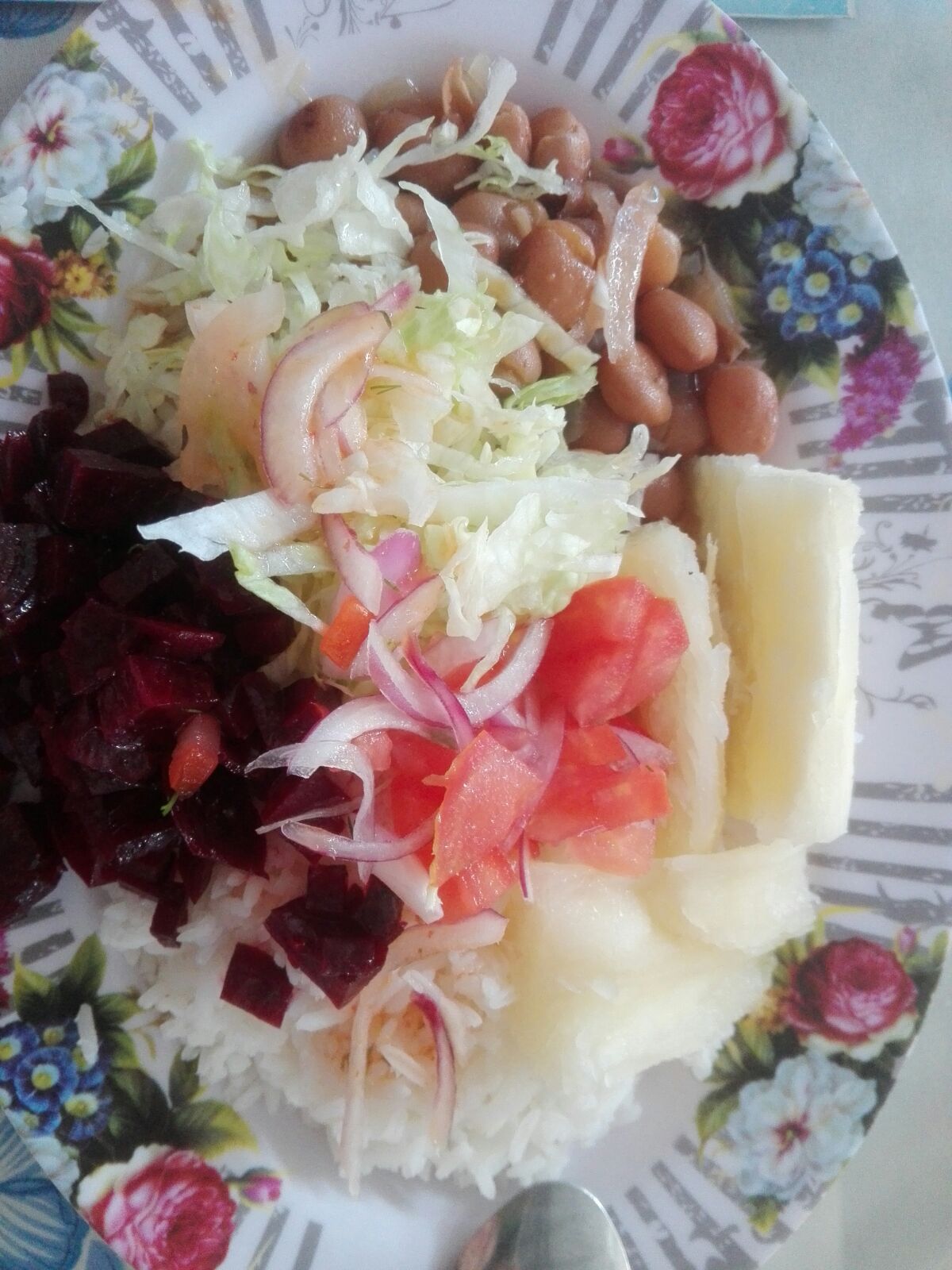
  • In Ecuador, people mainly eat a lot of rice, potatoes, pasta, chicken and cabbage. Often spicy but not spicy. The atmosphere in restaurants is often excellent because of the large number of musical groups that come in to perform their skills on the pan flute. If you are vegetarian or vegan, it can be difficult to find meals in Ecuador. A tip, be sure to specify what you do eat (i.e. ask for a plate of rice, beans and salad), that works better than specifying what you don't eat.

What are the best recipes in Ecuador?

  • Arroz con Pollo is a dish of rice with chicken.
  • Lomo saltado is beef sautéed in onion and tomato with rice.
  • Churrasco is beef with fried egg.
  • Aji is the tangy sauce that you get with everything separately.
  • Cuy Chactado is a traditional Inca dish and should be tried by every traveler. While doing so, get over the fact that it involves grilled guinea pig!
  • Arepas are corn pancakes with cheese.
  • Fanesca is a dish of different grains, corn, potatoes and stockfish.
  • Llapingachos: Small fried cookies made of mashed potatoes and cheese.
  • Locro: Soup with potatoes, onions and cheese. Often served with avocado.
  • Tropical fruits: maracuya (passion fruit), bananas of all shapes and sizes, guava, pineapple, mango, chirimoya, naranjilla (sour orange).

What are the best drinks in Ecuador?

  • Beer is available everywhere. Club and Pilsener are the Ecuadorian brands.
  • Soft drinks can also be found everywhere both well known and unknown brands.
  • The fresh fruit juices are delicious.
  • Enjoy a delicious fresh milkshake with tropical fruits.
  • An excellent thirst quencher is the Piaco, a drink made from lemon.

What are notable holidays and festivals in ...?

  • New Year is lots of fire, papier-mâché cars and figures: one big party!
  • Carnival: nice and colorful with water fights and fruit and flower festivals.
  • Dia de los Inocentes: festival in Cuenca, Nov. 6, a hilarious parade of dressed-up men and boys that the whole city comes to see.
  • All Souls' Day: Nov. 2, in celebration people lay flower bouquets in cemeteries.

What are the remarkable habits in Ecuador?

  • Ecuador is known for its strong family ties and sense of community. Family plays a central role in daily life, with extended family gatherings and a deep sense of respect and care for the elderly. Cultural festivals, such as Inti Raymi (the Sun Festival) and Carnival, are of great significance and are celebrated lavishly throughout the country.
  • Social norms and mutual communication: A little courtesy will get you a long way! A greeting is a must when you start a conversation. Whether it is short or long - say hello, shake hands and between men and women, a single kiss on the cheek is sometimes exchanged. Expect to use the same greeting when saying goodbye. 
  • Etiquettes & traditions: Ecuador is a long of traditions and is still fairly old-fashioned. Apart from greetings, respect for personal space is very important. So be sure to keep an appropriate distance during interactions unless you have developed a strong bond. People also value appropriate dress, especially at religious or business gatherings. Hospitality also plays an important role in Ecuador. 
  • Eating and drinking habits: meals are huge social occasions and can be long. As crazy as it sounds, don't arrive on time when you are invited somewhere. Always arrive a little later and make sure you are neatly dressed out of respect to the hoste. What does agree with us is that Ecuadorians say bon appetit (buen provecho) before a meal when dining out with friends. If you are invited home, the host says buen provecho to invite you to start eating. Food is always eaten with cutlery. 
Why study in Ecuador, do an internship, do volunteer work or look for a job in Ecuador?

Why study in Ecuador, do an internship, do volunteer work or look for a job in Ecuador?

Why study, do an internship, volunteer or work temporarily in Ecuador?

  • Because it is relatively safe depending on where you are.
  • Because it is a great opportunity to improve your Spanish.
  • Because you will find rich and ancient cultural diversity.
  • Because you can gain very specific knowledge.
  • Because you can make a deeper connection with Ecuadorian culture and local peoples.

What should you pay attention to?

  • That you end up with a good organization and that your money goes to the right purposes.
  • That you stay aware of local security risks and take good care of your belongings.
  • that you adapt your clothing to local standards and climate.


Why live in Ecuador, why emigrate to Ecuador or stay for a long time?

Why live in Ecuador, why emigrate to Ecuador or stay for a long time?

Why should you live in Ecuador as an expat, emigrant or working nomad?

  • because there is a great diversity of landscapes and therefore something for everyone.
  • because the climate is temperate in many places. So you can easily cool down, or seek out the heat when you want to.
  • because there is a lot of cultural heritage to discover.
  • because it is one of the more affordable countries in South America.
  • because Ecuadorians are incredibly friendly and welcoming and there are also several expat communities. 

What should you pay attention to?

  • that you know some words of Spanish.
  • that prices can vary considerably between cities and towns.
  • that there are health risks.
  • that you are aware of the local culture, traditions and customs.
  • build a network to help you integrate more easily into society.
 

Image

Preparation & Packing

Packing list for Ecuador, travel insurance for Ecuador, and taking your belongings

Packing list for Ecuador, travel insurance for Ecuador, and taking your belongings

What to take with you to Ecuador: spotlighted

  • Documents: passport valid for at least 6 months upon arrival with an online and/or offline copy.
  • Money: US dollars (Ecuador does not have its own currency), Credit card (often needed for bookings or accidents).
  • Care: sunscreen or sunscreen with a high factor – especially at high altitudes and so close to/on the equator.
  • Outdoor and practical items: cap or hat and sunglasses.
  • Protection: dry bags and/or a backpack rain cover will come in handy in the jungle or the rainy season. A mosquito net or impregnated mosquito net or mosquito net.
  • Clothing: because of the varied landscapes in Ecuador (from rainforest to beach to high mountains), varied clothing is best. Layers (with a really warm outer layer) and clothing for a humid climate (read more about clothing for when it is warm). Rain gear and gloves, hat and scarf can also come in handy. Swimwear for the coast/on the Galapagos. Shoes: both a pair of comfortable slippers/sandals and a pair of good (and possibly airy) walking shoes.
  • Medicines and travel kit: a small first aid kit with plasters, painkillers and ORS. Mosquito repellent.
  • Technology and equipment: world plug type A/B, power bank if you plan on taking long bus rides.
To consider:
  • Reusable water bottle with filter.
  • Quick-drying travel towel and swimwear for the beach or pool.
  • International driving permit, if you want to rent a car.
  • Snorkeling gear!

What should you keep in mind when traveling to Ecuador with your belongings?

  • Which parts of the country you are going to and in which season, your clothing can differ considerably. After all, it is the country of 3 seasons per day.
  • How you travel around. If you travel a lot by bus, your bag can quickly get damaged.

Are there mosquitoes in Ecuador?

  • Mosquitoes are most common in the Amazon basin and on the coast. They like a tropical climate and lots of water.
  • In the higher areas there are often fewer mosquitoes, although this is changing with climate change.
  • Mosquitoes can carry several serious diseases in Ecuador.
  • The regions of Esmeraldas, Manabi and Sucumbios have a higher risk of malaria.
  • During the rainy season (October to May) the number of mosquitoes increases significantly.

Are there sandflies in Ecuador?

  • Sand flies are mainly found in the Amazon region, near rivers and forests.
  • Also in humid subtropical zones on the edge of the Andes, e.g. Mindo or Baños, and the valleys in the Andes.
  • They can transmit leishmaniasis and bartonellosis, and the bite is also very irritating.

Can you buy DEET, or other mosquito repellents, in Ecuador?

  • Mosquito repellent is available in Ecuador, but often in lower concentrations.
  • You have the best chance of buying it in Quito or Cuenca.
  • NOPIKEX is a popular and readily available mosquito repellent brand, especially in pharmacies.
  • Jungle Formula is used, with higher concentration of DEET for higher risk areas.

Can you buy a joint or weed in Ecuador, or take it with you to Ecuador?

  • It is technically decriminalized (still legal, but tolerated) - you are allowed to have up to 10 grams in your pocket for personal use.
  • But be smart and careful:
    • Use in public is fines or problems.
    • Buying and selling is illegal.
    • Tourists are usually treated more severely than locals - with the risk of very long prison sentences.
    • Police can be corrupt - so: avoid the risk.
  • In short: leave it alone. You are here for the condors, cocoa and volcanoes, right?

Health, Insurance & Safety

How does healthcare work in Ecuador, and what travel insurance, health insurance or expat insurance do you need?

How does healthcare work in Ecuador, and what travel insurance, health insurance or expat insurance do you need?

How does the health care system work in Ecuador?

  • Affordable and good healthcare is one of the reasons why foreigners (e.g., from the U.S.) move to Ecuador. 
  • The country has invested heavily in healthcare in recent years, improving the level of care. 
  • In Ecuador, you have both public and private healthcare facilities to choose from. 
  • Many doctors are trained abroad.  
  • In larger cities like Quito, Guayaquil and Cuenca, you'll find affordable and accessible care. Outside the big cities, care is generally of lower quality. 
  • Pharmacies are easy to find, especially in the big cities. Pharmacists also provide medical advice and medications can be purchased for which you need a prescription in other countries.  However, be aware of the side effects and possible addictiveness of such over-the-counter medications. 
  • If you are admitted to a public hospital, it may be helpful -depending on hospital facilities- to have someone on hand to buy e.g. bottles of water or extra food (ask about specific dietary guidelines in advance).
  • Call 911 for emergency medical assistance (ambulance). 

How does the public healthcare system work in Ecuador?

  • Public health care is provided by the Instituto Ecuatoriano de Seguridad Social (IESS) - a system that provides services to workers through a contribution from salary. 
  • Expats (foreigners with a permanent residceny status, residency visa) can also get access to IESS. 
  • As an IESS member, you pay a monthly fee (based on your income) and get access to a wide range of medical services. 
  • If you are not insured through the IESS, you can access public hospitals at low cost. You can also get good medical care here, but the choice is more limited. 
  • The quality of public care varies. In urban areas, facilities are reasonable, but rural areas may lack resources. Waiting times in public hospitals can also be long. 

How does the private healthcare system work in Ecuador?

  • Despite IESS being a good safety net for foreigners, most choose to supplement/replace it with private insurance that fills in the gaps and offers more options. 
  • Private institutions, as in most countries, offer faster access to care and better service. Also, private care is generally of quite good quality. 
  • Private care is more expensive though (although prices are a lot better than in countries like the U.S. and in Europe). You can avoid these extra costs by getting international health insurance.  
  • In private healthcare, you will more often encounter staff trained abroad. This also means that there are generally more English-speaking staff. 

How is the family doctor or general practitioner arranged in Ecuador?

  • There are general practitioners in Ecuador. These are generally found in hospitals or private clinics.
  • You can also just make an appointment directly with a specialist. 
  • Always check with your insurance company which practices you can visit. 

How is the dental care and dentist arranged in Ecuador?

  • Also in dental care you will find many doctors who speak English. 
  • Dentists in Ecuador do a five-year degree, similar to a bachelor's degree, and sometimes supplement it with some kind of master's degree in Ecuador or abroad. 
  • These degrees are registered online in the SENESCYT system, which patients can check with the doctor's full name. 
  • Dental treatment is affordable, but it is helpful to have private insurance to cover these costs. 

How is pregnancy and maternity care arranged in Ecuador?

  • In Ecuador, you can get good pregnancy care in both public hospitals and private facilities. 
  • Most people give birth in the hospital, some at home or in birthing centers. 
  • Through the public system, you can get free prenatal and delivery care. 
  • In private care, on the other hand, you get more personal attention and have more luxurious options. So many expats choose this. 
  • To get the most out of your pregnancy classes, it may be wise to learn Spanish. 
  • Abortion is illegal in Ecuador, with some exceptions. 

How safe or unsafe is a trip or stay in Ecuador?

What should you pay attention to in terms of safety in Ecuador?

  • Crime is common in Ecuador. This does not necessarily make the country unsafe for expatriates, but it does mean that it is good to be aware of the risks. 
  • The most common safety concerns for people living in Ecuador are theft and robberies. Be extra careful in crowded places and at ATMs and be aware of distraction tricks. 
  • Cabs are not always safe in Ecuador. So it is better to use registered cabs.
  • There are several areas where crime is more intense. For example, be careful in border areas with Colombia (Carchi, Esmeraldas, Sucumbios) because of drug-related crime, and be careful in Zamora-Chinchipe on the border with Peru because of unexploded mines. 
  • Avoid traveling after dark in remote areas, keep your passport and other documents safe, do not carry large amounts of cash with you, and always cooperate if you are robbed. 
  • There are frequent demonstrations, which can get out of hand. It is best to avoid such gatherings; as a foreigner, you are also prohibited from engaging in political activity in Ecuador. 
  • As a woman alone, it is also important to be careful. 

What should you look out for to in terms of diseases in Ecuador?

  • Diseases transmitted by insects (especially mosquitoes) are one of the greater risks in Ecuador. Malaria and dengue are the most common. 
  • There are also several vaccinations recommended for staying in Ecuador.
  • Another risk in Ecuador is altitude sickness. Quito is one of the highest capital cities in the world and some people experience symptoms of altitude sickness as soon as they are in the city. So keep a close eye if you feel nauseous, have a headache and can't sleep, for example. This can be treated, but if it gets worse you should consult a doctor immediately. 

What should you pay attention to in terms of traffic in Ecuador?

  • Driving in Ecuador can be quite stressful. The streets are narrow, not always very good (outside the cities) and landslides occur in winter, especially in the mountains.  
  • Drivers in Ecuador do not care much about traffic rules and can drive hard and carelessly. Driving under the influence is also common. Make sure you drive carefully, that your tank is always full and your doors are locked. Do not leave valuables in the car. 
  • Ecuador has a bus system. It is a good alternative to driving yourself, although not all drivers drive as carefully and you do have to watch out for theft. 

What are the best insurance options for backpacking, traveling, doing an internship, studying, volunteering, or working in Ecuador?

What types of insurance should you get if you're planning to emigrate, work as an expat, or live in Ecuador?

What insurance can you choose as backpacker, emigrant, expat, intern, nomad, student, volunteer or traveler abroad?

What are the main international insurances through JoHo and WorldSupporter for activities, backpacking or travel to or from Ecuador

Advice and decision support
Insurance

What are the main international insurances through JoHo and WorldSupporter for emigrants, expats and nomads in Ecuador

Advice and decision support
Insurance
Why get specific insurance when going abroad: per activity abroad
What is travel insurance, and why take out specific insurance when you go on a trip or vacation?

What is travel insurance, and why take out specific insurance when you go on a trip or vacation?

What is travel insurance to insure your trip or vacation?

  • Travel insurance is insurance that provides coverage for risks during a trip or vacation abroad. This mainly concerns loss of or damage to your luggage, medical assistance in the event of accidents, for example, or repatriation costs if you need to be transported back to your home country urgently. In some cases, travel insurance coverage also applies in your home country.
  • With continuous travel insurance, you are insured for all your trips throughout the year.
  • With temporary travel insurance, you take out insurance for each trip for the duration of the trip.
  • Cancellation insurance reimburses (all or part of) the travel sum, cancellation or accommodation costs if you have to cancel or interrupt your vacation.

Why should you take out travel insurance for a short trip, vacation, or long-distance trip?

  • Travel insurance can provide coverage in the event of an accident or emergency while you are away.
  • Travel insurance can provide coverage for damage and accidents during the adventurous or sporting activities you are going to do.
  • Travel insurance can continue to provide coverage if your Dutch basic health insurance no longer provides coverage, or if the damage is only reimbursed at Dutch cost price.
  • Travel insurance can provide coverage in the event of damage, loss, or theft of your luggage.
  • Travel insurance can provide coverage if you are held liable for damage you cause to other people or their property.
  • Travel insurance can provide coverage if you have to return home early because something has happened to you or your immediate family.

What is important to insure when you are going to travel?

  • That you have insurance that is valid in the countries where you are going to travel and possible work.
  • That you are adequately insured for the sports and activities you are going to participate in during your full period abroad
  • That you are insured for emergency assistance and early return if something happens to you or your immediate family.
  • That your medical expenses are insured up to the actual cost and not just for the standard costs. The costs per medical treatment vary greatly between countries.
  • That you insure your luggage and take sufficient precautions against theft or damage.
  • That you are well insured against personal liability.
  • That you are well insured in case of accidents.
  • That you only insure yourself for legal assistance if there is an immediate reason to do so, unless coverage is already automatically included in the insurance.
  • That you pay close attention to choosing the right coverage when performing work or voluntary work during your world trip.

What insurance do you need for a trip or vacation?


What is round the world travel insurance or long-term travel insurance, and why take out specific insurance when you go abroad?

What is round the world travel insurance or long-term travel insurance, and why take out specific insurance when you go abroad?

What is round the world travel insurance or long-term travel insurance?

  • Round the world travel insurance means that you take out insurance that continues to provide coverage during all your activities abroad, and which is specifically intended for those who travel for long periods of time, such as world travelers, globetrotters, and nomads.

Why should you take out specialized travel insurance for a long trip abroad?

  • Round the world travel insurance provides coverage for a much longer trip than regular travel insurance.
  • World travel insurance is specifically intended for longer trips, whereas regular travel insurance may offer coverage on paper, but in practice handles it differently.
  • World travel insurance is suitable for many types of activities, ranging from high-altitude trekking to more risky sports.
  • World travel insurance continues to provide coverage if you start working during your trip, whether planned or unplanned. If you did not take out insurance before departure that allows you to work, there is no guarantee that you will be able to take out insurance that provides coverage while abroad.
  • Long-term travel insurance continues to provide coverage when your home country's health insurance no longer does.
  • Worldwide travel insurance also covers your medical expenses up to the actual cost, and not just for the standard costs. The costs per medical treatment vary greatly between countries.
  • Worldwide travel insurance can also continue to provide coverage if negative travel advice is issued.

What is important to insure when you are going to travel around the world?

  • That you have insurance that is valid in the countries where you are going to travel and possibly work.
  • That you are adequately insured for the sports and activities you are going to participate in during your full period abroad
  • That you are insured for emergency assistance and early return if something happens to you or your immediate family.
  • That your medical expenses are insured up to the actual cost and not just for the standard costs. The costs per medical treatment vary greatly between countries.
  • That you insure your luggage and take sufficient precautions against theft or damage.
  • That you are well insured against personal liability.
  • That you are well insured in case of accidents.
  • That you only insure yourself for legal assistance if there is an immediate reason to do so, unless coverage is already automatically included in the insurance.
  • That you pay close attention to choosing the right coverage when performing work or voluntary work during your world trip.

What insurance do you need when backpacking abroad?

What is backpack insurance, and why take out specific insurance when you go backpacking abroad?

What is backpack insurance, and why take out specific insurance when you go backpacking abroad?

What is backpacking insurance and travel insurance for backpackers?

  • Backpacking insurance for backpackers means that you take out insurance that continues to provide coverage during all your activities abroad and is specifically intended for those who are traveling for a long time, traveling independently, or making frequent use of local transportation.

Why should you take out travel insurance specifically for backpacking?

  • Travel insurance for backpacking can provide coverage in the event of an accident or emergency while backpacking.
  • Travel insurance for backpacking can provide coverage for damage and accidents during your adventurous or sporting activities.
  • Travel insurance for backpacking can continue to provide coverage if your Dutch basic health insurance no longer provides coverage, or if the damage is only reimbursed at Dutch cost price.
  • Travel insurance for backpacking can provide coverage in the event of damage, loss, or theft of your luggage while backpacking.
  • Travel insurance for backpacking can provide coverage if you are held liable for damage you cause to other people or their property.
  • Travel insurance for backpacking can provide coverage if you have to return home early because something has happened to you or your immediate family while backpacking.

What aspects are important to insure when backpacking abroad?

  • The duration of your trip: so that you are also covered during a very long backpacking trip, or can extend your coverage if you want to stay longer
  • The activities during your trip: so that you can also participate in all kinds of sports and adventure activities that are excluded from travel insurance
  • Coverage of your medical expenses during your trip: so that you are always covered, even if you go to work or if the costs in the event of an accident are higher than the Dutch rate
  • Coverage for natural disasters and war during your trip: so that you don't have to return home immediately with your tail between your legs every time the Dutch government issues negative travel advice
  • Your insurer's specialization: so that your insurer specializes in backpacking trips or long stays abroad, and doesn't treat you like an “all-inclusive sunglasses claimant.”

What insurance do you need when backpacking abroad?

What is insurance for working abroad, and why do you need specific insurance if you are going to do paid work?

What is insurance for working abroad, and why do you need specific insurance if you are going to do paid work?

What is insurance for working abroad?

  • Insuring yourself for working abroad means taking out insurance that continues to provide coverage during your paid work abroad.

Why take out insurance, and when is normal travel insurance no longer sufficient?

  • There may be several reasons why you need separate insurance for paid work abroad.
  • During your work, local employers generally offer no or limited insurance that does not provide sufficient coverage.
  • The risk of accidents is sometimes greater during your work, for example because you are doing work with which you have little experience or because of the nature of the work.
  • During specific work abroad, additional requirements may apply as soon as you start performing work that involves additional risks. Only special insurance policies offer coverage during this type of work.
  • During work, internships, or volunteer work abroad where you receive a salary or compensation (for example, food or housing), your local health insurance coverage will normally lapse. You will then need special insurance to remain insured for illness and accidents.
  • Standard travel insurance policies generally do not provide sufficient coverage to apply for a work visa or working holiday visa.
  • Standard travel insurance policies generally only cover stays abroad for a limited number of days. If your trip or stay abroad exceeds the maximum number of days, this generally means that there will be no coverage for the entire travel period.
  • Standard travel insurance policies generally only provide coverage for recreational travel without study, internship, or work. If you engage in activities other than recreational activities, this generally means that you will no longer be covered for the entire travel period.

What should you pay attention to in your insurance policy if you are going to work abroad?

  • Make sure you have insurance that is valid in the area where you will be traveling and working.
  • Make sure you are adequately insured for the sports and activities you will be participating in.
  • That you are insured for emergency assistance and early return if something happens to you or your immediate family.
  • That your medical expenses are insured up to the actual cost and not just for the standard costs. The costs per medical treatment vary greatly between countries.
  • That you insure your luggage and take sufficient precautions against theft or damage.
  • That you are well insured against personal liability.
  • That you are well insured in case of accidents.
  • That you insure yourself for legal assistance if there is an immediate reason to do so, unless the coverage is already automatically included in the insurance.
  • That you take care to choose the right coverage when working in healthcare, with wild animals, and with dangerous machinery.

What insurance do you need to work abroad?

What is insurance for working with animals abroad, and why do you need specific insurance for jobs, internships, and volunteer work abroad?

What is insurance for working with animals abroad, and why do you need specific insurance for jobs, internships, and volunteer work abroad?

What is insurance for working with animals abroad?

  • Insuring yourself for working abroad with animals means taking out insurance that continues to provide coverage during your paid, unpaid, or internship work abroad, where minor or major risks are involved.

Why take out insurance, and when is normal travel insurance no longer sufficient?

  • There may be several reasons why you need separate insurance for work abroad.
  • During specific work abroad, additional requirements may apply as soon as you start performing work that involves additional risks. Only special insurance policies offer coverage during this type of work. Almost all standard insurers exclude working with animals from coverage.
  • The risk of accidents is sometimes greater during your work, for example because you are doing work with which you have little experience or because of the nature of the work. All over the world, there are reserves, rescue centers, and zoos where you can roll up your sleeves as a veterinarian, intern, or volunteer. Working with animals or wildlife is not without danger. No matter how cute they may look, or how tame they may behave. All animals can suddenly bite viciously or lash out with a claw or beak. Not only can this result in nasty injuries, but it can also transmit diseases that you would rather not have, and certainly not abroad.
  • During work, internships, or volunteer work abroad where you receive a salary or compensation (for example, food or housing), your local health insurance coverage will normally lapse. You will then need special insurance to remain insured for illness and accidents.
  • During your work, local employers generally offer no or limited insurance that does not provide sufficient coverage.

What should you pay attention to in your insurance policy if you are going to work abroad?

  • Make sure you have insurance that is valid in the area where you will be traveling and working.
  • That you have insurance that provides sufficient coverage for the work you will be performing.
  • Make sure you are adequately insured for the sports and activities you will be participating in.
  • That you are insured for emergency assistance and early return if something happens to you or your immediate family.
  • That your medical expenses are insured up to the actual cost and not just for the standard costs. The costs per medical treatment vary greatly between countries.
  • That you insure your luggage and take sufficient precautions against theft or damage.
  • That you are well insured against personal liability.
  • That you are well insured in case of accidents.
  • That you insure yourself for legal assistance if there is an immediate reason to do so, unless the coverage is already automatically included in the insurance.

Which insurance do you need for working, an internship, or volunteering with animals abroad?

What is volunteer insurance, and why should you take out specific insurance if you are going to do volunteer work?

What is volunteer insurance, and why should you take out specific insurance if you are going to do volunteer work?

What is insurance for volunteering abroad?

  • Insuring volunteer work abroad means taking out insurance that continues to provide coverage while you are working as a volunteer abroad

Why should you take out specialized travel insurance for voluntary work abroad?

  • There may be several reasons why you need separate insurance when volunteering abroad.
  • During specific activities abroad, additional requirements may apply if your work involves extra risks. Only specific insurance policies offer coverage during these activities.
  • The risk of accidents is sometimes higher during your work, for example because you are doing work you have little experience with or because of the nature of the work.
  • Local projects or employers generally offer no or limited insurance that provides insufficient coverage during your work.
  • When volunteering abroad and receiving minor financial compensation (or, for example, food or housing), your home country's health insurance coverage will potentially lapse. You will then need special insurance to remain insured for illness and accidents.
  • Regular travel insurance policies generally provide coverage for trips of a limited number of days. If your trip or stay abroad exceeds the maximum number of days, this generally means that for the entire travel period, you will not be covered.
  • Regular travel insurance policies generally only provide coverage for recreational travel without voluntary work activities. If you engage in activities other than recreational activities (such as volunteer work), this generally means that for the entire travel period, you will not be covered.

What is important to insure when you are going to work as a volunteer abroad?

  • That you have insurance that is valid in the country or countries where you are going to travel and volunteer.
  • That you are adequately insured for the sports and activities you are going to participate in during your period abroad
  • That you are insured for emergency assistance and early return if something happens to you or your immediate family.
  • That your medical expenses are insured up to the actual cost and not just for the standard costs. The costs per medical treatment vary greatly between countries.
  • That you insure your luggage and take sufficient precautions against theft or damage.
  • That you are well insured against personal liability.
  • That you are well insured in case of accidents.
  • That you only insure yourself for legal assistance if there is an immediate reason to do so, unless coverage is already automatically included in the insurance.
  • That when performing work in healthcare, with wild animals, and with dangerous (agricultural) machinery, you take care to choose the right coverage.

What insurance do you need when volunteering abroad?

Why should you take out specialized travel insurance for an internship abroad?

Why should you take out specialized travel insurance for an internship abroad?

What is insurance for an internship abroad?

  • Insuring an internship abroad means taking out insurance that continues to provide coverage during your internship abroad
  • Insurance for internships abroad are also referred to as internship insurance. This internship insurance is specifically for when you go abroad for a long period of time to work as an intern, take courses, or conduct research abroad.

Why should you take out specialized travel insurance for an internship abroad?

  • There may be several reasons why you need separate insurance for an internship abroad.
  • During internship activities abroad, additional requirements may apply as soon as you start performing work that involves additional risks. Only specific insurance policies offer coverage during these activities.
  • During your internship, the risk of accidents is sometimes greater, for example because you are doing work with which you have little experience or because of the nature of the work.
  • During your internship, local employers generally do not offer insurance, or offer limited insurance that does not provide sufficient coverage.
  • During an internship abroad where you receive financial compensation (or, for example, food or accommodation), your home country's health insurance coverage will potentially lapse. You will then need special insurance to remain insured for illness and accidents.
  • Regular travel insurance policies generally provide coverage for trips of a limited number of days. If your trip or stay abroad exceeds the maximum number of days, this generally means that for the entire travel period, you will not be covered.
  • Regular travel insurance policies generally only provide coverage for recreational trips without work activities.

What is important to insure when you are going to be an intern abroad?

  • That you have insurance that is valid in the area where you will be traveling and doing your internship.
  • That you are adequately insured for the sports and activities you will be participating in.
  • That you are insured for emergency assistance and early return in case something happens to you or your immediate family.
  • That your medical expenses are insured up to the actual cost (what it actually costs), and not just for the standard costs. The costs per medical treatment vary greatly between countries.
  • That you insure your luggage and take sufficient precautions against theft or damage.
  • That you are well insured against personal liability and, preferably, also for liability during your internship.
  • That you are well insured in case of accidents.
  • That you insure yourself for legal assistance if there is an immediate reason to do so, unless the coverage is already automatically included in the insurance.
  • Make sure you choose the right coverage for internship work in healthcare, with wild animals, or with dangerous machinery!

Check out more about international insurances

What is insurance for studying abroad, and why should you take out specialized travel insurance for your education abroad?

What is insurance for studying abroad, and why should you take out specialized travel insurance for your education abroad?

What is insurance for studying abroad?

  • Insurance for studying abroad means that you take out insurance that continues to provide coverage during your studies, your education, and your related activities abroad.
  • Insurance for studying abroad is also referred to as study insurance. This study insurance is specifically for when you go abroad for a long period of time to take courses, study, or conduct research abroad.

Why should you take out specialized travel insurance for a study abroad?

  • Study insurance is specifically designed for studying abroad, whereas regular travel insurance policies may offer coverage on paper but handle this situation differently in practice.
  • Study insurance offers coverage for longer stays than regular (vacation) travel insurance.
  • Study insurance is also suitable for many types of activities, ranging from various sports to hiking at high altitudes.
  • Study insurance continues to provide coverage if you start working during your trip, whether planned or unplanned. If you have not taken out insurance before departure that allows you to work, there is no guarantee that you will be able to take out insurance abroad that provides coverage.
  • Study insurance continues to provide coverage if your own country's health insurance no longer provides coverage.
  • Student insurance also covers your healthcare costs above the rates in your own country; with regular insurance, you have to pay the extra costs yourself.
  • Student insurance can also continue to provide coverage if (study) visa issuers impose additional requirements on how you insure yourself, for example if you are going to the US and applying for a J-1 visa.
  • Student insurance continues to provide coverage if you are staying abroad for a longer period of time and want to visit your own country in between.

What is important to insure when you are going to study abroad?

  • That you have insurance that is valid in the country or countries where you are going to travel and work.
  • That you are adequately insured for the sports and activities you are going to participate in during your period abroad
  • That you are insured for emergency assistance and early return if something happens to you or your immediate family.
  • That your medical expenses are insured up to the actual cost and not just for the standard costs. The costs per medical treatment vary greatly between countries.
  • That you insure your luggage and take sufficient precautions against theft or damage.
  • That you are well insured against personal liability.
  • That you are well insured in case of accidents.
  • That you only insure yourself for legal assistance if there is an immediate reason to do so, unless coverage is already automatically included in the insurance.
  • That you pay close attention to choosing the right coverage when performing work alongside your studies.

Check out more about international insurances

What is an expat insurance or emigration insurance, and why specifically take out insurance if you are going to do move abroad?

What is an expat insurance or emigration insurance, and why specifically take out insurance if you are going to do move abroad?

What is an expat insurance?

  • Expat insurance is insurance that continues to provide coverage if you go to work abroad for a local or international employer for an extended period of time.
  • Expat insurance is not only intended for expats, but for anyone who has a more permanent job abroad.

What is an emigration insurance, or insurance for moving and living abroad?

  • Emigration insurance is an insurance that continues to provide coverage if you move abroad permanently or for an indefinite period of time.
  • Emigration insurance is not only intended for emigrants, but for anyone who leaves their home country for an extended period of time and does not intend to return in the foreseeable future.

Why should you take out specialized insurance for emigration or working as an expat abroad?

  • Emigration or expat insurance not only provides coverage for acute assistance in the event of illness or accident abroad, such as travel insurance, but can also provide coverage for existing conditions and ailments or non-urgent care.
  • Emigration or expat insurance does not require you to maintain valid health insurance in your home country.
  • Emigration or expat insurance provides coverage for preventive care or costs related to pregnancy and childbirth.
  • Emigration or expat insurance also provides coverage for long-term treatments and chronic conditions without you having to return to your home country.
  • Emigration or expat insurance often has no restrictions on the duration of the insurance, unlike travel insurance.
  • Emigration or expat insurance usually maintains coverage in cases such as negative travel advice or acts of war.
  • Emigration or expat insurance offers various solutions in the areas of disability, home and household insurance, goods transport, and liability.

What is important to insure when you are going to move abroad?

  • That you have insurance that is valid in the country or countries where you are going to live and/or work.
  • That you are adequately insured for the sports and activities you are going to participate in during your period abroad
  • That you are insured for emergency assistance and early return if something happens to you or your immediate family.
  • That your medical expenses are insured up to the actual cost and not just for the standard costs. The costs per medical treatment vary greatly between countries.
  • That you are well insured against personal liability.
  • That you are well insured in case of accidents.
  • That you pay close attention to choosing the right coverage when performing work with additional health risks

When can you also live abroad for a longer period of time with travel insurance?

  • There are also special expiring travel insurance policies that provide coverage without you having valid health insurance in your home country, however, these travel insurance policies are not intended for emigration or expats, but for stays outside your home country of up to a few years, for study, temporary work, volunteer work, and longer trips.
  • See the information at International Insurances for backpacking and travel abroad

What insurance do you need for emigration or working as an expat abroad?

International insurance through JoHo Insurances and JoHo WorldSupporter

International insurance through JoHo Insurances and JoHo WorldSupporter

Image

Table of content

  • Why should you take out insurance through the JoHo Foundation when you go abroad?
  • Insuring activities abroad:
    • internships, studying, volunteer work or paid work
    • backpacking, holiday, travel or round the world
    • emigration, living abroad, working as expat
  • Insurances for abroad: per insurance 
  • Insurances for abroad: per organization
  • How healthcare works
......Read more on this page
Insuring, troubleshooting and safe travel abroad

Insuring, troubleshooting and safe travel abroad

Image
Table of contents
  • Why get specific insurance when going abroad?
  • How to survive disasters abroad ?
  • How to insure activities abroad?
  • Which Insurances apply for internships, staying, studying, volunteer work or paid work abroad?

Image

Reading & Remembering

Ecuador: Updates & Travel

Ecuador: Updates & Travel

Travel in Ecuador?

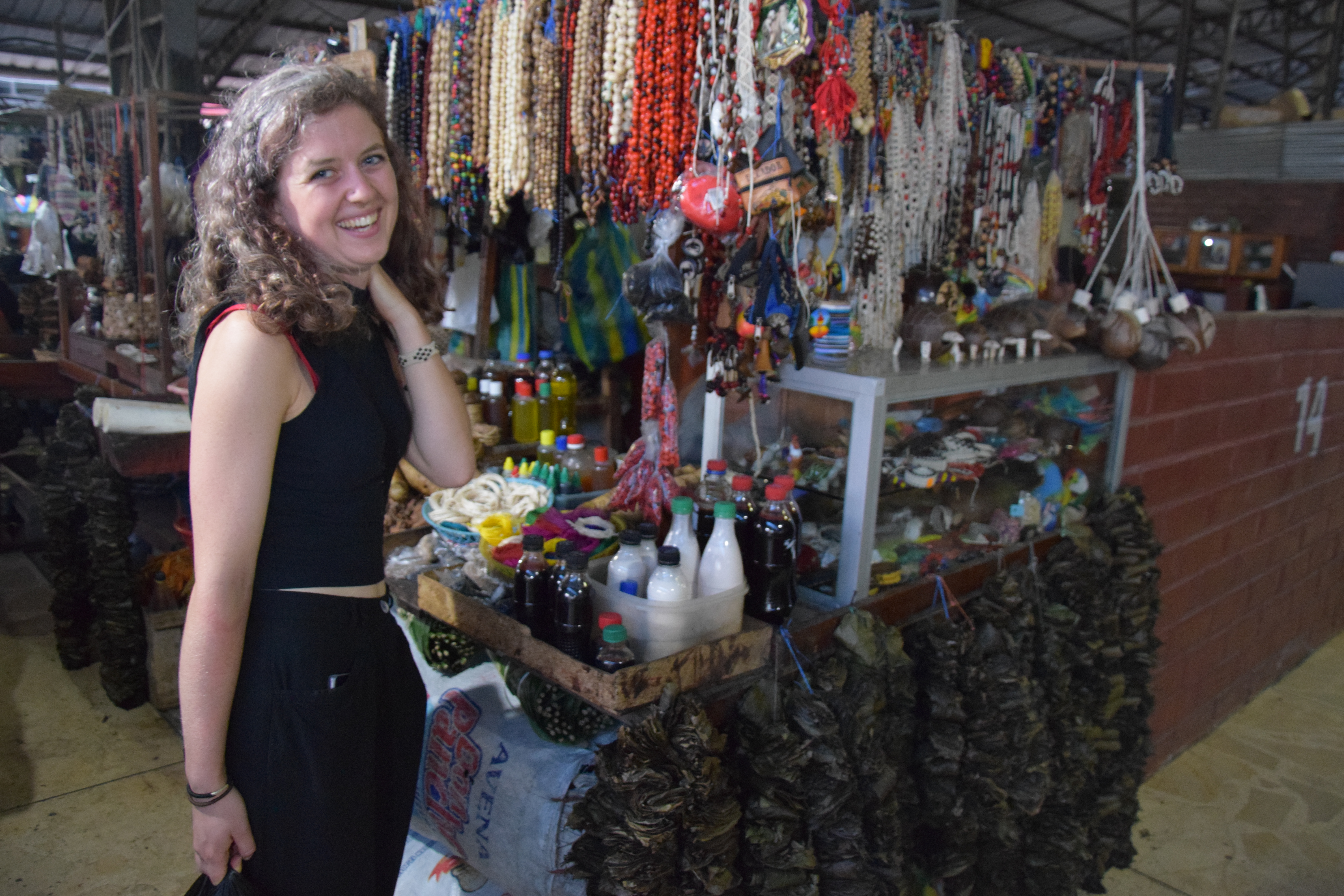
  • In Ecuador you will find the colorful markets, the Amazon area where you can make beautiful jungle trips, and the coastal areas with quiet, traditional fishing villages. There are also very lively seaside resorts where you can really let loose. You can also visit the Galapagos Islands: this costs a penny extra, but the beautiful surroundings are worth it. You can swim with dolphins, and also see other animals such as sea lions, penguins, large turtles, pelicans and iguanas. The underwater world is beautiful
  • In Ecuador you will find the colorful and now world-famous Indian markets, nice for souvenirs and a cultural experience.
  • Between Quito and Cuenca in the valley you will find many mountains and volcanoes. The most famous volcano with eternal snow is the Cotopaxi (5,897m). The Cotopaxi National Park is also located here. The snow-capped Chimborazo (6,310m) is a challenge for mountain climbers.
  • From Cuenca you can go to the Inca Pirca, the most important and best preserved ruin from the Inca era.
  • In the east, the Oriente, lies the Amazon region with many species of flora and fauna. There are various options for an Amazon trip. Make sure you are well informed when choosing your trip.
  • By train you can go from Alausi to Huigran along the scary, but fantastic, Devil's Nose Route.
  • On the Galapagos Islands you can snorkel with sharks, swim with sea lions and penguins, admire the many iguanas, see the famous Darwin finches and experience what it is like when animals have little fear of people. Because this comes with a hefty price tag, the number of boats that sail you and your fellow passengers along the islands remains somewhat limited. You are certainly not the only one, but you do not have to queue. If you can't afford the Galapagos, there is a reasonable alternative in the form of 'little Galapagos' (Isla de la Plata, near Manta on the coast of Ecuador) known as the Galapagos Islands for the poor.
  • The capital Quito is located in the Andes Valley. Here you can visit the old city center, the Casa de la Cultura museum, stroll through the crowded market, visit the colonial churches or play volleyball in the city park.
  • In Baños, a very relaxed village in a beautiful area, you will find hot springs, an ice-cold waterfall on the edge of the Tungurahua volcano, beautiful horse riding routes through the mountains for experienced and inexperienced riders, hiking trails and mountain bike trails. If you have trouble with the altitude in Quito, you can easily get used to it in Baños, which is located a bit lower.
  • North of Quito lies Otavalo where the famous Saturday market is held, the meeting place for the colorful Indian population. Pan flutes, sweaters, caps, scarves and bags change hands and eventually end up in Europe. If you travel a little further, you can make the unforgettable trip from Ibarra to Esmaraldas.
  • There are also very lively seaside resorts where you can party, for example in Montañita.
  • Be prepared that on the night buses that travel long distances, the drivers sometimes drive like crazy. People are also often robbed on these night buses. So be on your guard.
  • If you are going on a jungle tour through the rainforest, the rainy season can sometimes spoil the fun.
  • If you do not speak Spanish, it can be difficult to find your way. English is not spoken everywhere and even Spanish is sometimes difficult for the native population!
  • Be prepared that the Galapagos Islands are fantastic and at the same time a drain on your wallet.

Updates Ecuador

  • More about Ecuador, updates and contributions, see the link below.
What are typical South American holidays and remarkable holiday habits?

What are typical South American holidays and remarkable holiday habits?

What are typical South American remarkable holidays and holiday habits?

  • Silvester evening is the last night in the year, the 31st of December. Silvester is the name of a holy pope. In general after midnight fireworks are burned. It comes from the belief that firework will keep ghosts away. 

What are remarkable holidays in Colombia?

  • Colombia's holidays reflect the Catholic history and heritage, providing opportunities for both religious observance and national celebration.
  • Colombia's Independence Day is celebrated extensively on July 20 with concerts, parades and costume parties.
  • It is sometimes said that the carnival of Barranquilla is the most colorful carnival in the world. In any case, after the carnival in Rio, it is the one with the most visitors. Every year in January, it celebrates for 4 days. 
  • During La Feria de Cali from December 25 to 30, the city of Cali turns into one big party. People flock from all over the country for the horse parades, beautiful women, bullfights and delicious food. The essence of the party is salsa, here the best salsa in the world is danced by professionals and accompanied by the most famous Salsa orchestras of Colombia and other South American countries.
  • Flower Festival of Medellín: For several days a year, the city of Medellín in the Andean region is one big Sea of Flowers. During this 10-day celebration in August, all balconies, terraces and gardens are covered with flowers.
  • The superstition with new year is: wear yellow underwear, that makes the next year for sure financial beneficial. You know what you gotta do!

What are remarkable holidays in Ecuador?

  • In Ecuador holidays are a vibrant blend of indigenous traditions and Catholic influences.
  • With el ano Viejo and Nuevo ano (new year) men dress as widows to mourn the passing year. It is meant to be done with humor and fun.
  • The Ecuadorians wear yellow underwear with new year, that makes the next year financially well.
  • Carnival is a time of joy and playfulness it is celebrated with water fights and foam sprays. Parades are lively and colorful.
  • The festival of the sun (Inti Raymi) honors Mother Earth (Pachamama) and celebrates the winter solstice. It is a celebration with offerings, traditional dance and music.

What are remarkable holidays in Mexico?

  • On average, there are four holidays per month in Mexico. Each day on the calendar is actually a holiday in Mexico. Calendar days are dedicated to saints with names. Also called “name days.” It's similar to a birthday. If you, as a Mexican, have the same name as the saint the day is named after, you are congratulated and receive gifts. For example, June 24 is the name day of San Juan.
  • Constitution Day is a national holiday in Mexico. Originally, Feb. 5 was the fixed date for this. In 1857 and 1917, Mexican constitutions were adopted on this date. In 2006, it was decided to celebrate it on the first Tuesday of the year.
  • On May 5, Mexicans celebrate the day Mexico defeated a French army in the Battle of Puebla. The discovery of America by Columbus used to be celebrated grandly in Mexico. However, after 300 years of misery by Europeans, it was decided to celebrate something else on Oct. 12. Today, Mexico celebrates Race Day. This refers to the new race that emerged from the Europeans and the Indians.
  • In Mexico, they celebrate the “Day of the Dead” (El Dia de los Muertos). Also called All Saints' Day and All Souls' Day. This national holiday is on November 1 and 2, and Mexicans celebrate on this day that the dead come back to earth to visit the living. The dead are then the guests of the living on that day. Cemeteries are crowded, picnics are held at gravesites and skulls are used as decorations. Bakers sell the bread of death on this festive day.
  • December 12 is the most important holiday in Mexico. Mexicans then celebrate the national feast of the Virgin of Guadalupe. This patron saint of Mexico is said to have been beheld as a Marian apparition in 1531 by Saint Juan Diego Cuauhtlatoatzin. Pilgrims in Mexico walk with torches and wear tunic referring to Juan Diego's clothing. Tens of thousands of Mexicans climb the mountain that day to the basilica “Iglesia de Guadalupe” in Mexico City. All day in Mexico there is celebration with music and fireworks.
  • Christmas starts in Mexico on the 16th of December with the "Posadas", which are processions through the streets with plays of the story of Maria and Joseph. Every evening ends with a feast and breaking of a pinata. On Nochebuena, Christmas Eve, diner is served with tamales, bacalao, and ponche (fruitpunch). After dinner a lot of people go to Misa de Gallo, a Mass at church, followed by firework. 
Ecuador: selection of contributions by WorldSupporters - Bundle

Ecuador: selection of contributions by WorldSupporters - Bundle

Content about Ecuador shared by WorldSupporters

What are the best fruits from South America (Ecuador)?

What are the best fruits from South America (Ecuador)?

Image

Hola Amigos!

Fruits are one of the main parts of a healthy diet, but also just simply DELICIOUS. Well, if you want a good choice of fruits, head out to South-America. It's FRUIT HEAVEN! The fruits here are sweet, fresh, without travel pollution and cheap, what else do you want? Well, today for you, my fruit amigos, I will describe some typical fruits which you can find in Ecuador and other parts of South America. I will not talk about the easily recognizable ones like pineapple, mango, grapes etc., but about the ones I was super curious about. Fortunately, there are so many that I can't even describe all of them so you'll still have to go on an adventure yourself. Hopefully, however, this blog can help you to get through an Ecuadorian market a little bit easier than I did, if you happen to be at one sometime.

Maracuya (E: Passion fruit)


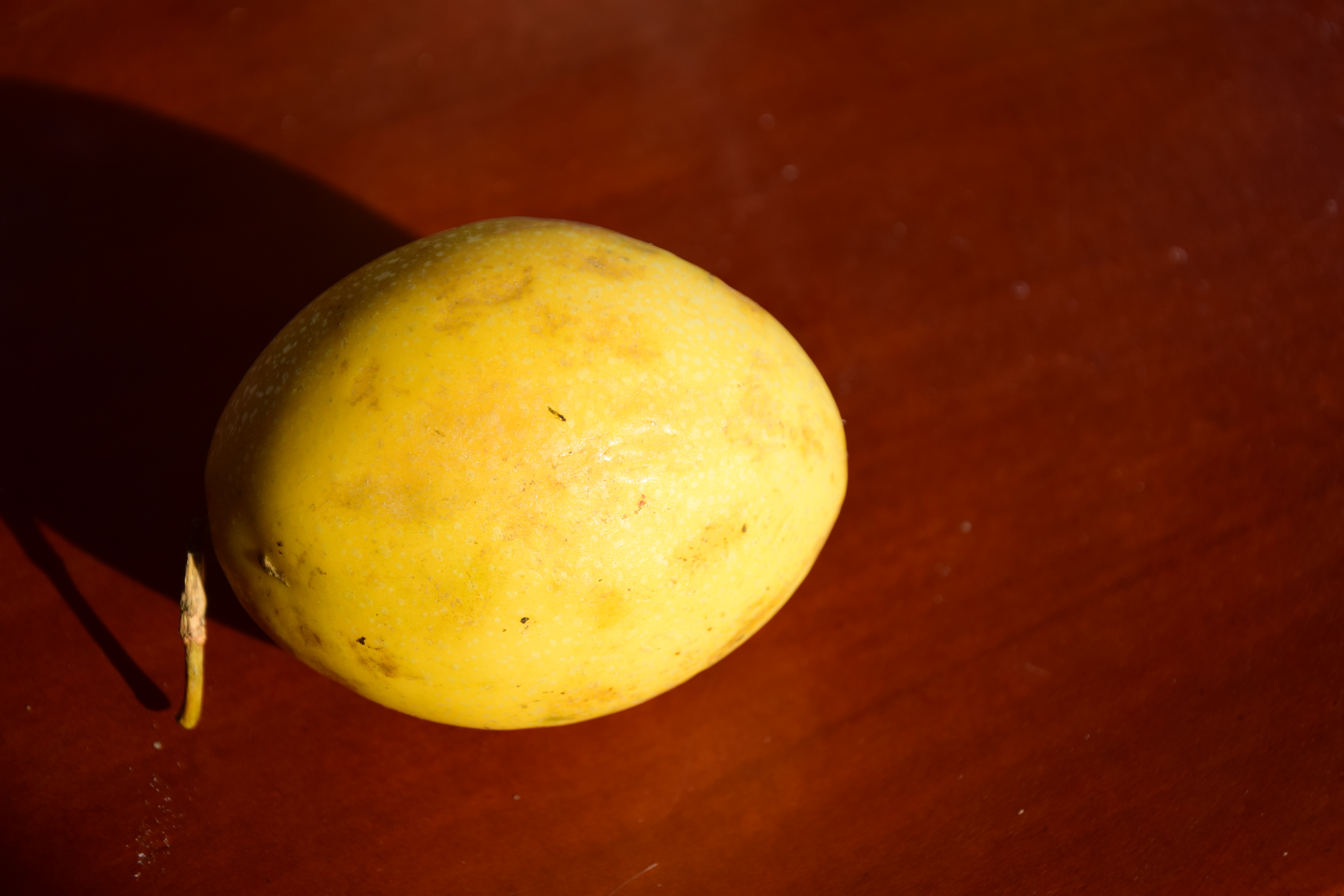
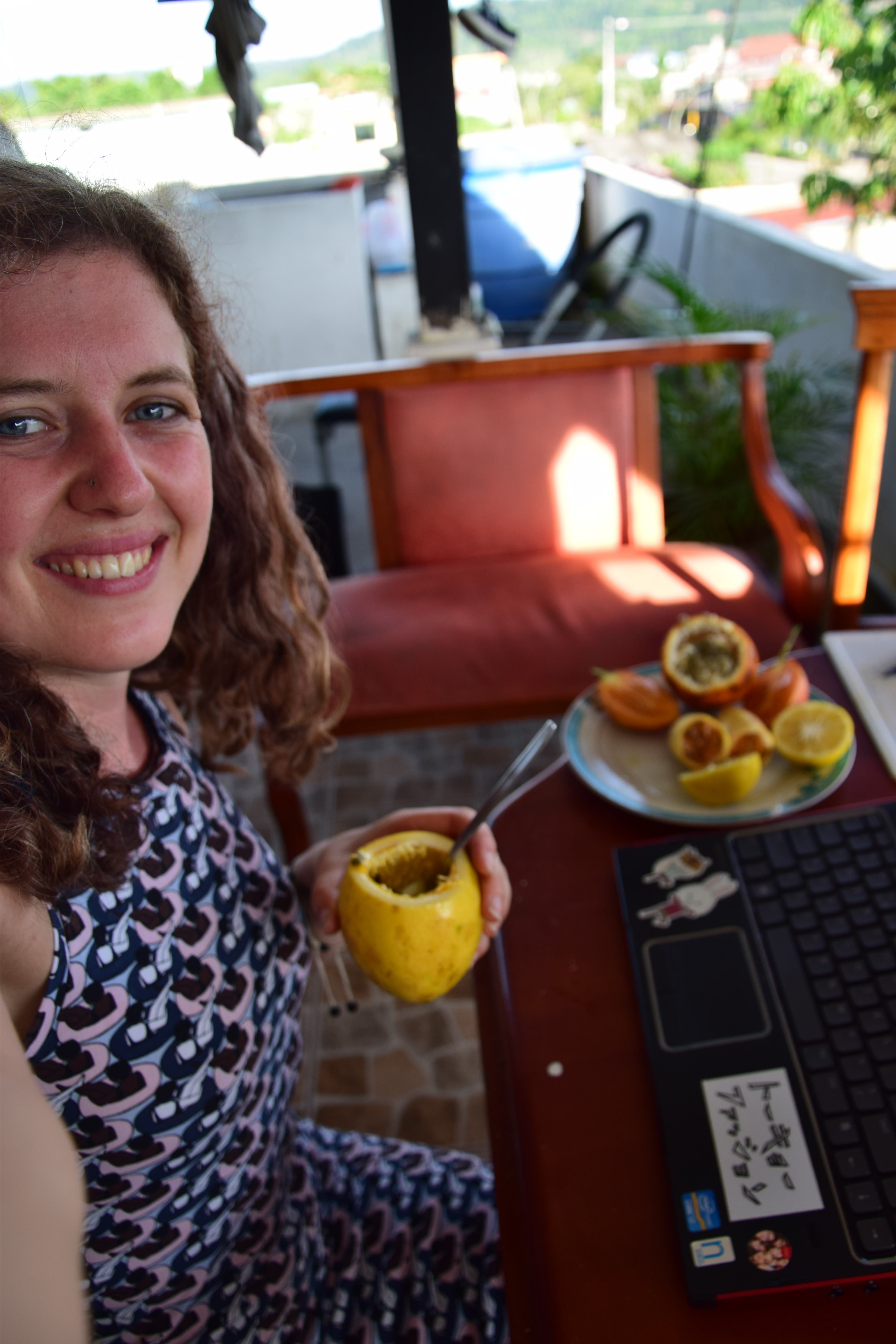
YES! Let’s start with my ultimate favorite; the maracuya. Even though it looks totally different from the purple small passion fruits we get in Europe, it tastes somewhat the same and is a lot bigger (so better! ;)). This one is yellow with sometimes a little bit of green, and feels quite hard on the outside. To find the best ones on the market, I always pick the biggest and heaviest ones! They usually contain the most seeds. To start eating, either cut it through the middle and eat both halves, or take the top side off and use the maracuya as a bowl and just scoop out the inside. Some people prefer to swallow everything without chewing, however, I like the texture of the seeds since it makes it a little bit crunchy so I prefer to chew on it.

Use: mostly used for juices since it’s a very sour fruit. But if you’re like my sisters and I, you’ll probably prefer to eat it like this!
Price: 5/6 for 1 dollar

Granadilla (E: Sweet passion fruit)
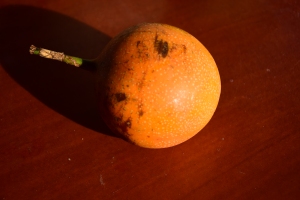
 

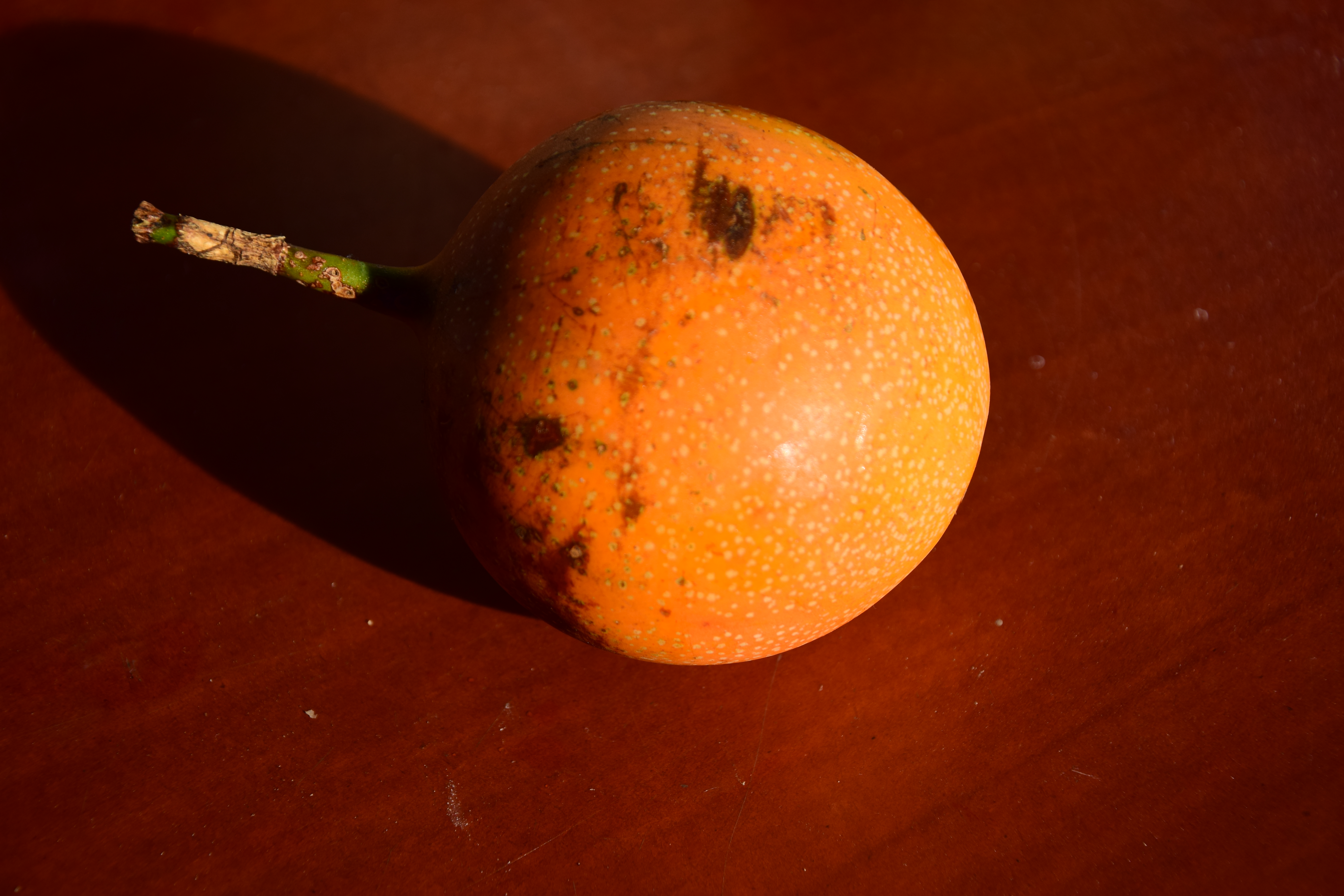
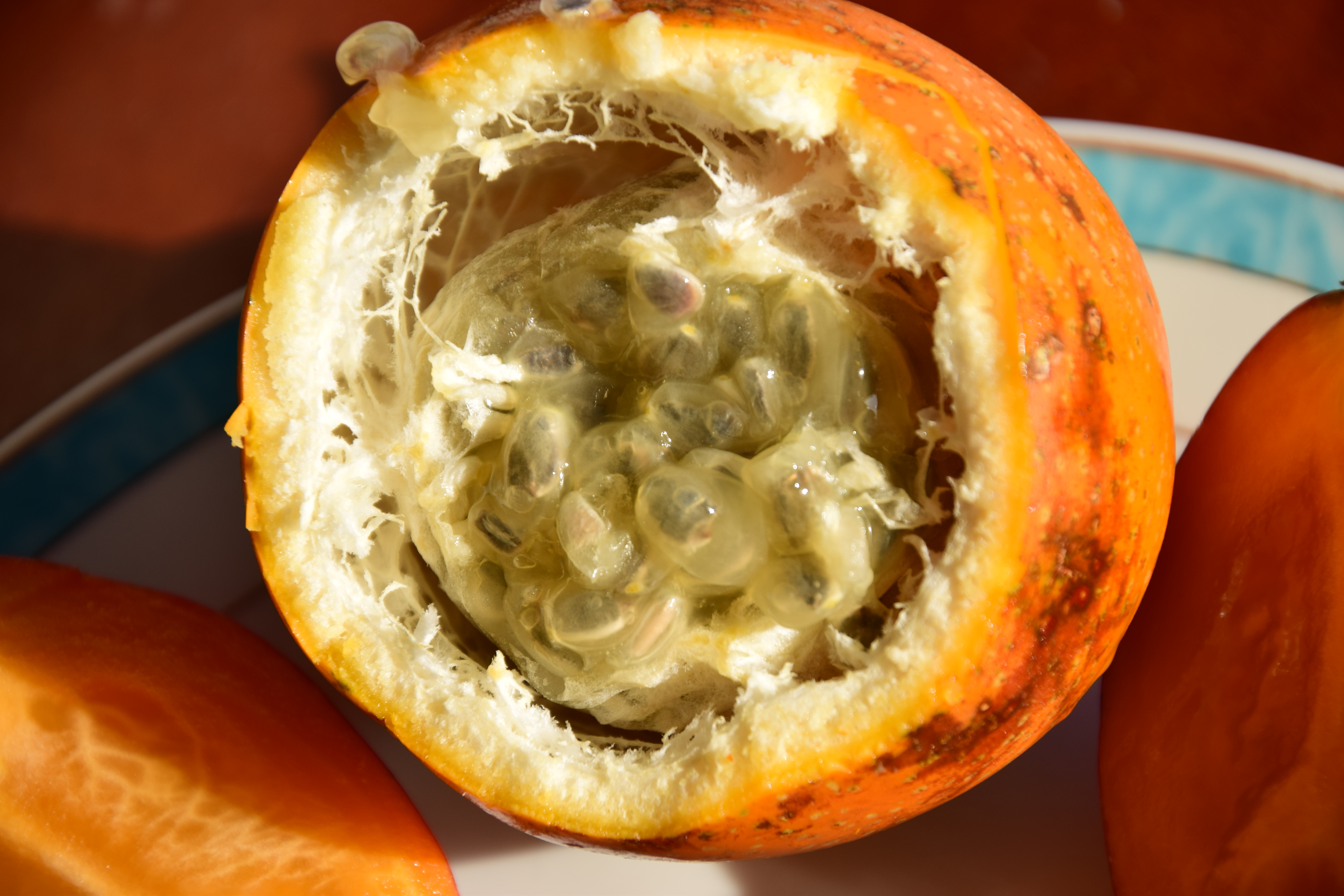
Another passion fruit, yay! It’s an orange fruit with some light brown speckles on it and can be found at most markets. While the maracuya is sour and has a pretty strong flavour, the granadilla is a lot sweeter and the texture is even more like spawn. It might look a bit disgusting at first, but the taste makes up for it. If you like both, but find the granadilla not strong enough (flavour wise) and the maracuya to sour, then do like I do sometimes and mix them together in one of the fruits to get a combination of the two flavours

Use: I think just for eating, and you can put it in some dishes too.
Price: 4/5 for 1 dollar

Taxo (E: Banana passion fruit)
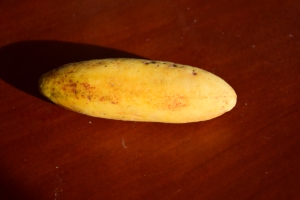
 

Yes, there is another one for you, passion frutas lovers! Where the name comes from? Well, I think you can take a guess while looking at the picture. The fruits are usually yellow/orang and quite soft when you touch them. Even though I cut it differently in the picture, I think the best way to cut and eat it is longitudinally. The texture is a little bit more tough (and so are the seeds, better just swallow them) than that of the maracuya and granadilla, and therefore it’s also a little bit more difficult to eat, but the flavour resembles that of the maracuya the most. Again it’s quite sour and it has a tangy taste.

Use: it can be eaten raw (although that is rarely done), but it is mostly used for juices and ice-cream
Price: 5/6 for 1 dollar

Tomate de árbol (E: Tree tomato)


Tree tomato is a strange fruit of which I haven’t really figured out how to eat it yet, except for just drinking it as a juice with a lot of sugar. It’s a kind of red-orange fruit that is more oval-shaped than a tomato, but when you open it, you do realize why they call it tomato anyway. When you eat it fresh, the fruit tastes very sour and kind of like a mix between tomato and papaya. I wouldn’t recommend doing this. However, the fruit can be used for juices and desert when boiled and mixed with sugar. In that way it still is a flavour I’m not used to, but it tastes quite good.

Use: Juices/desserts/sauces
Price: 6-8 for 1 dollar

Lemons/limes/oranges
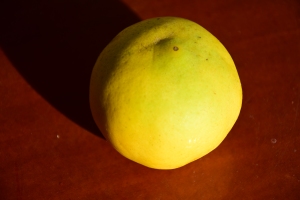
 

I still haven’t been able to figure out which one is which. While the oranges are quite clear and have a bit of a dirty orange-green look, there are also other oranges that again look different. The same in terms of lemons and limes. There are so many that I can’t even start describing them all. I recommend you just buy and try some to find out for yourself!

It’s BANANAs!

There are several types of bananas in Ecuador (what else would you expect in a tropical country) of which I will describe the most common ones:

Platana Verde (E: Green plantain)

This banana is HUGE and NOT to eat raw. It’s an unripe green plantain with no flavour but it has a great texture for cooking. They go crazy for it here and you can find it everywhere. You can try to prepare it yourself by cooking and baking it, or by making patacones (one of the favorite dishes here), but I recommend you to just go out on the streets and get some ready made, because it’s a lot easier.

Use: Many dishes, but not raw
Price: 8 for 1 dollar

Platano Maduro (E: Ripe plantain)

The ripe version of platana verde. Again it’s huge, but this time it has a yellow colour due to the ripening process. Now it’s a lot sweeter, but still not very good to eat raw. They are eaten grilled, from the oven, with cheese, fried and they taste very good. While this one is a bit easier to prepare yourself, I would still recommend to buy it on the streets (you can see people selling them outside from the grill while you walk on the streets), since they know how to prepare it the best.

Use: many dishes but again not raw
Price: 8 for 1 dollar

Orito (E: Baby banana)

Orito is a tiny banana (about 1/3rd of a normal one) and contains just as much, if not more, flavour but more concentrated. It’s full of sugar and delicious to eat and the best of all, they are super super cheap. I use them to cook banana bread, or I eat them raw. They contain a lot of sugar though so don’t eat too many or you’ll start bouncing all over the streets.

Use: raw! and I use it for banana bread
Price: depends, but usually a bunch (about 15-20) for 1 dollar

Platano Rosado (E: Red banana)

Platano rosado is a banana with a red/purple-ish skin. It's full of antioxidants, beta-carotene and vitamin C and therefore very healthy. Additionally, many more health benefits are attributed to it, although I always remain a bit sceptical. What I know for sure though, is that these bananas are so sweet and delicious. I have eaten the big ones (I heard there are also small ones) and even though it was a bit too much for me at one, since I'm not very fond of bananas, it was soooooo good. So I would really recommend you to eat one if you find them :) 

Use: raw, just peal it like a normal banana
Price: Around 5-10 for one dollar

Mora (E: blackberries)

Blackberries in Ecuador are very different from the ones I’m used to in the Netherlands. The ones here are more sour and not very juicy, but they still taste good. They look basically the same, but are a little bit bigger and generally quite ‘expensive’ compared to other fruits.

Use: juices, ice-cream
Price: 2 dollars a pound


Next to these frutas, there are of course many others like mango, pineapple (piña), strawberries (fresas), apples (manzana), watermelons (sandia), grapes (uvas), coconut (coco), guanabana, dragon fruit (pitahaya), prickly pear (tuna), papaya and so on. Maybe I'll describe some of the smaller fruits (tamarindo, some kind of small mango and another thing) which are eaten raw as snacks on the street in one of my next blogs or vlogs so if you want to know about that, make sure to follow me!

I hope this blog helped you to get an idea of Ecuadorian fruits! At least I got to eat all of them while writing this haha. Have fun trying them out too if you get the opportunity!

Chao! Hannah


Travelling in Ecuador as a Vegan

Travelling in Ecuador as a Vegan

Image

As a vegan who loves travelling, you've probably heard that it's impossible to do it if you want to stay healthy. Well, I'm here to change that view and give you some tips for travelling as a vegan in Ecuador.

When I went to Ecuador, I was doubtful about whether I would manage to stay vegan. I had been vegan for a year, and while it was rather easy in the Netherlands, I always thought that I would never be able to keep being vegan while abroad. Nevertheless, I did it with the help of some tips/tricks. 

1. Cook yourself
The easiest and best way (if you can use a kitchen) is cooking yourself. There are so many delicious recipes that contain some meat, but it's easy to substitute this meat for beans. Check out the arepas recipe on my page for example. Arepas are totally vegan, and if you combine them with vegetables and beans, very nutritious as well. The plantain recipe is also a very easy recipe for vegans which can be combined with all kinds of things. Basically, you can cook anything you were used to cooking at home as well, just check the ingredients. 

2. Eating out? Ask for something specific. 
This might sound strange, but it works better than asking "do you have something vegan?" or "can I have this without meat?". These questions often lead to misunderstandings, or even more questions. If you ask for rice with salad, or rice with beans or rice with beans and avocado, you will get it. Of course, in bigger or more international restaurants you might get away with asking for a dish without meat, but if you're at a bus station, or a smaller town or just local restaurants, ask for a specific thing. 

3. Look for vegan restaurants
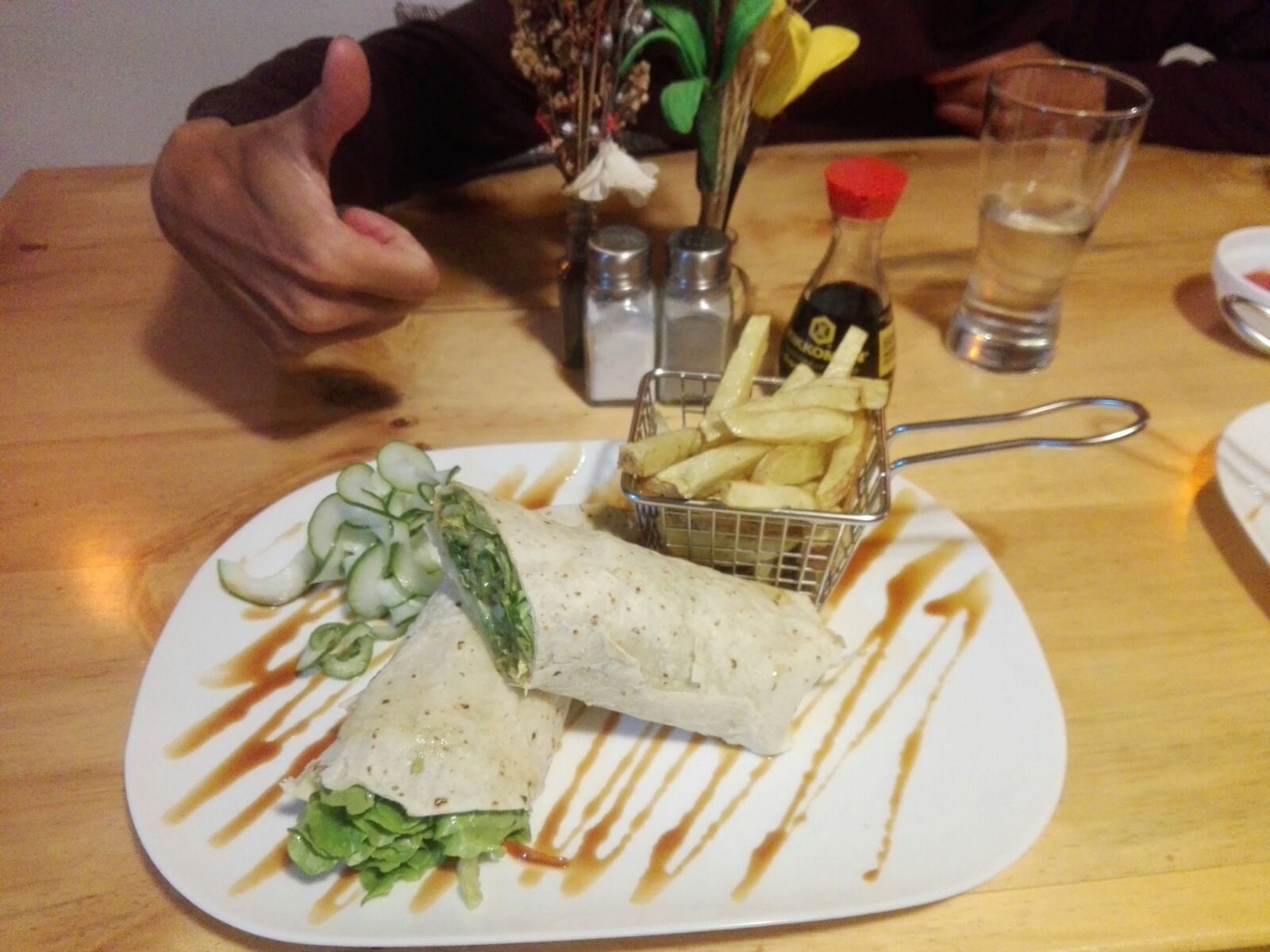
Nowadays many places have some vegan restaurants, or restaurants with vegan options. Especially in the bigger and more touristic places in Ecuador (Cuenca, Quito, Otavalo, Banos, at the coast) you might have a chance of finding vegan things. For a start, in Tena, where I stayed for 3 months, is a great vegan restaurant next to Cafe Tortuga (which also has some vegan options). It is owned by a wonderful cheff and she makes just great dishes! In Baños there is a restaurant called Healthy Food which you can't find on Google Maps, but it is near Ponche Suizo and they have many vegetarian and Vegan options. Also in Baños is Zumo, a great restaurant at which they offer all kinds of dishes, also vegan, and if you ask they might even be able to make some adjustments to the non vegan dishes. But since Ecuador is a popular travel destination, you can find many options nowadays at more international restaurants. 


Food at Zumo                                                                                   Vegan Streetfood

Hopefully, this can encourage you and aid you in your vegan travels! Also in the rest of South America! Let me know if you have any more recommendations :)

Cheers, 
Hannah


"The Dutch" Working & Living Abroad: Frank Weijand - Ecuador

"The Dutch" Working & Living Abroad: Frank Weijand - Ecuador

Image

Who?

  • Frank Weijand

Where?

  • Ecuador, Mera, Amazon rainforest

Which Initiative?

  • Merazonia

What?

  • Wildlife conservation organization
  • Merazonia combines passion for nature with a professional approach on animal care and release, along with rainforest conservation and wildlife monitoring.

Something special?

  • Merazonia was truly built by volunteers for volunteers (and animals of course). Volunteers help the local team in the day to day care of the wildlife.
  • Donations are vital for the animal care and release projects of Merazonia. For the wellbeing of the animals they do not receive tourists in the reserve, nor do they get any governmental funding.
  • The World Wildlife Fund has called the area from Baños to Mera, “A Gift to the Earth” because of its beauty and biological importance to the region. 

And last but not least...a little insight in 'Why'

  • All founding members of Merazonia have a background in volunteering and worked as volunteers at several wildlife centres throughout the continent, before joining forces. The first work started in the fall of 2004, with every partner investing his own money in the project. Frank and his team are proud to have built this centre with their own hands, along with the many volunteers that joined them. Volunteers joined from day one in the heavy physical labor, carrying massive amounts of rocks and sand, and dragging beams through the forest. The only help they had was from a loyal workhorse Monty. Little by little the centre started to take shape. Supporting Merazonia has direct effect: with the help of volunteers and donors they implement successful and groundbreaking rehabilitation programs.

Image ACTIVITIES

Check courses, jobs, projects, recipes, suggestions and tips related to: 'Ecuador'

CHECK MORE ACTIVITIES

Make a selection, to find more tips than you see below

Image Bij deze taalschool kun je je volledig onder laten dompelen in de Ecuadoriaanse cultuur; combineer Spaanse les bijvoorbeeld met vrijwilligerswerk, of een verblijf in een lokaal gastgezin
Bij deze taalschool kun je je volledig onder laten dompelen in de Ecuadoriaanse cultuur; combineer Spaanse les bijvoorbeeld met vrijwilligerswerk, of een verblijf in een...
Image Combine a Medical Spanish course with volunteer work in a medical center in Ecuador
Combine a Medical Spanish course with volunteer work in a medical center in Ecuador A study in the medical field or experience in the medical sector is required.
Image Take an intensive course in medical Spanish and put it in to practice during a special volunteer placement in South America
Take an intensive course in medical Spanish and put it in to practice during a special volunteer placement. For both the Spanish course and the medical volunteer program...
Image Wil je wat goeds voor Ecuador betekenen? Leer de taal en ga daarna aan de slag bij een vrijwilligersproject
Wil je wat goeds voor Ecuador betekenen? Leer de taal en ga daarna aan de slag bij een vrijwilligersproject.
Image Volunteer on a permaculture farm in Ecuador and learn about sustainable agriculture
Volunteer on a permaculture farm in Ecuador and learn about sustainable agriculture in the Ecuadorian Andes. Help with the work in the agro-botanical garden and...
Image Help mee op een biologische boerderij in Ecuador en leer alles over permacultuur
Help mee op een biologische boerderij in Ecuador met onder andere paden in de botanische tuin aanleggen of bezoekers rondleiden. De eigenaren delen graag hun kennis over...
Image Bescherm de natuur van de Galapagos eilanden door het bestrijden van invasieve soorten, planten van inheemse soorten en het opruimen van afval
Bescherm de natuur van de Galapagos eilanden door het bestrijden van invasieve soorten, planten van inheemse soorten en het opruimen van afval. Je kunt een deel van de...
Image Zet je in voor het behoud van het unieke ecosysteem van de Galapagos Eilanden
Zet je in voor het behoud van het unieke ecosysteem van de Galapagos Eilanden.
Image Help this Dutch organisation as a volunteer in childcare for the poorest families in Ecuador or help reconstructing their buildings or garden
Help this Dutch organisation as a volunteer in childcare for the poorest families in Ecuador or help reconstructing their buildings or garden
Image Loop een studentenstage in de zorg, kinderopvang, kinderrechten of het onderwijs in Zuid Amerika
Loop een studentenstage in de zorg, kinderopvang, kinderrechten of het onderwijs in onder andere Paraguay, Uruguay, Ecudor en Peru
Activities abroad: home bundle

Main content and contributions for activities abroad

,,,accommodations, adventure activities, courses, internships, jobs and volunteer projects

...to help another, travel with care, work together , learn to share and inspire with your experience


Activities abroad: home page

Activities abroad: home page

From language courses to gap year abroad, from work experience to volunteering abroad, from paid work to internship abroad, from mountaineering to diving and from backpacking to travel around the world

    What social activities can you do abroad?

    • Opportunities are found in the areas of helping, learning or studying. You can get involved to volunteer in a social project at a school in Africa, Asia or Latin America. You can get involved in nature, in a project with animals or cleaning the sea or beaches. Those who want to learn more can choose for example a language course in Latin America, Spain or South Africa.

    What work related activities can you do abroad?

    • If you want to gain work experience, and/or also earn money, go and work abroad. You can combine backpacking in Australia with temporary work. You can work on campsites in Europe or bush camps in Africa. You can pretty much go all over the world to work in the hospitality industry, hotels and hostels, in the healthcare sector or for example at a diving school.

    What sports activities to do abroad?

    • Have you ever thought of mountain biking, rafting (going down a wild river on a raft or rubber dinghy, climbing or canoeing), survival (which involves building rafts, climbing or canoeing), abseiling (descending a rock face while secured to ropes), zip-lining (whizzing down a cable), canyoning (starting at the top of a river and then climbing, swimming, diving down the bed) or caving (scrambling, wriggling and crawling through caves and crevices)?
    • Maybe you feel more comfortable on a bodyboard (on a half-wave surfboard, you surf the high waves lying down-with flippers), on a hang glider or while paragliding (with a parachute you float down a mountain or dune), hydrospeeding (on a bodyboard with flippers and a wetsuit on you go down a wild river via rapids) or Tiefschneeskiing (racing down through powder snow)?

    Check the pages below for more activities and inspiration and where to go and how to arrange it

      Activities abroad: for experiencing countries and cultures abroad

      Activities abroad: for experiencing countries and cultures abroad

      Bundled content for experiencing countries and cultures during gap year, travel and backpacking abroad

      Access: 
      Public
      Activities abroad: for sports, adventure and outdoor abroad

      Activities abroad: for sports, adventure and outdoor abroad

      Bundled content for sports, adventure and outdoor during travel, gap year and backpacking abroad

      Access: 
      Public

      Image STORIES

      Check blogs, experiences and information related to: 'Ecuador'

      CHECK MORE STORIES

      Make a selection, to find more blogs and contributions than you see below

      Image How does healthcare work in Ecuador, and what travel insurance, health insurance or expat insurance do you need?
      How does the healthcare system work in Ecuador, and which insurance do you need? How does the health care system work in Ecuador? How does the public healthcare system...
      Image Sharks abroad and while traveling: are they dangerous, where do you encounter them, where can you see them?
      What are sharks? What is a great white shark? Where can you see sharks from a boat? Where can you see sharks well when snorkelling? Where is the best place to dive with...
      Image What are typical South American holidays and remarkable holiday habits?
      What are typical South American remarkable holidays and holiday habits? What are remarkable holidays in Colombia? What are remarkable holidays in Ecuador? What are...
      Image What are the best fruits from South America (Ecuador)?
      H o l a A m i g o s ! Fruits are one of the main parts of a healthy diet, but also just simply D E L I C I O U S . Well, if you want a good choice of fruits, head out to...
      Image Welk visum regelen voor een reis, werk of vrijwilligerswerk naar Ecuador?
      Toeristenvisum Er is geen toeristenvisum nodig voor een verblijf tot 90 dagen in Ecuador. Als je langer wilt blijven zul je vanuit Nederland een toeristenvisum moeten...
      Countries & Destinations: home bundle

      Bundled content, suggestions, stories and tips about the countries and destinations in the world

      ...to help another, travel with care, work together , learn to share and inspire with your experience

      Africa: country bundles

      Africa: country bundles

      Access: 
      Public
      Asia: country bundles

      Asia: country bundles

      Country bundles of Asian countries

      Access: 
      Public
      Europe: country bundles

      Europe: country bundles

      Country bundles of European countries

      Access: 
      Public
      The Caribbean: country bundles

      Image ORGANIZATIONS

      Check sectors and organizations related to: 'Ecuador'

      CHECK MORE ORGANIZATIONS

      Make a selection, to find more or other organizations than you see below

      Image Tura-Travel
      Tura-Travel offers various round trips across Peru, Bolivia, and Ecuador, as well as multi-country combination tours. Special attention is given to the Arbolivia project...
      Image Rebecca Adventure Travel
      Rebecca Adventure Travel is a Dutch tour operator based in Quito, Ecuador. The organisation offers tailor-made adventure tours in Ecuador, Peru and Colombia.
      Image Physical Therapy Abroad
      Physical Therapy Abroad is een organisatie voor en door fysiotherapeuten die vrijwilligerswerk, groepsreizen, stages en afstudeeropdrachten organiseert in Azië, Afrika,...
      Image CENIT Ecuador
      CENIT is a non-profit organization dedicated to improve the life of children in Ecuador. Volunteer opportunities are varied, there are tasks for all interests, and your...
      Image Ecole Travel & Colourful Ecuador
      Ecole Travel is a Dutch travel agency based in Ecuador. The organization has been led by Lydia and Wytze since 2002. Under the name Colourful Ecuador Travels, they...
      Image Enlace: Teaching English in Ecuador
      Learn English in Mindo, Ecuador ENLACE is a non-profit language school founded in 2023 in the cloud forest of Mindo, Ecuador. Understanding the need for quality and...
      Image Parque Bambú - Permaculture and Botanical garden
      A local organization in northern Ecuador offers volunteer opportunities to help with various agricultural activities. Learn about the country's biodiversity and work on...
      Image Beyond South America: internships, volunteering and language courses
      Beyond South America is a small agency, founded by Marye from the Netherlands, that arranges internships, volunteer work, Spanish language courses, and activities in...
      Image On-Stage Latin America
      On-Stage Latin America, was founded by two Dutch people in 2006, wants to contribute to both the sustainable development of the countries in which it operates and that...
      Image Merazonia Wildlife Rescue Centre
      Merazonia is a dynamic wildlife rescue and rehabilitation centre in Ecuador. Merazonia, operated by Frank (Dutch), combines passion for nature with a professional...
      Organizations & Services: home bundle

      Bundled content, suggestions, stories and tips about organizations and their products and services

      ...to help another, travel with care, work together, learn to share and inspire with your experience

      Organizations: home page
      Organizations for administrative, tax and legal work and consulting

      Organizations for administrative, tax and legal work and consulting

      international law

      Activities, internships, paid work, services or volunteer work in administration, tax and legal consulting

      Administrative, tax and legal consulting abroad: by position

      For job roles and duties related to activities, internships and jobs abroad, see:
      ......Read more on this page
      Organizations: for agriculture, grape picking, farming and vineyards
      Organizations: for animal protection, animal care and working with wildlife abroad
      Organizations: for au pairs, youth work and child care abroad
      Organizations: for bush camping and working at a campsite abroad
      Organizations: for catering, hospitality and entertainment abroad
      Organizations: for civil society and social work abroad
      Organizations for corporate business services

      Organizations for corporate business services

      Image

      Activities, internships, paid work, services or volunteer work in corporate business services

      Corporate business services abroad: by position

      For job roles and duties related to activities, internships and jobs abroad, see:
      ......Read more on this page
      Organizations: for customer services abroad and help desks
      Organizations: for diving, snorkeling and water sports abroad
      Organizations: for education and schools abroad
      Organizations: for expatriate insurances, travel insurances, and emergency call centers
      Organizations: for gap year activities abroad and sabbaticals
      Organizations: for internship placement abroad
      Organizations: for insurances and finance abroad
      Organizations for IT, engineering and construction

      Organizations for IT, engineering and construction

      Image

      Activities, internships, paid work, services or volunteer work in IT, webdevelopment, engineering and construction

      IT, engineering and construction abroad: by position

      For job roles and duties related to activities, internships and jobs abroad, see:
      ......Read more on this page
      Organizations: for language travel and language teaching abroad
      Organizations for marketing, communication and PR abroad

      Organizations for marketing, communication and PR abroad

      Image

      Activities, internships, paid work, services or volunteer work in marketing and communication

      Marketing, communication and PR abroad: by position

      For job roles and duties related to activities, internships and jobs abroad, see:
      ......Read more on this page
      Organizations: for mediation in au pairs, childcare and elderly care in the Netherlands
      Organizations for moving, international relocation and transport abroad

      Organizations for moving, international relocation and transport abroad

      Image

      Activities, internships, paid work, services or volunteer work in transport and international relocation

      Moving abroad and relocation services abroad: by position

      For job roles and duties related to activities, internships and jobs abroad, see:

      Moving abroad and relocation

      ......Read more on this page
      Organizations for nature conservation, environmental protection and working in nature abroad

      Organizations for nature conservation, environmental protection and working in nature abroad

      Costa Rica rain forest - Jungle

      Activities, internships, paid work, services or volunteer work in environmental protection, sustainability and nature conservation

      Nature conservation and environmental protection abroad: by position

      For job roles and duties related to activities, internships and jobs abroad, see:
      ......Read more on this page
      Organizations: for nonprofit projects, development work and international cooperation
      Organizations: for online work as digital nomad, freelancer, or independent entrepreneur from abroad
      Organizations: for outdoor activities and sports
      Organizations: for providing accommodation and hospitality work in hotels, guesthouses, ecolodges and hostels abroad

      Organizations: for providing accommodation and hospitality work in hotels, guesthouses, ecolodges and hostels abroad

      Image

      Activities, internships, paid work, services or volunteer work in hotels, resorts, guesthouses, ecolodges, bed and breakfasts and hostels abroad

      Working in hospitality and tourist accommodations abroad: by position

      For job roles and duties related to activities, internships and jobs abroad, see:
      ......Read more on this page
      Organizations: for providing healthcare and working in medical care abroad

      Organizations: for providing healthcare and working in medical care abroad

      Image

      Activities, internships, paid work, services or volunteer work in healthcare

      Providing healthcare and working in medical care abroad: by position

      For job roles and duties related to activities, internships and jobs abroad, see:
      ......Read more on this page
      Organizations: for psychological assistance and mental health care abroad

      Organizations: for psychological assistance and mental health care abroad

      Image

      Activities, internships, paid work, services or volunteer work in psychological assistance, coaching and mental health care abroad

      Psychological assistance, coaching and mental health care abroad: by position

      For job roles and duties related to activities, internships and jobs abroad, see:
      ......Read more on this page
      Organizations: for real estate, brokerage abroad and property rental abroad
      Organizations: for research and scientific work abroad

      Organizations: for research and scientific work abroad

      Image

      Organizations: for research, R&D, data collection, data analysis and scientific work abroad

      Activities, internships, paid work, services or volunteer work in research and science

      From R&D to data collection and data analysis

      Research and science abroad: by position

      For job roles and duties related to activities, internships and jobs abroad, see:
      ......Read more on this page
      Organizations: for student support and student associations
      Organizations: for tour guidance and adventure tours abroad
      Organizations: for tourism and organized travel and leisure work abroad
      Organizations: for voluntary work mediation and project placement abroad
      Organizations for yacht and shipping crew and working on a cruise ship abroad

      Organizations for yacht and shipping crew and working on a cruise ship abroad

      Image

      Activities, internships, paid work, services or volunteer work on cruise ships, sailing yachts and other ships

      Boat crew, deck hand or working for an international shipping organization

      Working on a yacht or cruise ship abroad: by position

      For job roles and duties related to activities, internships and jobs abroad, see:
      ......Read more on this page

      Image SUMMARIES

      Check summaries and study assistance related to: 'Ecuador'

      CHECK MORE SUMMARIES

      No results found.

      Image ALL CONTENT

      Search all related content within the topic: 'Ecuador'

      ALL CONTENT WITHIN TOPIC

      Select any filter and click on Apply to see results

      Image

      SPOTLIGHT & FAVORITES

      SPOTLIGHT
      Image

      As a vegan who loves travelling, you've probably heard that it's impossible to do it if you want to stay healthy. Well, I'm here to change that view and give you some tips for travelling as a vegan in Ecuador. When I went to Ecuador, I was doubtful about whether I would manage to stay vegan. I had b...

      FAVORITES
      Image
      • … elke vrouw die ouder is dan veertig je aanspreekt met 'mi hija' (mijn dochter / mijn kind)
      • … elke man die ouder is dan veertig je aanspreekt met 'tiene novio?' (heb je een vriend?)
      • … ook elke man die jonger is dan veertig je aanspreekt met 'tien...
      Image

      Op de melodie van *Row, row, row your boat*; ¨Tell me what you do, early in the morning. Everyday I brush my teeth, early in the morning.¨ Makkelijk zat, de liedjes-voor-kleintjes module van de Teaching English cursus afgelopen mei in Sevilla. Het kostte ons zo´n vijf minuten om het li...

      Image

      Hola Amigos! Fruits are one of the main parts of a healthy diet, but also just simply DELICIOUS. Well, if you want a good choice of fruits, head out to South-America. It's FRUIT HEAVEN! The fruits here are sweet, fresh, without travel pollution and cheap, what else do you want? Well, today for&...

      Image

      TOPICS : check associated topics and more activities

      Check more: activities in WorldSupporter
      Check more: of the topic below
      Go abroad!
      Page topic

      Stories, tips and experiences from Ecuador

      Submenu & Search

      Search only via club, country, goal, study, topic or sector