

Water sports abroad: questions and answers about the risks of diving, surfing and swimming
Tips and advice to stay safe and healthy while diving, surfing and swimming abroad or while traveling
What are the dangers of snorkeling while traveling and backpacking abroad?
 What are the dangers of snorkeling while traveling and backpacking abroad?
What are the dangers of snorkeling while traveling and backpacking abroad?
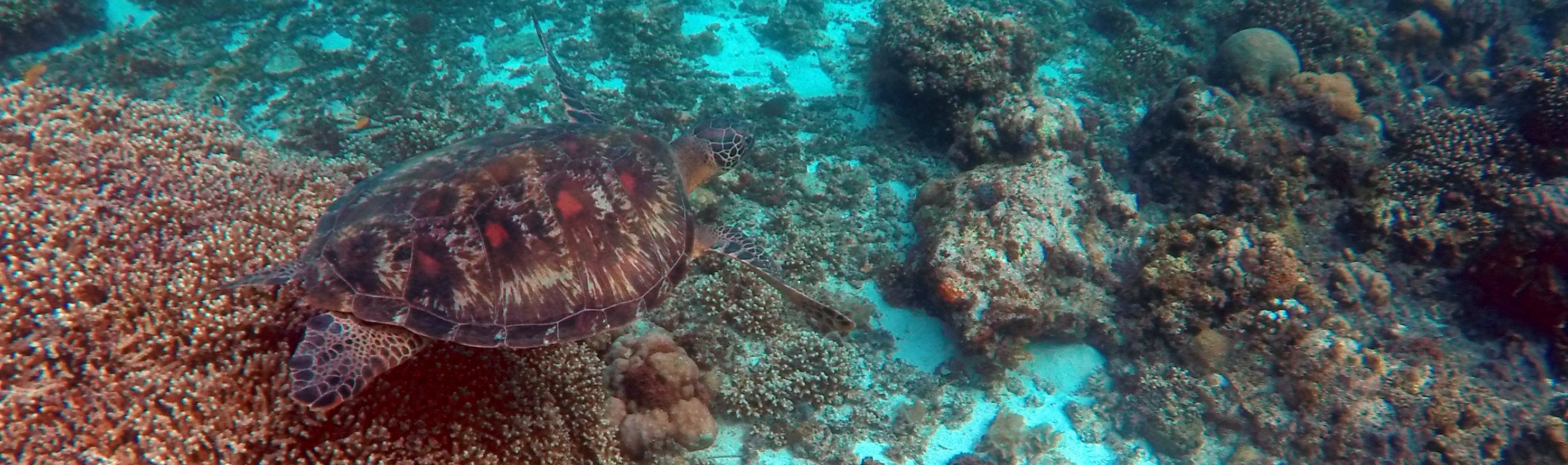
- More often than when swimming, you'll be near rocks and corals while snorkeling, because that's where most of the fish and other marine life can be seen. A wave or current pushing you against the sharp rocks can cause serious injuries. Hitting your head on a rock is especially life-threatening.
- Every diver, but not every snorkeler or swimmer, knows not to touch coral. Not only are you likely to damage the coral, but you also run the risk of contracting an infection from the wounds that coral easily causes. If you come into contact with "poisonous" corals like fire coral, you only worry about the infection once the pain has subsided.
- While snorkeling, you're often so focused on watching or tracking fish and sea turtles, for example, that you forget to check whether you're drifting too far from shore or a safe beach. Wearing fins further enhances this effect, as even with gentle movements, you reach a much higher speed than when swimming. Regularly check your position above the water.
- Floating on the surface, you're an ideal victim of severe sunburn. Many snorkelers choose protective clothing, which helps protect against the sun, hypothermia, and injuries from coral or sharp rocks.
- Also read the risks of swimming in the sea and abroad.
What are the dangers of swimming while traveling and backpacking abroad?
What are the dangers of swimming while traveling and backpacking abroad?
What are the dangers of swimming while traveling abroad?
- Pollution: This is especially true in places where sewage systems are inadequate and there are large cities nearby or upstream. In extreme cases, you might smell or see that the water is not suitable for swimming. In most cases, however, pollution is invisible and you only notice it the next day when using the toilet or, for example, in the form of a skin rash.
- Infections: The risk of bacterial contamination is higher in stagnant water and in water that is comfortably warm (for swimmers and bacteria). If the water quality is unknown, it's a good idea to at least use earplugs to prevent ear infections.
- Obstacles: Be careful diving into the water if you don't know the depth, as you risk a broken neck and other injuries.
- Intoxication: If you have consumed alcohol, be very careful or avoid intense swimming. Alcohol and swimming have proved fatal for many a brave traveler.
- Overconfidence: in places where swimming is particularly dangerous, warning signs are often posted, which are often ignored.
What are the dangers of swimming in the sea abroad?
- Although many swimmers have a considerable fear of invisible sharks, jellyfish, and poisonous fish, drowning is by far the greatest risk of swimming in seawater.
- The majority of drownings are caused by currents. Rip currents, in particular, cause many deaths and require lifeguard rescues.
- A rip current is where waves flow back out to sea. Strong rip currents are also found, especially with large waves. The force of a rip current is greater than a swimmer can handle. Swimmers who are startled by a rip current and panic are the ones who drown. If you encounter a rip current, it's best to swim away perpendicular to the current, usually parallel to the beach. Don't worry, behind the break line, a rip current quickly diminishes in strength, and you can swim back to the beach. Surfers and sea kayakers often use the rip current to paddle leisurely through the surf.
- You can often recognize a rip current from the beach by foam flowing out to sea or slightly browner water, and often smaller waves.
- When there are many surfers and large waves, it's a good sign to inquire whether swimming is safe.
- Due to the waves and the tides, there's almost always a current along the coast. This current can move you sideways unnoticed; this is especially a problem near rocks, breakwaters, and piers. So, when swimming in the sea, regularly check the distance from these kinds of dangerous objects.
- Tip: A deserted beach is often deserted for a reason, whether it's the presence of sharks, jellyfish, sea urchins, dangerously sharp surfaces, or a strong current.
- Tip: If you're swimming somewhere where you're unfamiliar with the current or undercurrent, whirlpools can occur, the waves are very high, etc., have someone keep an eye on you on the shore and/or check with those who are familiar with the local situation.
What are the dangers of swimming in rivers abroad?
- The current, waterfalls, rough surfaces, and wild animals pose some of the greatest dangers when swimming in rivers.
- River currents are often stronger than humans. If the current catches you, try to estimate which side the current is weakest and swim in that direction. Swimming against the current is pointless; try to swim roughly perpendicular to the current.
- In fast-flowing water, try to keep your head above water and your feet in front of you. This way, you won't bump your head on unexpected underwater rocks. Keeping your feet as high as possible also reduces the risk of dangerous entrapment.
- If you end up in a whirlpool, the best exit is generally in the direction of the current; you'll essentially be thrown out.
- Especially higher in the mountains, river water is often cold. Besides hypothermia, this also poses a risk of unknowingly sustaining injuries to your feet, for example.
What are the dangers of swimming in the tropics while traveling or backpacking?
- The warm weather and often less developed sewage systems make swimming in freshwater in the tropics particularly dangerous for bacterial infections and infections with various tropical parasites, such as bilharzia and giardiasis.
- In the tropics there are several animal species that you would rather not encounter as a swimmer: hippos, crocodiles, alligators and piranhas
What are the dangers of diving while traveling and backpacking abroad?
What are the dangers of diving while traveling and backpacking abroad?
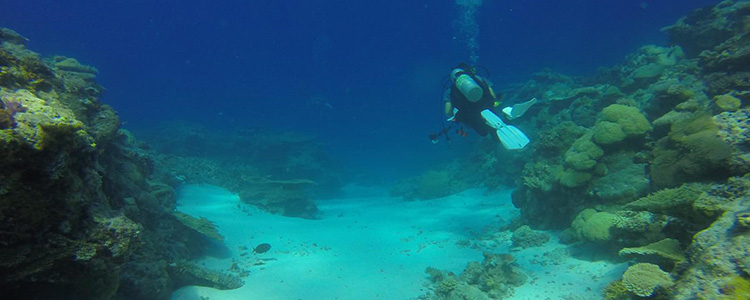
What are the main dangers of diving?
- Water pressure during descent: The ever-increasing pressure on your body as you dive deeper poses various health risks, especially for your ears. By "equalizing" your ears, you restore the pressure in your ear. If equalization/clearing is not successful, you run the risk of eardrum perforation, middle ear barotrauma, inner ear barotrauma, dizziness, and balance disorders.
- Water pressure during ascent: Ascending too quickly is one of the greatest dangers for divers due to decompression sickness.
- Oxygen depletion: Poor planning, bad luck on the way, increased breathing due to stress, or excessive exertion can all cause you to run out of oxygen while still underwater. If you return to the surface in a hurry, you also run an additional risk of decompression sickness.
- Poor diving equipment: Good quality, a good fit, and the right diving outfit for a specific type of dive can reduce various underwater risks. Diving with experienced instructors and through reputable diving schools reduces the chance of problems with your diving equipment.
- Hypothermia: You cool down twenty times faster underwater than on land. Since the water is almost always colder than your body temperature during diving, the risk is always present, even at tropical diving destinations and especially when diving at deeper depths.
- Getting stuck: For example, while wreck diving or exploring an underwater cave, you run the risk of getting caught on something or swimming into a trap.
- Whitewater conditions: Breaking waves and currents can crash you into rocks or the bottom. When you have to use more energy underwater, your oxygen will also deplete faster than average.
- Being run over by a boat: especially in places with slightly poorer visibility, a speeding boat can suddenly surprise you when you're near the surface.
- Reduced visibility due to swirling bottom debris: in many locations, this is a constant factor that makes diving more difficult and dangerous. It can also occur in clear water, for example, when a diver approaches the bottom too close with their flipper. The chance of losing your buddy or getting too close to a dangerous object increases in poor visibility.
- Dangerous marine life: not all underwater wildlife will be equally welcoming. Try not to touch animals and keep your hands away from potential hiding places.
What causes the most fatalities in diving?
- Drowning is the most common cause of death among divers. Drowning results from various causes, often related to poor planning, inadequate training, panic, and/or equipment failure or entrapment.
- Because diving is quite strenuous on your body, divers who suffer heart attacks account for a significant number of fatal diving accidents.
What is the waiting period before flying after your last dive abroad?
- Also, keep in mind that there should be sufficient time between your last dive and any flight. It is recommended to wait 24 hours after your last dive before boarding a plane.
- It is also recommended not to dive immediately after flying. This is due to your body's hydration levels. You can become somewhat dehydrated during a long flight, which increases the risk of decompression sickness while diving.
Is diving while pregnant dangerous?
- Do not dive if you are pregnant. There is strong evidence (based on animal testing) that diving can be harmful to the unborn fetus and increases the risk of decompression sickness.
- During pregnancy, the mucous membranes also swell, making it difficult to equalize, increasing your risk of severe earaches.
- In the Netherlands, the Working Conditions Act prohibits diving during work hours, for example, as a diving instructor. While these laws don't exist at every diving destination, it might be a good starting point to discuss this with your employer if you find yourself in this situation.
What are the dangers of surfing while traveling, and is kiting or windsurfing dangerous abroad?
What are the dangers of surfing while traveling, and is kiting or windsurfing dangerous abroad?
Dangers of surfing, kiting or windsurfing abroad
What are the dangers of surf sports abroad?
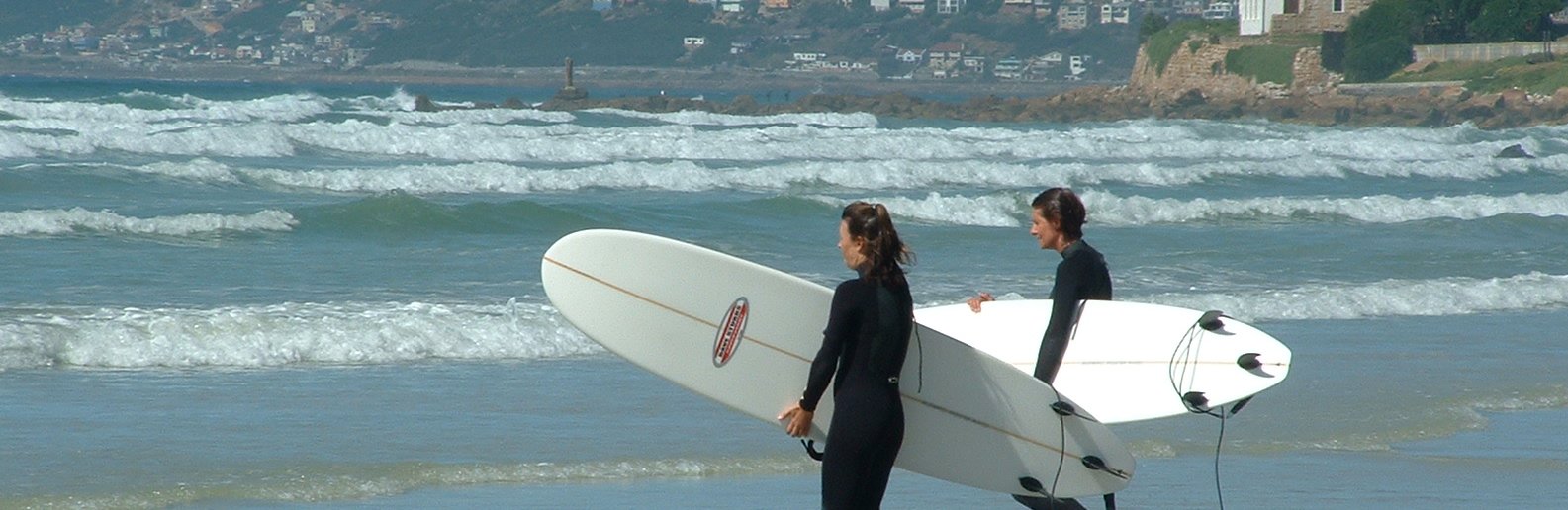
- Many of the dangers of surfing are similar to other water sports at sea: drowning, exhaustion, and hypothermia are all lurking, especially with poor preparation.
- Take the time to "read" the sea. Where are the waves breaking, where is the water flowing back (river!), how are other beachgoers and surfers behaving?
- Don't go out alone; make sure there are people around you who can help you or call for help if you get into trouble.
What are the dangers of surfing while traveling?
- Although waves can often look quite violent from the beach, experiencing a breaking wave while you're in the middle of one is an experience in itself.
- The brutal force of a breaking wave can slam you to the bottom and keep you underwater for quite a while, while you become disoriented by the churning water. The sharper the surface, the greater the risk of a fall. Protective clothing and surf shoes can prevent some of the damage. A fall on a firm sandy bottom can also be quite severe.
- Catching waves that exceed your surfboarding skills can seriously jeopardize your chances.
- Occasionally, a surfer is mistaken for a tasty morsel by a shark, for example. Surfers usually escape unscathed in these situations, but occasionally, serious and fatal injuries occur.
- Although the surfing community is often seen as "chill," it's important to be mindful of unwritten rules regarding who can catch which wave and when. There are also surf spots where local surfers try to ward off or chase away visitors.
What are the dangers of windsurfing and kitesurfing abroad?
- Especially for beginners, it can be quite difficult to estimate how far you can surf and still return safely. Exhaustion and hypothermia can strike while trying to surf back to shore in unfavorable winds. Especially in strong winds, it becomes increasingly difficult to maintain control, which can lead to collisions with other water sports enthusiasts, and when kitesurfing, someone can even be blown into the shore.
- Personal experience: there's a serious risk of a bruised ego if it turns out that combining kite flying and surfing isn't one of your talents.
Decompression sickness: what is it, how can you prevent it, and what can you do about it?
Decompression sickness: what is it, how can you prevent it, and what can you do about it?
What is decompression sickness?
- Decompression sickness occurs when gas bubbles form in your blood and tissues. These nitrogen bubbles develop when you ascend too quickly after a dive, especially if you've been underwater for a longer period of time and at a deeper depth.
- When you dive, your body is under increased pressure, and because of this extra pressure, more nitrogen dissolves in your blood and body. If you ascend too quickly or have an infection, your body can't release the nitrogen through breathing, and the dangerous bubbles develop.
- Decompression sickness is also called divers' disease or caisson disease.
Where does decompression sickness occur?
- You can get decompression sickness anywhere in the world.
- If you don't dive deeper than 6 meters, the risk of decompression sickness is very small.
What are the symptoms of decompression sickness?
- The effects and symptoms of decompression sickness depend on the location of the bubbles and the number of bubbles.
- Symptoms of decompression sickness can vary greatly and usually occur within minutes to hours after diving.
- Common symptoms include: joint and muscle pain, headache, dizziness, muscle weakness, tingling in the limbs, impaired thinking ability, or difficulty concentrating.
- In severe cases, and without appropriate treatment, paralysis, loss of consciousness, or even death can occur.
How to prevent decompression sickness abroad?
- Follow the rules and advice regarding the rate of ascent while diving and avoid surprises due to insufficient air supply.
- Make sure you are in good physical condition. Being overweight or underweight, dehydration, and fatigue increase the risk of decompression sickness.
- Do not dive if you are feeling unwell or have an infection.
- Diving in cold water and strenuous underwater exertion increase the risk of decompression sickness. Allow sufficient time between dives and avoid flying or high-altitude flights within 24 hours of your dive.
How do you treat decompression sickness and is divers' disease curable?
- Decompression sickness can be treated by breathing 100% oxygen. The high oxygen content allows the nitrogen to be released more quickly during breathing, reducing the chance of new air bubbles and shrinking existing air bubbles.
- For complete treatment, the diver is repressurized in a special decompression tank. In this chamber, the oxygen treatment continues, effectively simulating a slow ascent during a dive. This allows the nitrogen to be removed from your body at the correct rate and any air bubbles to dissolve.
- Always check the location of the nearest decompression tank when diving somewhere and check how you can be transported there as quickly as possible.