Travel to Scotland to backpack, study, intern, volunteer, work, or live as a digital nomad, expat or emigrant?

Image

Image

Image  Scotland

Image

Preparation & Packing

Packing list for Scotland, travel insurance for Scotland and taking your belongings

Packing list for Scotland, travel insurance for Scotland and taking your belongings

What to take to Scotland: brief

To pack and check:
  • Documents: a passport valid for your entire stay. Also check whether you need an Electronic Travel Authorisation (ETA) or visa and apply for one before departure if necessary. Always check the latest requirements for your nationality. Bring your travel insurance details and keep a copy of your documents both digitally and offline.
  • Money: Scotland uses the British pound. You can pay by debit or credit card almost everywhere. Cash is useful for small purchases and in remote areas. Scotland also has its own Scottish banknotes, which are a variation of the British pound. They are valid in Scotland but can sometimes be more difficult to use or may not be accepted elsewhere in the United Kingdom.
  • Clothing: the weather can change quickly, even in summer. Layers and a good waterproof jacket work best. In autumn and winter, a warm coat, thermal clothing, gloves, a hat and warm socks are also important. If you are visiting the Highlands or the islands, prepare especially well for wind, rain and lower temperatures.
  • Shoes: comfortable shoes for cities such as Edinburgh and Glasgow. If you plan to hike in the Highlands, on the islands, or through nature reserves, bring sturdy, waterproof hiking boots with good grip.
  • Toiletries and personal care: sunscreen for sunny days and your usual toiletries.
  • Packing and protection: a rain cover for your backpack and good, reusable waterproof bags for your phone and other belongings. For multi-day hikes, consider bringing extra protection for your clothing and electronics.
  • Insects and animals: insect repellent that is suitable for midges, the tiny biting flies Scotland is known for in summer. A tick remover is important if you plan to hike, camp or walk through long grass and woodland.
  • Outdoor essentials: a reusable water bottle, sunglasses, a cap or sun hat and a daypack. A headlamp is useful for camping and long hikes. Also bring a charged phone and, if needed, a power bank when visiting remote areas.
  • Nature and hiking: an offline hiking map or downloaded routes, for example for hikes in the Highlands. And good preparation; the weather can be brutal.
  • Medication and travel first aid: personal medication, plasters, blister plasters, painkillers and, if needed, oral rehydration salts (ORS) to prevent dehydration. A tick remover and something to relieve itching from insect bites are useful if you spend a lot of time outdoors.
  • Technology and equipment: a travel adapter for type G sockets. A power bank is useful for long hikes and days when you rely heavily on navigation or your camera.
To consider:
  • Waterproof trousers and gaiters for wet hikes through forests, hills and boggy areas.
  • Mobile phone reception is not always available in remote areas. A paper map and compass can therefore be useful for longer hikes.
  • A head net to protect against midges if you spend a lot of time in midge-prone areas during summer.
  • A thermos flask for hot drinks during long hikes or cold days on the coast.
  • Swimwear if you want to swim in lakes, rivers or the sea. Be prepared for icy-cold water!

Are there dangerous insects and animals in Scotland?

Are there mosquitoes in Scotland?
  • Yes, mosquitoes are found in Scotland, but for many travellers, the so-called midges are a bigger problem. These are tiny biting flies that are especially active during the warmer months. They are common in the Highlands, on the western islands and in damp areas with little wind.
  • They can appear in large numbers and cause considerable itching, but according to Scottish tourism information, they do not spread diseases. Ordinary mosquitoes can also occur, but mosquito-borne infections are uncommon in the United Kingdom.
  • Are you planning to hike, camp or spend long summer evenings outdoors? Bring a product specifically designed to repel midges, wear long sleeves and trousers, and consider a head net.
  • Read more about mosquitoes.
  • Read more about the use of DEET, as well as other ways to protect yourself against mosquitoes and insects.
Are there sand flies in Scotland?
Are there ticks in Scotland?
  • Yes, ticks are definitely found in Scotland, especially in forests, long grass, moorland, and other rural environments.
  • Ticks can transmit diseases such as Lyme disease, so protection is important.
  • Are you planning to hike, camp or cycle in the countryside? Wearing long clothing, tucking your trouser legs into your socks, and checking your skin and clothes afterward are important precautions. A tick remover is an essential addition to your travel first-aid kit if you spend a lot of time outdoors.
  • Read more about ticks.
  • Read more about protection against ticks and leeches.

Can you buy DEET or other insect repellents in Scotland?

  • Insect repellents are readily available at pharmacies, drugstores, outdoor shops and many larger supermarkets. In areas where midges are common, you can also find products specifically designed to repel them.
  • For a city break in Edinburgh or Glasgow, insect repellent is generally not necessary. If you are visiting the Highlands in summer, camping or doing a lot of hiking, a suitable midge repellent can be a lifesaver, as can a head net, which is available from outdoor shops.

Can you buy or bring a joint or weed into Scotland?

  • Although you may come across it here and there, cannabis is illegal for recreational use in Scotland. Possession, use, sale and import of cannabis can result in fines or even imprisonment.
  • Medicinal cannabis is permitted only under specific conditions, as are CBD products.
  • If you’re thinking of bringing cannabis with you into the country, then you’re taking quite a risk.

Health, Insurance & Safety

How does healthcare work in England and the United Kingdom, and what travel insurance, health insurance or expat insurance do you need?

How does healthcare work in England and the United Kingdom, and what travel insurance, health insurance or expat insurance do you need?

What is the quality of healthcare in England and the United Kingdom?

  • The healthcare system in the United Kingdom has been voted the best in the world for several years.
  • In various studies, England comes out on top in the categories of effectiveness, safety, coordination and patient-centredness.
  • The National Institute for Health and Clinical Excellence (NICE) determines the guidelines for the treatment of a specific condition in England. NICE also determines which care is reimbursed under the NHS and which is not.
  • In England, there are rules on whether or not hospitals charge parking fees to their clients. Among others, disabled people, people who have to visit an outpatient clinic frequently, parents of sick children and staff who work night shifts park for free.

How does the public healthcare system work in England and the United Kingdom?

  • The United Kingdom uses the National Health Service (NHS), a system in which the state provides for almost all the healthcare needs of its residents.
  • England, Northern Ireland, Scotland and Wales each have their own NHS systems for publicly funded healthcare.
  • Much NHS care is 'free', funded by taxes and government revenue. Residents pay little or no health insurance premiums, deductibles or additional costs.
  • Do not expect luxury with this (free) public care. Waiting lists are often quite long and planned targets are not met.
  • NHS care includes treatment by the GP (for basic care) and in hospital (for more specialised care, emergency care, care for people with psychiatric disorders). Ambulance transport (by road or by air) also falls under the NHS system.
  • Whether you are entitled to medicines on NHS prescription is determined in England by your right of residence, not by nationality.
  • Most patients do pay a modest contribution for medicines on prescription; a fixed amount per medicine (regardless of the value of your order).
  • You always need a prescription from a doctor for medicines, with the exception of painkillers and cold medication.
  • With a Prescription Prepayment Certificate (PPC) you can 'buy off' this contribution, which is worthwhile if you need the same medicine regularly. But not everyone actually pays this fee: exempt patients include those under 16 (18, if still in full-time education), over 60, with certain medical conditions, or on low incomes.
  • No charge is made anywhere in the UK for prescriptions administered in a hospital, by a doctor or in an NHS walk-in centre.

How does the public healthcare system work in England and the United Kingdom?

  • The private healthcare sector in England is relatively small; by far the largest part of care falls under the NHS.
  • The largest part of private care is 'plannable care'; that is to say that care in emergency situations almost always falls under the NHS. For example, if you unexpectedly have to be admitted to an intensive care unit, you will be transferred to an NHS hospital.
  • Private healthcare providers are increasingly entering into contracts with the NHS; for some procedures, you can also go to a private provider as an NHS insured person. And vice versa: as a private health insured person, you can sometimes also go to an NHS hospital for treatment. Reducing waiting lists is the main goal of these forms of cooperation.
  • For some treatments, the waiting lists under private care are a lot shorter than under NHS care.
  • Because there is a 'brake' on orthopaedic procedures and cataract operations under the NHS, people here more often opt for a private healthcare institution in combination with their own financing. Patients also more often end up at private care/private clinics for cosmetic procedures. Patients with private insurance outside London are often advised to opt for NHS treatment; private clinics are much more limited or have far fewer facilities (with some exceptions).
  • Because the NHS sector in England is so large, it is well known in England that surgery in private hospitals can be dangerous(er) due to inadequate equipment, lack of intensive care beds, inadequate staffing arrangements and poor medical administration. Of course, this does not apply to every private hospital.

How is the family doctor or general practitioner arranged in England and the United Kingdom?

  • In England, they use General Practitioners (GPs) for primary health care.
  • There are often multiple GPs associated with a GP practice.
  • It is common in England to choose a clinic, with or without specific facilities. Much less attention is paid to which specific GP you get. You always need a GP to refer you to specialists.
  • For care that you need in the evening, at night or at the weekend, you call a central call centre, which will then connect you to an on-call practice.
  • In England, you can choose your own GP. A simple form is sufficient; then you get to know the practice of your choice. You will then receive a National Health Service (NHS) card.

How is the dental care and dentist arranged in England and the United Kingdom?

  • If you have access to the NHS, minor dental procedures are reimbursed. You pay for extensive treatments yourself. Make sure you are well informed about what is and is not reimbursed.
  • Not every dental practice performs work for the NHS; so make sure you are well informed in advance whether you can go there if you are looking for NHS dental care. You can easily find your nearest dental practice via the NHS website.

How is pregnancy and maternity care arranged in England and the United Kingdom?

  • In England, there is a midwife; a combination of midwife and nurse.
  • A home birth is also certainly possible in England, although relatively more people in England give birth in hospital. And the caesarean section is very common.
  • After a home birth, or after returning home from a hospital birth, the community midwife will visit periodically for medical checks of mother and child. If necessary, you can also arrange a 'pregnancy and childbirth coach' yourself; there is no 'maternity nurse'.
  • Breastfeeding is very common in England. Breastfeeding in public is also fine: many shops have special areas for mothers, so that you can easily feed.

How safe or unsafe is a trip or stay in England and the United Kingdom?

What should you pay attention to in terms of safety in England and the United Kingdom?

  • The UK is generally a safe country, especially compared to other countries. However, there are a few things to keep in mind.
  • Pickpocketing and bike theft are common in major cities such as London, Manchester and Birmingham, especially in tourist hotspots. Keep your phone and wallet out of sight and make sure your bike is locked.
  • Brits love a night in the pub, but drunk people can be noisy and unpredictable around closing time.
  • The UK doesn’t have extreme weather conditions, but be prepared for rain – always. If you’re walking in the mountains, such as the Scottish Highlands, make sure you wear good shoes and warm clothing, as the weather can change quickly.

What should you look out for in terms of diseases in England and the United Kingdom?

  • Tap water is safe to drink and food hygiene is very good.
  • There are virtually no major health risks. However, as in other northern countries, the British climate, particularly the short days and limited sunshine in winter, can contribute to seasonal affective disorder (SAD) or the winter blues. Make sure you have plenty of daylight or consider a daylight lamp in your home. Mental health services are also available through the NHS, although there can be some waiting times.

What should you pay attention to when it comes to traffic in England and the United Kingdom?

  • In the UK people drive on the left side of the road, which can take some getting used to for many expats, especially at roundabouts. With a bit of practice, you’ll soon get used to it!
  • The UK thankfully has relatively low numbers of road accidents.
  • Check the signs – in cities, the speed limit is often 30 miles per hour (48 km/h).
  • It is mandatory to have car insurance. If you are importing a car, make sure your vehicle meets UK standards.
  • Look right when crossing the road, especially if you are used to right-hand traffic – this is crucial for pedestrian safety.
  • Cycling in the UK is becoming increasingly popular, especially in cities such as London. It can be quite hectic though, so wear a helmet and take care!
  • Trains, buses and the Underground are safe and well-run. Just be sure to keep an eye on your belongings, especially during peak hours.

What are the best insurance options for backpacking, traveling, doing an internship, studying, volunteering, or working in England and the United Kingdom?

What types of insurance should you get if you're planning to emigrate, work as an expat, or live in England and the United Kingdom?


What insurance can you choose as backpacker, emigrant, expat, intern, nomad, student, volunteer or traveler abroad?

What are the main international insurances through JoHo and WorldSupporter for activities, backpacking or travel to or from Scotland

Advice and decision support
Insurance

What are the main international insurances through JoHo and WorldSupporter for emigrants, expats and nomads in Scotland

Advice and decision support
Insurance
Why get specific insurance when going abroad: per activity abroad
What is travel insurance, and why take out specific insurance when you go on a trip or vacation?

What is travel insurance, and why take out specific insurance when you go on a trip or vacation?

What is travel insurance to insure your trip or vacation?

  • Travel insurance is insurance that provides coverage for risks during a trip or vacation abroad. This mainly concerns loss of or damage to your luggage, medical assistance in the event of accidents, for example, or repatriation costs if you need to be transported back to your home country urgently. In some cases, travel insurance coverage also applies in your home country.
  • With continuous travel insurance, you are insured for all your trips throughout the year.
  • With temporary travel insurance, you take out insurance for each trip for the duration of the trip.
  • Cancellation insurance reimburses (all or part of) the travel sum, cancellation or accommodation costs if you have to cancel or interrupt your vacation.

Why should you take out travel insurance for a short trip, vacation, or long-distance trip?

  • Travel insurance can provide coverage in the event of an accident or emergency while you are away.
  • Travel insurance can provide coverage for damage and accidents during the adventurous or sporting activities you are going to do.
  • Travel insurance can continue to provide coverage if your Dutch basic health insurance no longer provides coverage, or if the damage is only reimbursed at Dutch cost price.
  • Travel insurance can provide coverage in the event of damage, loss, or theft of your luggage.
  • Travel insurance can provide coverage if you are held liable for damage you cause to other people or their property.
  • Travel insurance can provide coverage if you have to return home early because something has happened to you or your immediate family.

What is important to insure when you are going to travel?

  • That you have insurance that is valid in the countries where you are going to travel and possible work.
  • That you are adequately insured for the sports and activities you are going to participate in during your full period abroad
  • That you are insured for emergency assistance and early return if something happens to you or your immediate family.
  • That your medical expenses are insured up to the actual cost and not just for the standard costs. The costs per medical treatment vary greatly between countries.
  • That you insure your luggage and take sufficient precautions against theft or damage.
  • That you are well insured against personal liability.
  • That you are well insured in case of accidents.
  • That you only insure yourself for legal assistance if there is an immediate reason to do so, unless coverage is already automatically included in the insurance.
  • That you pay close attention to choosing the right coverage when performing work or voluntary work during your world trip.

What insurance do you need for a trip or vacation?


What is round the world travel insurance or long-term travel insurance, and why take out specific insurance when you go abroad?

What is round the world travel insurance or long-term travel insurance, and why take out specific insurance when you go abroad?

What is round the world travel insurance or long-term travel insurance?

  • Round the world travel insurance means that you take out insurance that continues to provide coverage during all your activities abroad, and which is specifically intended for those who travel for long periods of time, such as world travelers, globetrotters, and nomads.

Why should you take out specialized travel insurance for a long trip abroad?

  • Round the world travel insurance provides coverage for a much longer trip than regular travel insurance.
  • World travel insurance is specifically intended for longer trips, whereas regular travel insurance may offer coverage on paper, but in practice handles it differently.
  • World travel insurance is suitable for many types of activities, ranging from high-altitude trekking to more risky sports.
  • World travel insurance continues to provide coverage if you start working during your trip, whether planned or unplanned. If you did not take out insurance before departure that allows you to work, there is no guarantee that you will be able to take out insurance that provides coverage while abroad.
  • Long-term travel insurance continues to provide coverage when your home country's health insurance no longer does.
  • Worldwide travel insurance also covers your medical expenses up to the actual cost, and not just for the standard costs. The costs per medical treatment vary greatly between countries.
  • Worldwide travel insurance can also continue to provide coverage if negative travel advice is issued.

What is important to insure when you are going to travel around the world?

  • That you have insurance that is valid in the countries where you are going to travel and possibly work.
  • That you are adequately insured for the sports and activities you are going to participate in during your full period abroad
  • That you are insured for emergency assistance and early return if something happens to you or your immediate family.
  • That your medical expenses are insured up to the actual cost and not just for the standard costs. The costs per medical treatment vary greatly between countries.
  • That you insure your luggage and take sufficient precautions against theft or damage.
  • That you are well insured against personal liability.
  • That you are well insured in case of accidents.
  • That you only insure yourself for legal assistance if there is an immediate reason to do so, unless coverage is already automatically included in the insurance.
  • That you pay close attention to choosing the right coverage when performing work or voluntary work during your world trip.

What insurance do you need when backpacking abroad?

What is backpack insurance, and why take out specific insurance when you go backpacking abroad?

What is backpack insurance, and why take out specific insurance when you go backpacking abroad?

What is backpacking insurance and travel insurance for backpackers?

  • Backpacking insurance for backpackers means that you take out insurance that continues to provide coverage during all your activities abroad and is specifically intended for those who are traveling for a long time, traveling independently, or making frequent use of local transportation.

Why should you take out travel insurance specifically for backpacking?

  • Travel insurance for backpacking can provide coverage in the event of an accident or emergency while backpacking.
  • Travel insurance for backpacking can provide coverage for damage and accidents during your adventurous or sporting activities.
  • Travel insurance for backpacking can continue to provide coverage if your Dutch basic health insurance no longer provides coverage, or if the damage is only reimbursed at Dutch cost price.
  • Travel insurance for backpacking can provide coverage in the event of damage, loss, or theft of your luggage while backpacking.
  • Travel insurance for backpacking can provide coverage if you are held liable for damage you cause to other people or their property.
  • Travel insurance for backpacking can provide coverage if you have to return home early because something has happened to you or your immediate family while backpacking.

What aspects are important to insure when backpacking abroad?

  • The duration of your trip: so that you are also covered during a very long backpacking trip, or can extend your coverage if you want to stay longer
  • The activities during your trip: so that you can also participate in all kinds of sports and adventure activities that are excluded from travel insurance
  • Coverage of your medical expenses during your trip: so that you are always covered, even if you go to work or if the costs in the event of an accident are higher than the Dutch rate
  • Coverage for natural disasters and war during your trip: so that you don't have to return home immediately with your tail between your legs every time the Dutch government issues negative travel advice
  • Your insurer's specialization: so that your insurer specializes in backpacking trips or long stays abroad, and doesn't treat you like an “all-inclusive sunglasses claimant.”

What insurance do you need when backpacking abroad?

What is insurance for working abroad, and why do you need specific insurance if you are going to do paid work?

What is insurance for working abroad, and why do you need specific insurance if you are going to do paid work?

What is insurance for working abroad?

  • Insuring yourself for working abroad means taking out insurance that continues to provide coverage during your paid work abroad.

Why take out insurance, and when is normal travel insurance no longer sufficient?

  • There may be several reasons why you need separate insurance for paid work abroad.
  • During your work, local employers generally offer no or limited insurance that does not provide sufficient coverage.
  • The risk of accidents is sometimes greater during your work, for example because you are doing work with which you have little experience or because of the nature of the work.
  • During specific work abroad, additional requirements may apply as soon as you start performing work that involves additional risks. Only special insurance policies offer coverage during this type of work.
  • During work, internships, or volunteer work abroad where you receive a salary or compensation (for example, food or housing), your local health insurance coverage will normally lapse. You will then need special insurance to remain insured for illness and accidents.
  • Standard travel insurance policies generally do not provide sufficient coverage to apply for a work visa or working holiday visa.
  • Standard travel insurance policies generally only cover stays abroad for a limited number of days. If your trip or stay abroad exceeds the maximum number of days, this generally means that there will be no coverage for the entire travel period.
  • Standard travel insurance policies generally only provide coverage for recreational travel without study, internship, or work. If you engage in activities other than recreational activities, this generally means that you will no longer be covered for the entire travel period.

What should you pay attention to in your insurance policy if you are going to work abroad?

  • Make sure you have insurance that is valid in the area where you will be traveling and working.
  • Make sure you are adequately insured for the sports and activities you will be participating in.
  • That you are insured for emergency assistance and early return if something happens to you or your immediate family.
  • That your medical expenses are insured up to the actual cost and not just for the standard costs. The costs per medical treatment vary greatly between countries.
  • That you insure your luggage and take sufficient precautions against theft or damage.
  • That you are well insured against personal liability.
  • That you are well insured in case of accidents.
  • That you insure yourself for legal assistance if there is an immediate reason to do so, unless the coverage is already automatically included in the insurance.
  • That you take care to choose the right coverage when working in healthcare, with wild animals, and with dangerous machinery.

What insurance do you need to work abroad?

What is insurance for working with animals abroad, and why do you need specific insurance for jobs, internships, and volunteer work abroad?

What is insurance for working with animals abroad, and why do you need specific insurance for jobs, internships, and volunteer work abroad?

What is insurance for working with animals abroad?

  • Insuring yourself for working abroad with animals means taking out insurance that continues to provide coverage during your paid, unpaid, or internship work abroad, where minor or major risks are involved.

Why take out insurance, and when is normal travel insurance no longer sufficient?

  • There may be several reasons why you need separate insurance for work abroad.
  • During specific work abroad, additional requirements may apply as soon as you start performing work that involves additional risks. Only special insurance policies offer coverage during this type of work. Almost all standard insurers exclude working with animals from coverage.
  • The risk of accidents is sometimes greater during your work, for example because you are doing work with which you have little experience or because of the nature of the work. All over the world, there are reserves, rescue centers, and zoos where you can roll up your sleeves as a veterinarian, intern, or volunteer. Working with animals or wildlife is not without danger. No matter how cute they may look, or how tame they may behave. All animals can suddenly bite viciously or lash out with a claw or beak. Not only can this result in nasty injuries, but it can also transmit diseases that you would rather not have, and certainly not abroad.
  • During work, internships, or volunteer work abroad where you receive a salary or compensation (for example, food or housing), your local health insurance coverage will normally lapse. You will then need special insurance to remain insured for illness and accidents.
  • During your work, local employers generally offer no or limited insurance that does not provide sufficient coverage.

What should you pay attention to in your insurance policy if you are going to work abroad?

  • Make sure you have insurance that is valid in the area where you will be traveling and working.
  • That you have insurance that provides sufficient coverage for the work you will be performing.
  • Make sure you are adequately insured for the sports and activities you will be participating in.
  • That you are insured for emergency assistance and early return if something happens to you or your immediate family.
  • That your medical expenses are insured up to the actual cost and not just for the standard costs. The costs per medical treatment vary greatly between countries.
  • That you insure your luggage and take sufficient precautions against theft or damage.
  • That you are well insured against personal liability.
  • That you are well insured in case of accidents.
  • That you insure yourself for legal assistance if there is an immediate reason to do so, unless the coverage is already automatically included in the insurance.

Which insurance do you need for working, an internship, or volunteering with animals abroad?

What is volunteer insurance, and why should you take out specific insurance if you are going to do volunteer work?

What is volunteer insurance, and why should you take out specific insurance if you are going to do volunteer work?

What is insurance for volunteering abroad?

  • Insuring volunteer work abroad means taking out insurance that continues to provide coverage while you are working as a volunteer abroad

Why should you take out specialized travel insurance for voluntary work abroad?

  • There may be several reasons why you need separate insurance when volunteering abroad.
  • During specific activities abroad, additional requirements may apply if your work involves extra risks. Only specific insurance policies offer coverage during these activities.
  • The risk of accidents is sometimes higher during your work, for example because you are doing work you have little experience with or because of the nature of the work.
  • Local projects or employers generally offer no or limited insurance that provides insufficient coverage during your work.
  • When volunteering abroad and receiving minor financial compensation (or, for example, food or housing), your home country's health insurance coverage will potentially lapse. You will then need special insurance to remain insured for illness and accidents.
  • Regular travel insurance policies generally provide coverage for trips of a limited number of days. If your trip or stay abroad exceeds the maximum number of days, this generally means that for the entire travel period, you will not be covered.
  • Regular travel insurance policies generally only provide coverage for recreational travel without voluntary work activities. If you engage in activities other than recreational activities (such as volunteer work), this generally means that for the entire travel period, you will not be covered.

What is important to insure when you are going to work as a volunteer abroad?

  • That you have insurance that is valid in the country or countries where you are going to travel and volunteer.
  • That you are adequately insured for the sports and activities you are going to participate in during your period abroad
  • That you are insured for emergency assistance and early return if something happens to you or your immediate family.
  • That your medical expenses are insured up to the actual cost and not just for the standard costs. The costs per medical treatment vary greatly between countries.
  • That you insure your luggage and take sufficient precautions against theft or damage.
  • That you are well insured against personal liability.
  • That you are well insured in case of accidents.
  • That you only insure yourself for legal assistance if there is an immediate reason to do so, unless coverage is already automatically included in the insurance.
  • That when performing work in healthcare, with wild animals, and with dangerous (agricultural) machinery, you take care to choose the right coverage.

What insurance do you need when volunteering abroad?

Why should you take out specialized travel insurance for an internship abroad?

Why should you take out specialized travel insurance for an internship abroad?

What is insurance for an internship abroad?

  • Insuring an internship abroad means taking out insurance that continues to provide coverage during your internship abroad
  • Insurance for internships abroad are also referred to as internship insurance. This internship insurance is specifically for when you go abroad for a long period of time to work as an intern, take courses, or conduct research abroad.

Why should you take out specialized travel insurance for an internship abroad?

  • There may be several reasons why you need separate insurance for an internship abroad.
  • During internship activities abroad, additional requirements may apply as soon as you start performing work that involves additional risks. Only specific insurance policies offer coverage during these activities.
  • During your internship, the risk of accidents is sometimes greater, for example because you are doing work with which you have little experience or because of the nature of the work.
  • During your internship, local employers generally do not offer insurance, or offer limited insurance that does not provide sufficient coverage.
  • During an internship abroad where you receive financial compensation (or, for example, food or accommodation), your home country's health insurance coverage will potentially lapse. You will then need special insurance to remain insured for illness and accidents.
  • Regular travel insurance policies generally provide coverage for trips of a limited number of days. If your trip or stay abroad exceeds the maximum number of days, this generally means that for the entire travel period, you will not be covered.
  • Regular travel insurance policies generally only provide coverage for recreational trips without work activities.

What is important to insure when you are going to be an intern abroad?

  • That you have insurance that is valid in the area where you will be traveling and doing your internship.
  • That you are adequately insured for the sports and activities you will be participating in.
  • That you are insured for emergency assistance and early return in case something happens to you or your immediate family.
  • That your medical expenses are insured up to the actual cost (what it actually costs), and not just for the standard costs. The costs per medical treatment vary greatly between countries.
  • That you insure your luggage and take sufficient precautions against theft or damage.
  • That you are well insured against personal liability and, preferably, also for liability during your internship.
  • That you are well insured in case of accidents.
  • That you insure yourself for legal assistance if there is an immediate reason to do so, unless the coverage is already automatically included in the insurance.
  • Make sure you choose the right coverage for internship work in healthcare, with wild animals, or with dangerous machinery!

Check out more about international insurances

What is insurance for studying abroad, and why should you take out specialized travel insurance for your education abroad?

What is insurance for studying abroad, and why should you take out specialized travel insurance for your education abroad?

What is insurance for studying abroad?

  • Insurance for studying abroad means that you take out insurance that continues to provide coverage during your studies, your education, and your related activities abroad.
  • Insurance for studying abroad is also referred to as study insurance. This study insurance is specifically for when you go abroad for a long period of time to take courses, study, or conduct research abroad.

Why should you take out specialized travel insurance for a study abroad?

  • Study insurance is specifically designed for studying abroad, whereas regular travel insurance policies may offer coverage on paper but handle this situation differently in practice.
  • Study insurance offers coverage for longer stays than regular (vacation) travel insurance.
  • Study insurance is also suitable for many types of activities, ranging from various sports to hiking at high altitudes.
  • Study insurance continues to provide coverage if you start working during your trip, whether planned or unplanned. If you have not taken out insurance before departure that allows you to work, there is no guarantee that you will be able to take out insurance abroad that provides coverage.
  • Study insurance continues to provide coverage if your own country's health insurance no longer provides coverage.
  • Student insurance also covers your healthcare costs above the rates in your own country; with regular insurance, you have to pay the extra costs yourself.
  • Student insurance can also continue to provide coverage if (study) visa issuers impose additional requirements on how you insure yourself, for example if you are going to the US and applying for a J-1 visa.
  • Student insurance continues to provide coverage if you are staying abroad for a longer period of time and want to visit your own country in between.

What is important to insure when you are going to study abroad?

  • That you have insurance that is valid in the country or countries where you are going to travel and work.
  • That you are adequately insured for the sports and activities you are going to participate in during your period abroad
  • That you are insured for emergency assistance and early return if something happens to you or your immediate family.
  • That your medical expenses are insured up to the actual cost and not just for the standard costs. The costs per medical treatment vary greatly between countries.
  • That you insure your luggage and take sufficient precautions against theft or damage.
  • That you are well insured against personal liability.
  • That you are well insured in case of accidents.
  • That you only insure yourself for legal assistance if there is an immediate reason to do so, unless coverage is already automatically included in the insurance.
  • That you pay close attention to choosing the right coverage when performing work alongside your studies.

Check out more about international insurances

What is an expat insurance or emigration insurance, and why specifically take out insurance if you are going to do move abroad?

What is an expat insurance or emigration insurance, and why specifically take out insurance if you are going to do move abroad?

What is an expat insurance?

  • Expat insurance is insurance that continues to provide coverage if you go to work abroad for a local or international employer for an extended period of time.
  • Expat insurance is not only intended for expats, but for anyone who has a more permanent job abroad.

What is an emigration insurance, or insurance for moving and living abroad?

  • Emigration insurance is an insurance that continues to provide coverage if you move abroad permanently or for an indefinite period of time.
  • Emigration insurance is not only intended for emigrants, but for anyone who leaves their home country for an extended period of time and does not intend to return in the foreseeable future.

Why should you take out specialized insurance for emigration or working as an expat abroad?

  • Emigration or expat insurance not only provides coverage for acute assistance in the event of illness or accident abroad, such as travel insurance, but can also provide coverage for existing conditions and ailments or non-urgent care.
  • Emigration or expat insurance does not require you to maintain valid health insurance in your home country.
  • Emigration or expat insurance provides coverage for preventive care or costs related to pregnancy and childbirth.
  • Emigration or expat insurance also provides coverage for long-term treatments and chronic conditions without you having to return to your home country.
  • Emigration or expat insurance often has no restrictions on the duration of the insurance, unlike travel insurance.
  • Emigration or expat insurance usually maintains coverage in cases such as negative travel advice or acts of war.
  • Emigration or expat insurance offers various solutions in the areas of disability, home and household insurance, goods transport, and liability.

What is important to insure when you are going to move abroad?

  • That you have insurance that is valid in the country or countries where you are going to live and/or work.
  • That you are adequately insured for the sports and activities you are going to participate in during your period abroad
  • That you are insured for emergency assistance and early return if something happens to you or your immediate family.
  • That your medical expenses are insured up to the actual cost and not just for the standard costs. The costs per medical treatment vary greatly between countries.
  • That you are well insured against personal liability.
  • That you are well insured in case of accidents.
  • That you pay close attention to choosing the right coverage when performing work with additional health risks

When can you also live abroad for a longer period of time with travel insurance?

  • There are also special expiring travel insurance policies that provide coverage without you having valid health insurance in your home country, however, these travel insurance policies are not intended for emigration or expats, but for stays outside your home country of up to a few years, for study, temporary work, volunteer work, and longer trips.
  • See the information at International Insurances for backpacking and travel abroad

What insurance do you need for emigration or working as an expat abroad?

International insurance through JoHo Insurances and JoHo WorldSupporter

International insurance through JoHo Insurances and JoHo WorldSupporter

Image

Table of content

  • Why should you take out insurance through the JoHo Foundation when you go abroad?
  • Insuring activities abroad:
    • internships, studying, volunteer work or paid work
    • backpacking, holiday, travel or round the world
    • emigration, living abroad, working as expat
  • Insurances for abroad: per insurance 
  • Insurances for abroad: per organization
  • How healthcare works
......Read more on this page
Insuring, troubleshooting and safe travel abroad

Insuring, troubleshooting and safe travel abroad

Image
Table of contents
  • Why get specific insurance when going abroad?
  • How to survive disasters abroad ?
  • How to insure activities abroad?
  • Which Insurances apply for internships, staying, studying, volunteer work or paid work abroad?

Image

Reading & Remembering

England & United Kingdom: Updates & Travel

England & United Kingdom: Updates & Travel

Travel in England?

  • Who doesn't love London? English humor and that wonderful language. It's only an hour's flight, but you step right into another world. The British do have something typical: a different driving direction, old-fashioned double-deckers and the peculiar names of their agents. The country itself also has plenty to explore: from rugged nature in Scotland to cozy college towns throughout the country.
  • Dive into one of the many cozy pubs.
  • Why so many tourists go to see a pair of upright stones every year is a mystery. Probably because Stonehenge is imposing and vastly ancient.
  • Go hiking in the Cairngorms National Park to learn about the English countryside. With mountains, lakes and vast forests.
  • The coastal strip in the south is often quite warm, with palm trees even common. If the English summer stays dry for once, it is a wonderful place for a beach vacation.
  • Isle of men is an island with one of the most rugged landscapes in England that is best viewed from a train. You can also see dolphins and sharks here between mid-May and mid-August.
  • London: Hyde park, London Eye, Big Ben, Canary Warf, Greenwich, 10 Downing Street, Oxford Street, Picadilly Circus, House of Parliament, Tate Modern, National Museum, Madame Tussauds, Westminster Abbey. Need we say more?
  • The highlight of hilly Edinburgh is Edinburgh Castle. This castle comes across as so fairytale-like that J.K.Rowling read from her Harry Potter books there. The botanical garden, zoo and city park (with squirrels coming to eat out of your hand) show that Edinburgh is a green city.
  • Oxford: in addition to being home to one of the best universities in the world, Oxford is also booming and a fun college town.
  • Be prepared that the gloomy weather can sometimes spoil the fun considerably.
  • Driving on the left is quite tricky if you're not used to it.
  • Miles, inches, yards, pounds.... You have to convert everything all the time.

Updates England

  • Electronic Travel Authorisations (ETAs) are being introduced worldwide for visitors to the UK who do not currently need a visa for short stays, or who do not already have a UK immigration status.
  • Eligible Europeans can apply for an ETA and will need an ETA to travel from 2 April 2025.
  • Eligible non-Europeans already need an ETA to travel to the UK.
  • An ETA is a digital permission to travel – it is not a visa and does not permit entry into the UK – it authorises a person to travel to the UK.
  • Applying for an ETA is quick and simple. Visitors should apply in advance, see the link (ETA)below.
  • More about England, updates and contributions, see also the link below.
England & United Kingdom: selection of contributions by WorldSupporters - Bundle

England & United Kingdom: selection of contributions by WorldSupporters - Bundle

Content about England & United Kingdom shared by WorldSupporters

Wales: Britain's hidden gem of waterfalls, wild beaches, ancient stories and dragons

Wales: Britain's hidden gem of waterfalls, wild beaches, ancient stories and dragons

Image
Two weeks of hiking, magical forests, stunning castles, spectacular coastlines and unexpected discoveries in a country that deserves far more attention.

I have just spent two weeks exploring this beautiful corner of Great Britain, and I totally fell in love with it.

Every day brought another hike, another waterfall, another stretch of coastline or another forest that seemed to have come straight out of a fairytale. It felt a bit like being back in Tasmania (perhaps a bit more barren), but this time closer to home. Dramatic landscapes, beautiful beaches and little moments of unexpected beauty around almost every corner. But that wasn't all. This time, I also got to experience the culture through its amazing castles, pubs and old bridges. And then there were the people: genuinely kind, welcoming and happy to share a little of their country with this curious visitor.

Wales has all the ingredients for an unforgettable trip, especially if you love the outdoors. Yet somehow, it often sits in the shadow of its better-known neighbours, England and Scotland. I wonder if that's why I liked it even more – it felt like a secret that was just for me.

But my interest in Wales actually started long before I arrived here. And, rather unexpectedly, it began in Japan.

From Japan to Wales

A few years ago, I did an exchange semester in Japan, during which I attended a course called English Celts and The Lord of the Rings. Not exactly the sort of course you would expect to find in Japan, but that's what made it so intriguing. I was there to broaden my biology horizons a bit, so why not?

Our teacher was Welsh, maybe the most Welsh person you can imagine. Think long beard, thick accent, and a man who told me he lived in a house under a stone bridge! Through his stories, we explored Celtic history, folklore, mythology and the fascinating connections between these ancient traditions and the world J.R.R. Tolkien created.

We talked about legends, ancient peoples, mysterious landscapes and the cultural heritage that has survived through centuries of change. And, of course, there was music. We even played music together in a pub. Something about his enthusiasm for his country stayed with me throughout the years.

I became curious about Wales: its history, its language, its traditions and the stories that seem to live in the landscape itself.

So, ten years later, I finally came to explore it for myself.

First things first: why is it called Wales?

The English name Wales comes from an Old English word, Wealas, which was used to describe foreigners or people who spoke a different language. The Anglo-Saxons used it to refer to the Celtic-speaking Britons, the Welsh. It's quite an interesting explanation: the name by which the country is known in English essentially came from what outsiders called its people.

It is therefore not surprising that the Welsh also have their own name for their country: Cymru, pronounced roughly Kum-ree. The people are called Cymry. Both are believed to derive from an ancient Brittonic word meaning something along the lines of fellow countrymen or compatriots. One name describes how others saw the Welsh, while the other reflects their own sense of belonging.

The Welsh language is also still a very important part of Welsh identity.

A language that refused to disappear

Welsh, or Cymraeg, is one of Europe's oldest living languages and belongs to the Celtic branch of the Indo-European language family. More specifically, it is a Brittonic language, related to Breton, spoken in Brittany in France, and Cornish, from Cornwall. Its roots go back many centuries, to the Celtic languages spoken across Britain long before English became dominant.

Over the centuries, Wales experienced Roman occupation, invasions, changing kingdoms and increasing English political control. The conquest of Wales by Edward I in the late 13th century was a major turning point. Later, the Laws in Wales Acts of the 16th century formally incorporated Wales into the English legal and administrative system.

The Welsh language also faced enormous pressure, particularly during the 19th and 20th centuries, when English became increasingly dominant in education, public life and everyday communication. Something that is still happening in Wales, but also in other countries around the world (if you're interested in these things, look into "the loss of language diversity").

But today, Welsh is an official language alongside English, and you see it everywhere: on road signs, in place names, on buildings and in everyday conversations. In some communities, particularly in the north and west, it is still very much the language of daily life.

It's awesome that a language with such deep roots is still being spoken by young and old, taught and celebrated. It gives this place an even more fairytale-like vibe.

Why does Wales have a dragon on its flag?

One thing you certainly won't miss in Wales is the dragon. The Welsh flag, known as Y Ddraig Goch (the Red Dragon), features a red dragon against a green and white background. But why a dragon?

The story goes back centuries, mixing history, mythology and national identity.

One of the best-known legends appears in Geoffrey of Monmouth's 12th-century account of British history. It tells of a Celtic king named Vortigern, who wanted to build a castle on a hill called Dinas Emrys. However, every time the foundations were laid, they mysteriously collapsed.

A young boy named Emrys (you might guess who this is, if you're into folklore) revealed that two dragons were sleeping beneath the hill in an underground lake, causing the foundations to collapse. Vortigern believed the little boy, as there was something magical about him. So he dug into the hill, and there it was: a lake with two sleeping dragons, one red and one white. When the dragons were released, they fought fiercely. Eventually, after a long battle, the red dragon defeated the white one.

The story came to represent the struggle between the Britons and the invading Saxons, with the red dragon becoming a powerful symbol of Welsh identity and resistance.

The dragon was used as a military emblem long before the modern flag appeared. Henry Tudor, who became Henry VII in 1485, also used the red dragon, combining it with the green and white colours associated with the Tudor dynasty.

And in case you fancy a pub visit while in Wales, here's a little flag-related question for your next pub quiz:

Which other national flag in the world features a dragon?

The answer is Bhutan! Its flag features a white dragon, known as Druk, the Thunder Dragon. So Wales and Bhutan are two rather unusual members of the dragon flag club.

A short history of Wales

Long before the modern country existed, this part of Britain was home to Celtic-speaking peoples, followed by Roman occupation and centuries of shifting kingdoms and borders. After the Romans left Britain, several Welsh kingdoms emerged. Their rulers fought to defend their territories and identities against the expanding Anglo-Saxon kingdoms to the east.

Later came the Norman influence, the campaigns of Edward I and the construction of the enormous castles that still dominate parts of the Welsh landscape today.

Castles such as Caernarfon, Conwy and Harlech are reminders of a complicated past, when power, independence and identity were constantly being contested. But Wales is not simply a story of battles and conquest. It is also a country of poetry, music, storytelling and a strong connection to the land.

Its folklore is full of giants, fairies, magical creatures and mysterious places. The medieval Welsh tales collected in the Mabinogion are some of the most fascinating examples of Welsh literature, containing themes that have inspired storytellers for generations.

Perhaps this is why some of the forests and mountains felt so magical to me. Once you know a little about the stories associated with this land, it becomes quite easy to let your imagination wander.

Waterfalls, fairytale forests and beaches that take your breath away

While it was the folklore and stories that initially drew me here, it was the hiking that left me in awe. I came here for a hiking course, so I ended up hiking every day, and I never seemed to run out of places to discover. The landscape has so much to offer: mountains and rolling green hills, ancient woodlands, rivers, waterfalls and some of the most beautiful coastline in Britain.

The rivers and waterfalls nestled among the beautiful autumn leaves were among my favourite discoveries. There is something incredibly peaceful about walking through a woodland and suddenly hearing the sound of rushing water before a waterfall appears through the trees.

Some are hidden away in deep, moss-covered forests, where the light filters through the branches and everything feels wonderfully untouched. Others are roaring and seem almost unreal, with enormous trees, twisting roots and carpets of green. Fairytale forests is perhaps the best description I can give them.

But Wales also has an extraordinary coastline, with long stretches of golden sand, dramatic cliffs and turquoise water on a sunny day. Some beaches are so beautiful that you could easily imagine yourself somewhere much further south. There is a wonderful sense of space, too. You can walk for miles, breathe in the fresh sea air and sometimes feel as though the entire coastline belongs to you, the seals and the dolphins.

Wildlife is another part of the experience. It's not a safari country, but if you're lucky, you can see puffins along the coast, wild Carneddau ponies and goats in the mountains, and squirrels running around in the forests.

For anyone who loves hiking, nature and exploring beyond the obvious tourist routes, Wales is absolutely amazing.

The people of Wales

I've found that if you want to get to know a place, you have to get to know its people. Travelling should, in my opinion, never just be about ticking off boxes, but also about showing an interest in the local way of life and the people who take care of the land you're visiting. You can visit the most spectacular place in the world, but it is often the people you meet who make the experience memorable.

One thing that really stood out during my time in Wales was how kind and welcoming people were. From little conversations along walking trails to encounters in villages and pubs, I repeatedly experienced genuine warmth and interest. It makes travelling so much more special when you feel that people are happy you have come to discover their home.

Part of the reason Wales feels special to me is that it seems to have a strong identity, a rich cultural heritage and a sense of place that feels very much alive, while still appreciating and showing warmth towards visitors.

So, is Wales Britain's hidden gem?

For me, it is, alongside Scotland, because I love that country too, haha. Wales exceeded my expectations and I can't wait to come back. It's also only about an eight-hour drive or train ride from the Netherlands, which is a nice bonus.

All in all, Wales is not simply a beautiful part of Great Britain. It is a country with its own language, stories, traditions and character. A place where ancient legends meet wild landscapes, where a red dragon flies proudly on the flag, and where there is always another trail, waterfall or hidden beach waiting to be discovered.

Diolch, Cymru. Thank you, Wales.

Day 1 West Highland Way: Fort William to Kinlochleven hike

Day 1 West Highland Way: Fort William to Kinlochleven hike

Image

Recently I walked part of the West Highland Way in Scotland on a short 1-week break from work. Since I flew to Inverness, I decided to walk the trail in reverse, which was kind of cool since I often had the experience of hiking totally alone. I combined hiking with and without a backpack; camping, wildcamping and hostel beds and short and long walking days. If you want to know more about my general experience on this trip, read this blog. In this series of blogs I'll tell you about each section of the West Highland Walk and how I experienced it, starting of with my first section: Fort William to Kinlochleven. 
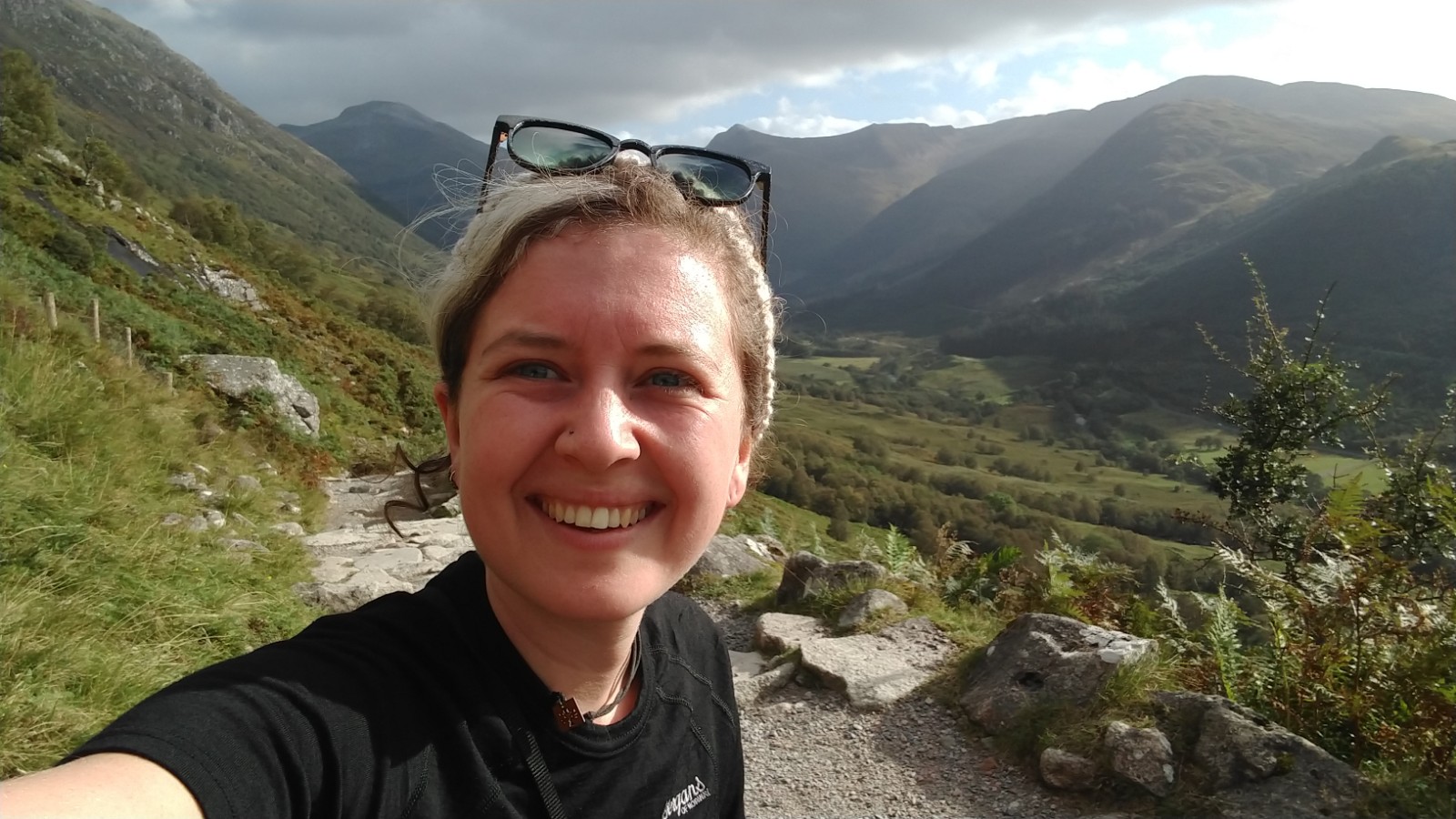
The Fort William to Kinlochleven hike is around 24 kilometers and takes you into the mountains after about a 5km walk next to the road (I think because part of the WHW trail was closed) from Fort William to Glen Nevis. More information about the route and routefiles, you can find here. These first 5km I walked with my backpack to the Glen Nevis Youth Hostel where I spent the night before leaving for my big 4-day adventure. The hike is easy and short, and if you have the chance to arrive at Glen Nevis in the morning, you can even make it up to Ben Nevis, which should be another beautiful hike that serves as a good warm-up for the rest of the WHW. 

The next morning I left without my luggage (it was being transfered to MacDonald Hotel and Cabins in Kinlochleven) towards the WHW. To get to the trail I had to walk up a bit towards Fort William and then left, up the mountains. After walking on a basic road next to forest plantations for a while, and just before the start of the proper hiking path, there was a sign pointing towards Dun Deardail, a 2500 year old fort that was unfortunately destroyed in a fire. Since a local whom I met the day before told me about this place, I decided to have a look. Not knowing how destroyed it actually was, I didn't realise I was walking on top of the ruins until now, while writing this blog haha. It's a nice little side-tour from the WHW, but don't expect to see a fort. You can, however, see the outlines of the old fort and walk around it to imagine what it must have been like 2500 years ago. Also, don't forget to look back at Glen Nevis, and even Fort William in the distance, sometimes the view behind you can be even more amazing than in front of you!

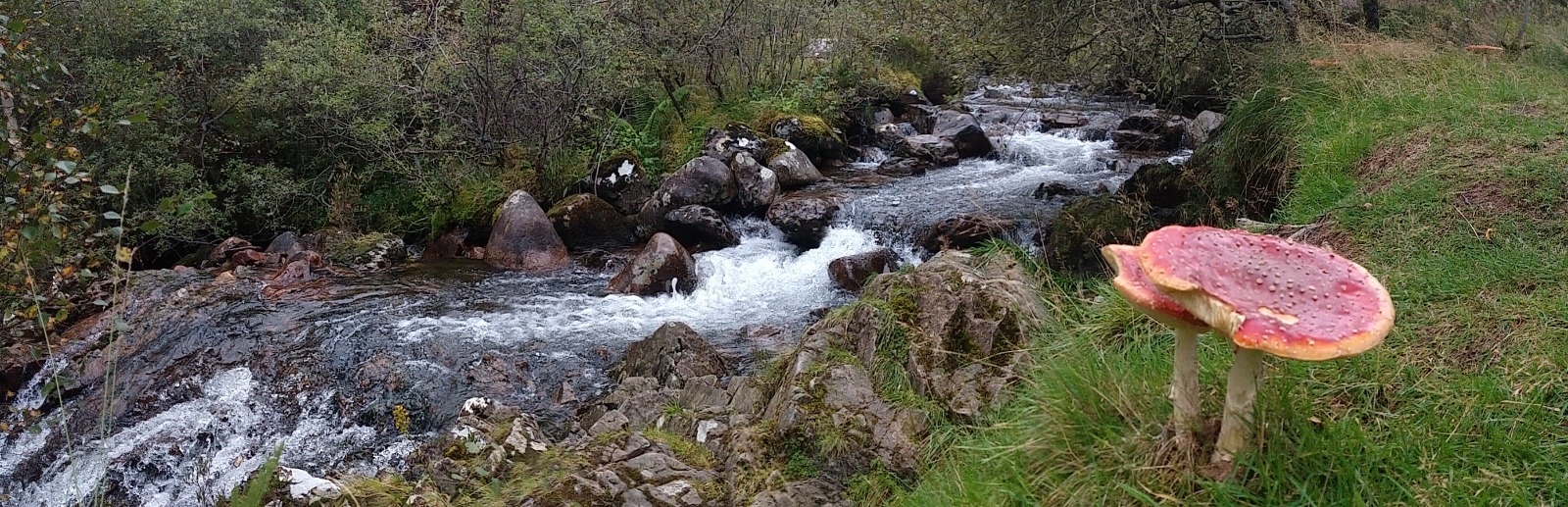
After going back down, you'll arrive at the nice part of the WHW day-1 trail. It's a proper hiking trail, no cars around. You will pass some beautiful streams and waterfalls (great place for a break and to refill your water!), and if you're there in autumn, might see some of the cool red and white mushrooms. The walk isn't too tough and mostly even, with some short ascents and descents in between. It mostly takes you through open hillsides from here, and this is also where you'll start meeting people going in the other direction (if you leave really early though, you might have some more time by yourself!). 

You'll pas another information sign on the Battle of Inverlochy. It makes for an interesting read, and I can definitely recommend reading these signs along the way, especially if you like Scottish history. After this signpost, the way will be quite exposed. Even though two rain showers passed over me, it didn't stop me from enjoying the solitude, especially with my rain gear on. Eventually the walk takes you along an old military road, passed the ruins of tigh na sleubhaich, an amazing cottage ruin in the middle of nowhere. From here it takes about another 5 km before reaching kinlochleven, which will mostly be downhill! 

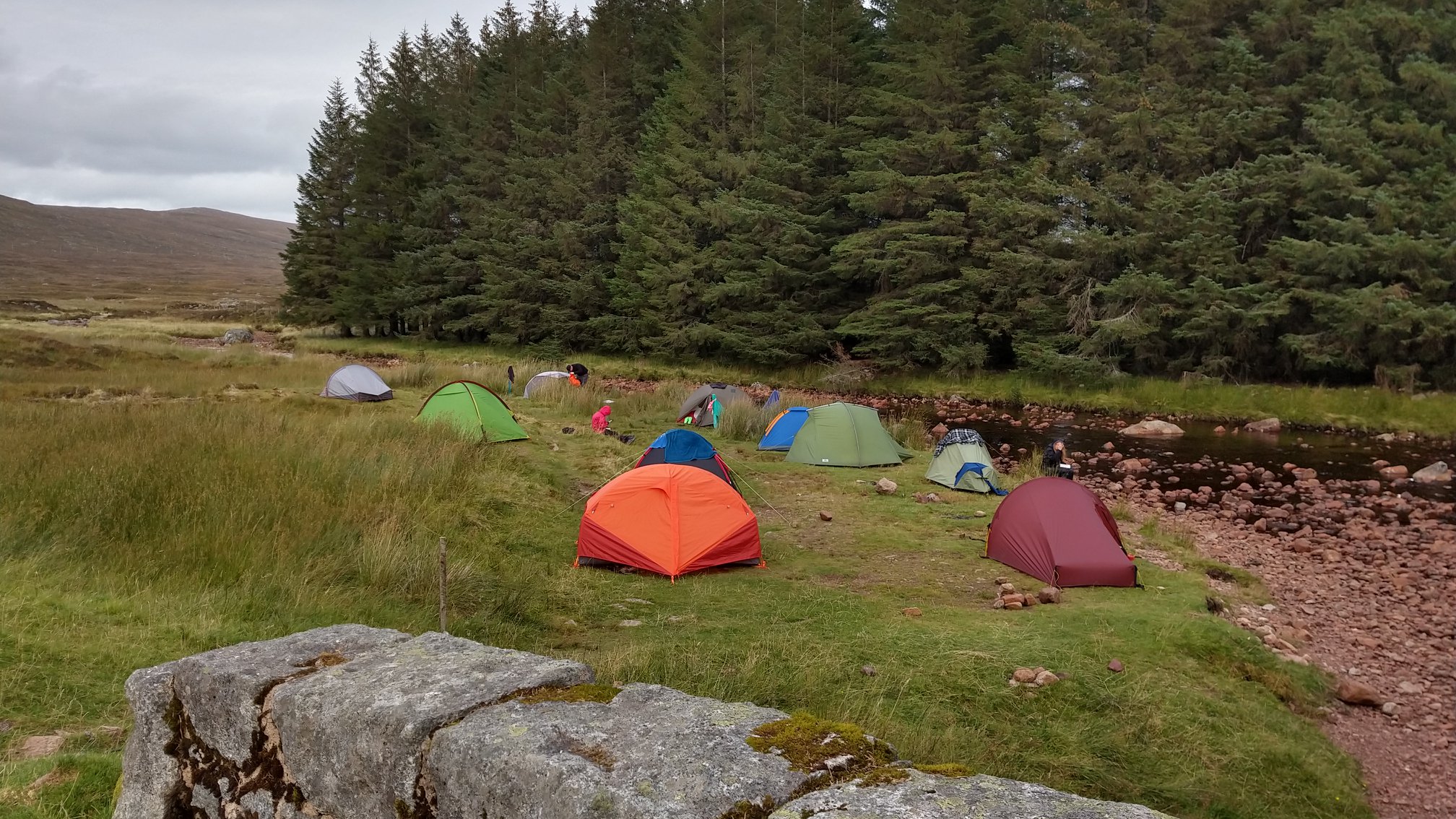
This last part is easy, fun and the beautiful Loch Leven comes in to view. Make sure to enjoy this downhill walk through a bit of forest before you get to your destination. I can recommend having a cider or beer at the Bothy Bar at MacDonald Hotel and Cabins. You'll have the most amazing view of Loch Leven and probably also some good company! Opposite to the hotel (on the other side of the road) is also a good place to wildcamp in the forest, and I have seen that some of the wildcampers there were allowed to get water from the hotel. If you prefer staying at a campsite, then Macdonald is a good place too. 

Click here for the next stage!

Day 2 West Highland Way: Kinlochleven to Kingshouse

Day 2 West Highland Way: Kinlochleven to Kingshouse

Image

Recently I walked part of the West Highland Way in Scotland on a short 1-week break from work. Since I flew to Inverness, I decided to walk the trail in reverse, which was kind of cool since I often had the experience of hiking totally alone. I combined hiking with and without a backpack; camping, wildcamping and hostel beds and short and long walking days. If you want to know more about my general experience on this trip, read this blog. In this series of blogs I'll tell you about each section of the West Highland Walk and how I experienced it, today talking about section 2: Kinlochleven to Kingshouse (Hotel). 

After a comfortable night in my tent at MacDonald Hotel & Cabins and a true outdoor breakfast consisting of a bag of cereals mixed with some water, I was ready to pack up and start the second day of the journey. This section would be around 15 km, so easy peasy compared to my first day. This sections also features the Devil's Staircase, a part you'll probably have heard of before, but, since you're walking the trail in reverse, this means no climbing up the 'staircase', but actually climbing down :). 

The day starts with a short walk through the town of Kinlochleven, a beautiful tiny Scottish village. Here you can find a supermarket in case you need some provision for the day, and even a cool indoor ICE climbing center! Also, this town makes for a nice stop to take part in several outdoor activities such as MTB, hiking, trailrunning, kayaking etc. After leaving the campsite, you'll follow the trail towards the River Leven and make your way to the left before crossing it. This river supports populations of sea trout and salmon, and because of their strict fishing rules, if you're there in the right season you might even be able to spot some! Continuing your walk, you'll eventually cross the river towards the old military road that goes up the hill. To me it wasn't the most interesting walk since it's a simple road through the forest that just goes up and up and up. You'll pass a big water reservoir with extensive warnings about not swimming in it, and before you know it you'll be out of the trees and out in the open again! 

From here on, you'll be super exposed to the weather until you reach Kingshouse, so there's plenty of time to test your rain gear if you have the chance. The path is easy to follow, well marked, but stony in some places such as the Devil's Staircase. However, it is beautiful and the views are simply amazing. For a while you'll just feel like you're the only person in the world. After walking across this Moorland, you'll reach the top of the Devil's Staircase, the highest point of the WHW at 550m. 

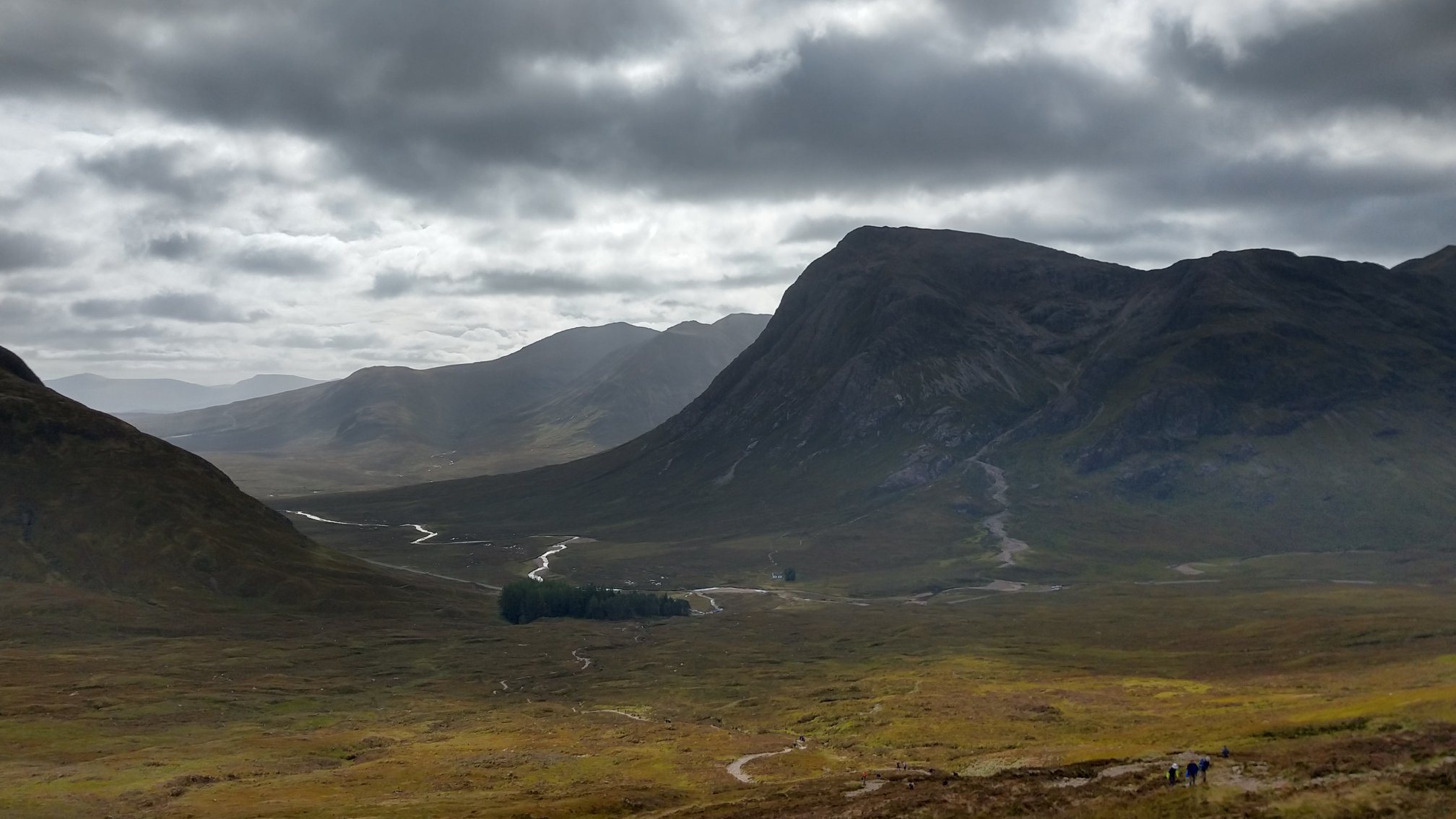
After going down the Devil's Staircase (and watching people struggling to get up), you'll be presented with a beautiful view of Glen Coe, the famous site of the MacDonalds Clan massacre in 1692 and Buachaille Etive Mor, one of the most famous mountains of the Munro Peaks. From here, the trail will be quite close to the motorway and quite flat, but the views totally make up for this. Eventually, you'll reach Kingshouse Hotel where you can either take a break in the Pub before you start the next section to Inveroran (another 16 km) or you can make this your overnight stop and either sleep in the hotel/hostel or in your tent on the other side of the bridge. For 1 pound you can take a shower in the building attached to the hostel (here you can also use the toilet and fill up your water bottle), and you can even use the drying room behind the hotel if you need to dry anything. I arrived at Kingshouse around 12.30, so if I hadn't booked the luggage service, I would have continued my walk to Inveroran since I still had plenty of time. All in all, however, staying in the pub, reading a bit and drinking cider was nice as well, and in the evening it's a great place to meet fellow hikers. 

TIP! When wildcamping, make sure you don't put your food in your tent. Sometime during the night, rodents apparently gnawed through my tent and ate all my food. It wasn't really a nice surprise the next morning, to find this whole in my tent. And since I hardly had any food left, I had to combine my next to days of hiking into one, which you can read about in my next blog! 

Click here for the next stage!


Day 3 West Highland Way: Kingshouse to Tyndrum

Day 3 West Highland Way: Kingshouse to Tyndrum

Image

Recently I walked part of the West Highland Way in Scotland on a short 1-week break from work. Since I flew to Inverness, I decided to walk the trail in reverse, which was kind of cool since I often had the experience of hiking totally alone. I combined hiking with and without a backpack; camping, wildcamping and hostel beds and short and long walking days. If you want to know more about my general experience on this trip, read this blog. In this series of blogs I'll tell you about each section of the West Highland Walk and how I experienced it, today talking about section 3: Kingshouse (Hotel) to Tyndrum.

This part was the longest part of my four-day walk, covering 31 km. While it can be split in the middle (at Bridge of Orchy, or Inveroran (good place for wildcamping), hiking both parts in one day isn't all that bad. The day started off with a nasty surprise... a HOLE in my INNER TENT :o. The night before I saw that some rodents were eating from the food I left outside of my tent, so I decided I'd put it in plastic bags inside of my tent. Well, apparently that wasn't enough and only made things worse haha. So yeah, hole in the tent, almost all of my food eaten, so no other way than to hike all the way to Tyndrum in one day (the nearest place with a supermarket). 

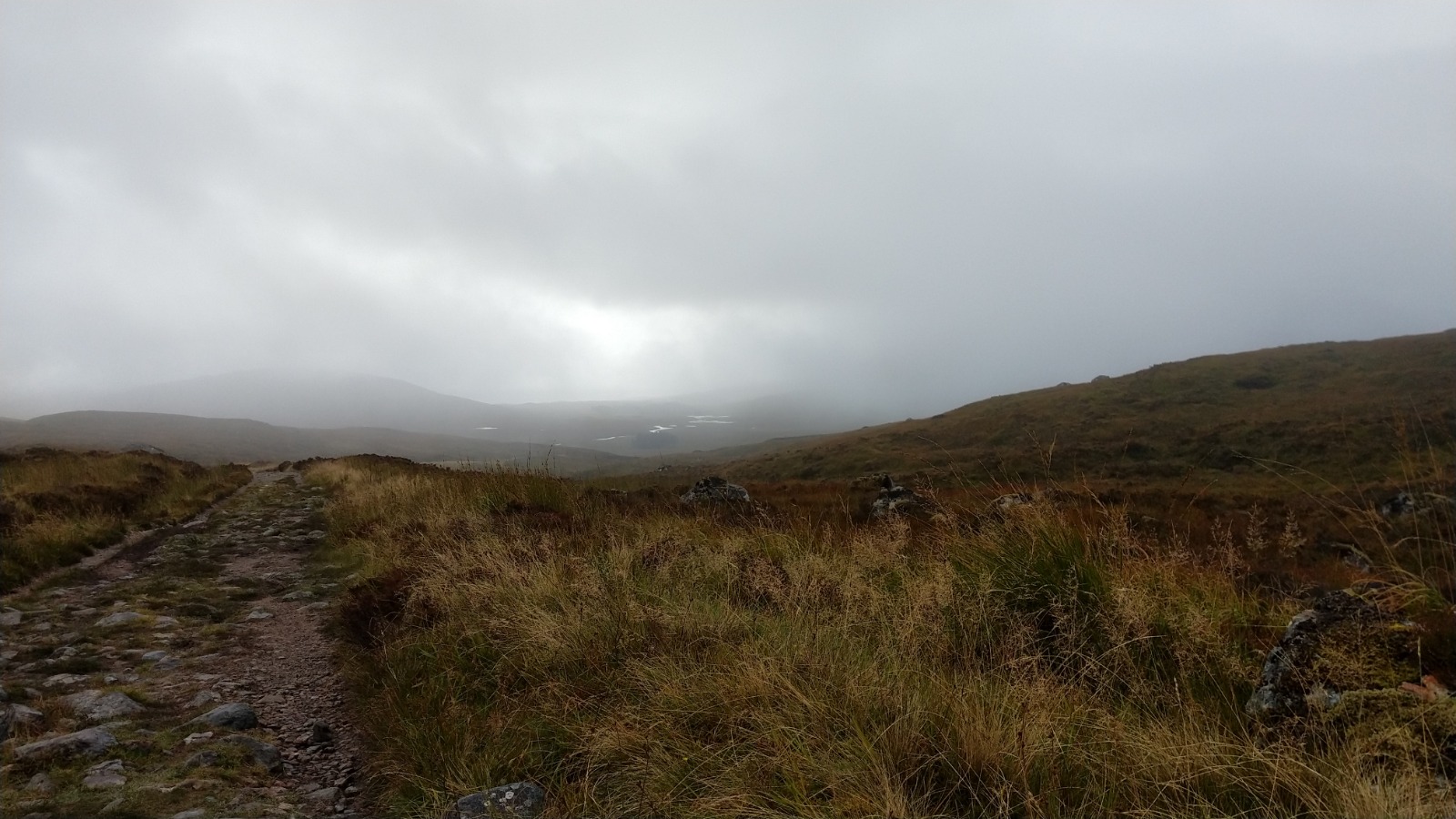
After a quick breakfast, 1 pound shower and some warming up and tent drying in the free drying room, I shouldered my pack and made my way south. Just 500m later, the main obstacle of the day presented itself; crossing the super busy highway. Having looked about 10 times to the left and right I quickly sprinted across the road and left Buachaille Etive Mor behind me. The route now took me through the moorland up the mountain, past Blackrock cottage and glencoe ski resort. The old military road took me up the mountain and as I reached the summit of the track, the vast and impressive landscape of Rannoch Moor presented itself. This section of the West Highland Way is a wild and more isolated section, I was walking through one of the last true wild places of Europe. While the trail is relatively easy, and most importantly dry, in bad weather you can be really exposed to the elements again, so keep that in mind! 

After taking a short break, and some pictures of course, I started this long part of the trail through the moorland. The path was easy to walk on and time flew by! Walking downhill all the way to Ba Bridge (halfway through the moorland) I decided it was a good time to take a break and eat some of my protein bars. Luckily these remained untouched by the little culprits! The whole walk through Rannoch Moor took me a couple of hours and definitely was one of my favorite parts during the hike. I felt the silence and wilderness, and felt engulfed by the roughness of the Scottish landscape. 

The path then continued to take me downhill, towards inveroran. Here you'll find some good places to wildcamp. Passing the cute inveroran hotel, I decided to stop and have a tea there. It was quite cold, I needed to refil my bottle (which you can do for free outside the back of the hotel) and I was looking forward to sitting down. In the tiny bar there was just enough room for me to pick a table and order an English tea. Next to me was an older American couple, of which the woman was hiking the WHW for the second time (about 25 years after her first WHW hike) so we talked quite a bit about how everything changed and remained the same at the same time. It was fun to meet some new people and a nice half hour break to get ready for my next half of the day. 

After Inveroran hotel, the road took me to Bridge of Orchy. I hiked uphill for a while, and almost forgot to look back at the top, which almost made me miss the sight of Loch Tulla and the Black Mount. Making my way to Bridgy of Orchy, I didn't have a lot of time and got a bit stressed about still hiking to Tyndrum I didn't take a lot of time to look around. I had a back up plan to take the train from Bridge of Orchy to Tyndrum, but when I arrive I decided to walk instead since I thought I had enough time. From Bridge of Orchy, the path followed the railway track for a while, meandering a little uphil through the glens, surrounded by the beautiful bens (mountains), eventually ending in Tyndrum.

The WHW goes straight past Brodies Mini Market, where you can buy all kinds of necessities for quite a good price! I bought some dinner and breakfast for the next day and made my way towards By the Way Hostel & Campsite (such a cool name :D). I decided I deserved a hostel bed for a night and a kitchen to cook my dinner, so for 20 pounds I had a bed in a four person dorm. I put my legs to rest, talked to some English people about brexit and hiking and went off to sleep. While I was tired and my feet hurt quite a bit, I was so excited and proud having walked 30+ km for the first time in my life! Just one more day of hiking before I'd make my way back... but first a good night's rest! 

Click here for the next stage!

Day 4 West Highland Way: Tyndrum to Inverarnan

Day 4 West Highland Way: Tyndrum to Inverarnan

Image

Recently I walked part of the West Highland Way in Scotland on a short 1-week break from work. Since I flew to Inverness, I decided to walk the trail in reverse, which was kind of cool since I often had the experience of hiking totally alone. I combined hiking with and without a backpack; camping, wildcamping and hostel beds and short and long walking days. If you want to know more about my general experience on this trip, read this blog. In this series of blogs I'll tell you about each section of the West Highland Walk and how I experienced it, today talking about section 4: Tyndrum to Inverarnan.

After a good night's rest at the By the Way hostel and a good bread and hummus breakfast, it was time for day four, and my last day of hiking. While I initially already was at the endpoint of my journey, I had a day to spare due to the rodent incident (see my previous blog) so I decided to add an extra section and walk to Inverarnan (around 20 km). This day was also the first day of walking with my backpack with a weight of around 12 kilo's, so that was going to be a challenge. 

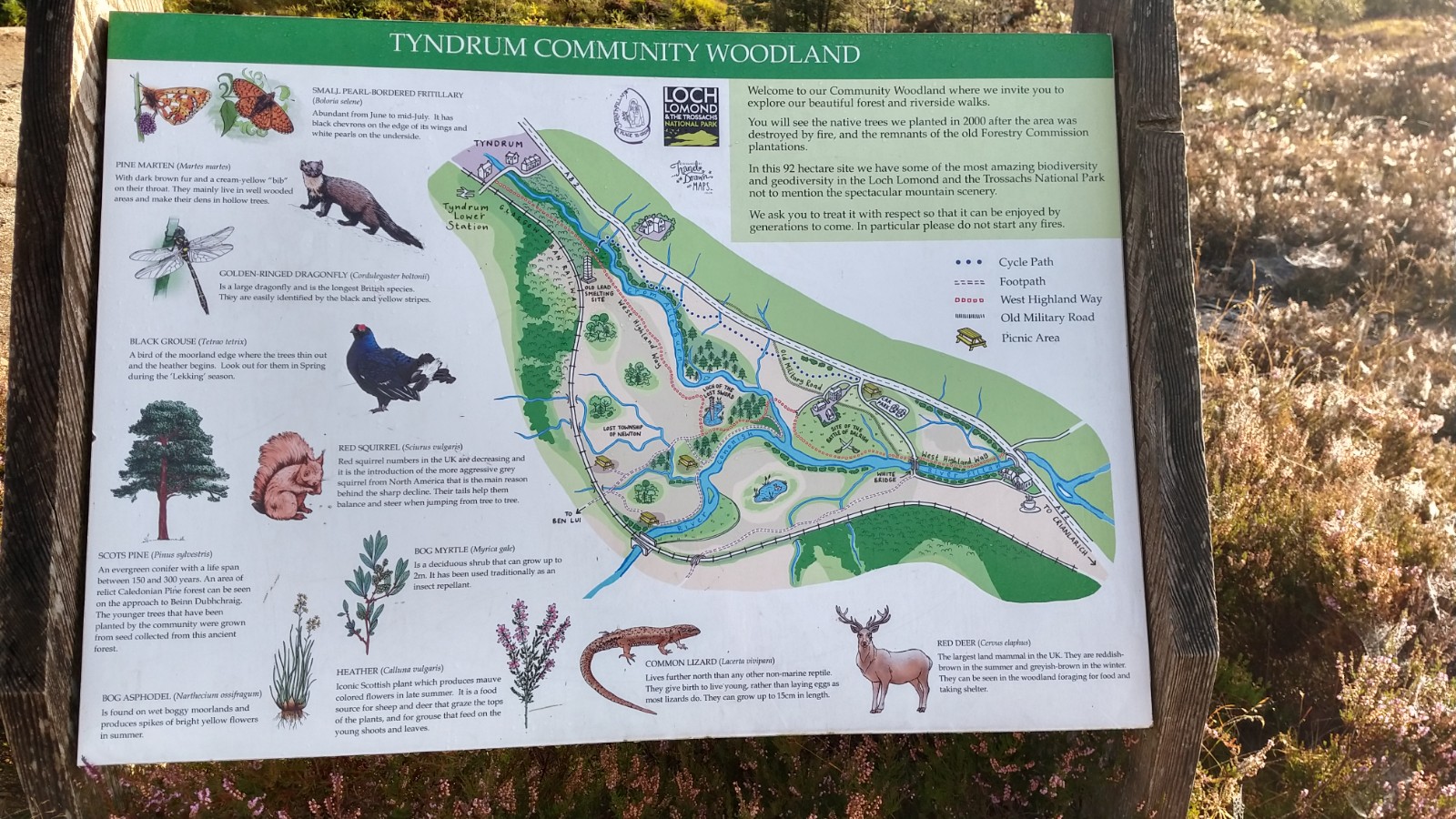
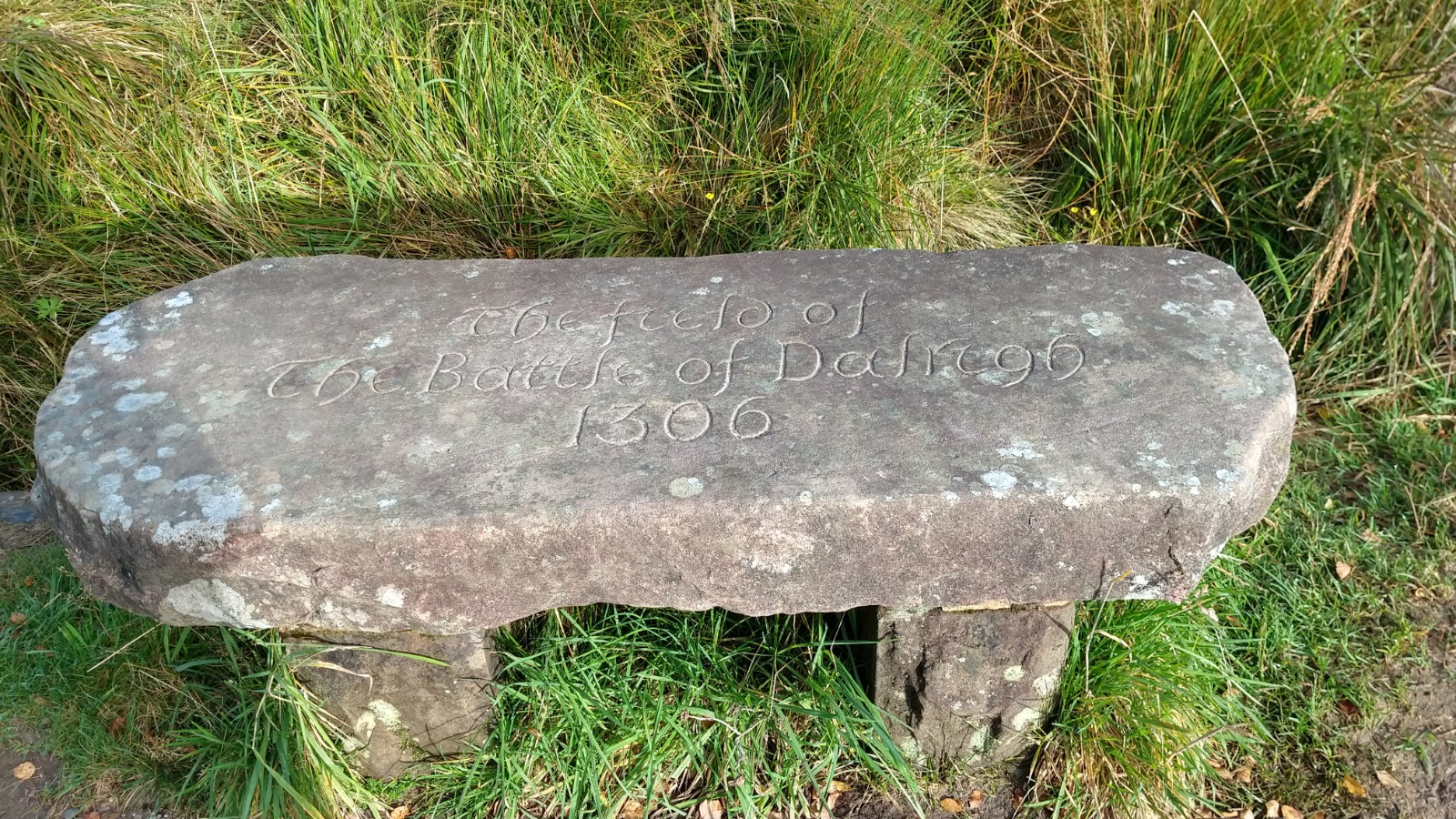
The weather was great as I walked out of the cute town of Tyndrum. The walk immediately felt different from the previous days, and not only because of the extra weight. Walking out of Tyndrum I was surrounded by forests, something that was hardly the case when I was higher up in the highlands. Pretty soon I saw a sign that I entered the Tyndrum Community Woodland, a beautiful forest area with lots of cool plants and animals. The WHW goes straight through this area, along little streams and past The Lochan (Legend of the Sword). As Tyndrum covers up the site of an ancient battlefield, it is bound to be the site of some cool stories. As the Clan MacDougall and Robert the Bruce fought in the Battle of Dalrigh in 1306, surprisingly Robert's forces were defeated. According to the legend, Robert ordered his men to dump their weapons in the nearby loch, as to make a quick retreat. This loch is now named "The Loch of the Legend of the Lost Sword", named after Robert's legendary massive sword that was told to have been almost 2 meters in length (wow, the length of a pretty tall human being as a sword :o). Nowadays a nice little bench is placed next to the WHW as a reminder of this story, as well as a stone with a cool carving of a sword. It was pretty cool to walk here and feel the ancient atmosphere. 

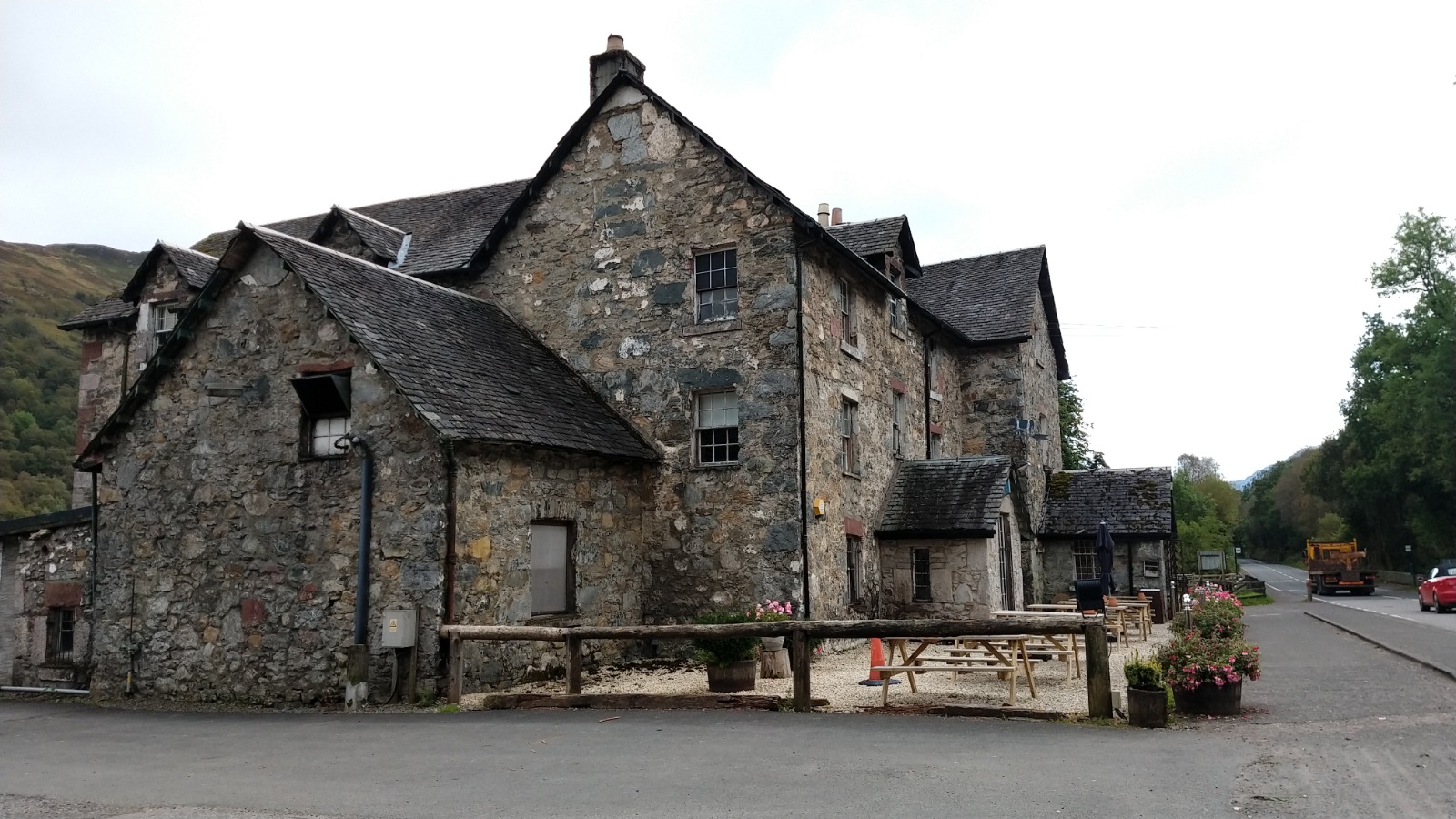
The walk then takes you to some farmland on the other side of the highway. This farmland belongs to Scotland's Rural College, and they do all kinds of research on more sustainable farming practices. It is interesting to walk through not only because of the animals, but also because there are a lot of signs with explanations about what they are doing. After crossing the highway again, the WHW takes you through more and more forest. Up and down some small hils, and after about 9-10 km you'll make a bit of a steeper climb up the final hill before making your way down and around the corner towards Inverarnan. I believe, at this point there's also the possibility to take a little detour towards Crianlarich for a lunch or tea break. However, since I was on a tight schedule to catch my bus back from Inverarnan I decided to continue walking. From here it is all downhill, and as you make your way through the forest you'll have the time to look around and encourage the people going the other way, up up up. After a while the trail takes you to the other side of the A82, at this point, make sure you have peed. I remember I had to pee so much, and walking along the beautiful River Falloch for another maybe 6 km or something reaaaaaallly didn't help. Nevertheless, it's a beautiful walk downhill towards Inverarnan. Make sure not to miss the famous Falls of Falloch, 'cause since you're walking the WHW in the other direction, you might miss it if you don't look back!

At the end of the 20km, I was super tired. The backpack was too much. I wouldn't recommend walking with a backpack that weighs 25% of your body weight for 20 km on the first day. Unfortunately I was met by a surprise. The tiny bridge connecting the WHW between the Being Glass Campsite and the Drover's Inn was closed due to flooding damage. O.M.G. I was so broken at this point, and so relieved I thought I had made it, and then they told me I had to walk back around 1,5 km to cross at the previous bridge. Full of frustration, I walked back, cried my heart out before reaching the pub almost an hour later, but luckily still in time for my bus. I dried my tears, was proud of myself and had a nice soda to celebrate my 24km day at the beautiful old Drover's Inn, before catching the bus back to Tyndrum. 

After four days of hiking, I finished more than half, and the best half ;P, of the WHW. It was a great experience with amazing surroundings, relatively good weather, and the best people. Reflecting back on my 4-day adventure in my tiny tent back at By the Way, I felt proud, relieved and tired. The next day I would make my way back to Inverness by train and bus to spend some time there, before going back to the Netherlands on Sunday. 


Welk visum regelen voor een reis, werk of vrijwilligerswerk naar Groot-Brittannië (Engeland, Schotland, Wales & Noord-Ierland)?

Welk visum regelen voor een reis, werk of vrijwilligerswerk naar Groot-Brittannië (Engeland, Schotland, Wales & Noord-Ierland)?

Image
Heb je als Nederlander een toeristenvisum nodig voor het Verenigd Koninkrijk?
  • Er is geen toeristenvisum nodig voor Groot-Brittannië. Er is wel een Electronic Travel Authorisation (ETA) nodig om het land in te komen, en als je visum wel al eerder is afgekeurd, dan is het handig om de procedure om een visum aan te vragen wel door te lopen. 
  • Je kunt er aan een gesloten verblijven voor maximaal 6 maanden (voor de duur van twee jaar) als je een geldige ziektekostenverzekering hebt en genoeg financiële middelen hebt om jezelf te onderhouden.
Kan je een werkvisum krijgen voor het Verenigd Koninkrijk?
  • Je hebt als Nederlander een werkvisum nodig voor Groot-Brittannië. Als je een baan hebt in Groot-Brittannië of als je na je baan in Groot-Brittannië blijft mag je dezelfde behandeling verwachten als burgers van dat land op het gebied van werk, arbeidsomstandigheden en alle andere sociale en fiscale voordelen. Check goed alle soorten werkvisa.
Hoe werkt het vrijwilligersvisum voor het Verenigd Koninkrijk?
  • Er is een mogelijkheid om een vrijwilligersvisum aan te vragen voor het Verenigd Koninkrijk. Onder het toeristenvisum zijn een aantal mogelijkheden voor vrijwilligerswerk die toegestaan zijn.
Waar kan je actuele informatie vinden rondom visa en verblijf in het Verenigd Koningrijk?
  • Check altijd de meest actuele informatie rondom visa en verblijf, zie de link hieronder.
Expat and Emigration Interviews: How Bella discovered Europe and eventually made Scotland her home

Expat and Emigration Interviews: How Bella discovered Europe and eventually made Scotland her home

Who is Bella?

  • Bella is a Dutch woman who has spent half her life living in other countries. She currently lives in Scotland, but she didn’t move here directly from the Netherlands. In many ways, she feels more European than Dutch. From that perspective, she hasn’t really emigrated, because she still lives in Europe!

What is your motivation and experience to move to Scotland?

  • We came to Scotland because my boyfriend’s father passed away and we wanted to be a bit closer to the family. It felt like a fairly small step; I’ve changed countries so many times by now. The biggest problem was finding a veterinarian who could stamp my cat’s passport on the day of the boat trip. The plan was to stay for a year, but it ended up being a bit longer (I’ve been here for 10 years now) because I landed a really great job. My contract runs until the end of 2029, and who knows—by then Brexit might have been reversed and we might move to another country. 

How is the culture and how are the social interactions in Scotland?

  • Well, we’re naturally familiar with British culture from TV and such. I hadn’t expected Scotland to have such a strong distinct culture or for the political climate to be so socialist. It really feels different from England. Of course, I speak English well, but there is a big difference in communication style between the UK and the Netherlands. 
  • The Netherlands is a country with what’s known as low-context language. What people say is what they mean, and the meaning of a sentence often changes little across different situations. Scotland, on the other hand, has high-context language. What people say is usually not what they actually mean. You have to know the context and understand the exact meaning of the sentence in that specific situation. In a different situation, it can mean something completely different. Very tricky.

Wat are th challenges and opportunities to growt in Scotland?

  • It’s an island. You always have to take a boat, fly, or go through the Channel Tunnel to travel to another country. Of course, we’re not used to that in the Netherlands. I do miss not living a bit more in the heart of Europe. I also miss my family, of course, especially my twin sister, and my friends in the Netherlands. I think I’ve changed over the years, because you do try to adapt. Here, people still tell me I’m so Dutch, but meanwhile, people in the Netherlands say I’m starting to become Scottish too.

What are the practical tips and is the advice for others who would like to live in Scotland?

  • Luckily, I entered the country just before Brexit. Now it’s much harder to come live here as an EU citizen. You have to find a job that can “sponsor” you—meaning it has the right to bring you to Scotland as a foreigner—and that pays at least £40,000 a year. That’s difficult, because there aren’t that many of those jobs, and they’re very competitive. It’s also hard to find a place to live, so start looking early!

We also like to highlight great organizations abroad. Is there a charity you’d like to promote?

  • Through my work, I often come into contact with organizations that support refugees. The Scottish Refugee Council does fantastic work, and I’m also a big fan of Refuweegee (they put together welcome kits with everything you need for your first week, plus a letter from local residents).

Image

Related topics and terms

Related regions:
Related countries and regions:

Image ACTIVITIES

Check courses, jobs, projects, recipes, suggestions and tips related to: 'Scotland'

CHECK MORE ACTIVITIES

Make a selection, to find more tips than you see below

Image Learning English around the world and abroad
Table of content Learning English abroad: orientation What is an English language course? Why should you learn English and take an English language course abroad? What...
Image Medewerker bij een modern hostel in Schotland!
Verbeter de service voor de reizigers Help mee met de dagelijkse werkzaamheden in het hostel Locatie: Edinburgh Wat hou je er aan over? Te ontwikkelen competenties:...
Image Ga in Schotland of Ierland werken op een biologische boerderij, boomgaard, kwekerij of landgoed
Ga in het de UK of Ierland werken op een biologische boerderij, boomgaard, kwekerij of landgoed. Via deze organisatie vind je in Ierand, Noord-Ierland, Wales, Schotland...
Image Op een boerderij werken in de fruitteelt? Op deze boerderij in Schotland worden voornamelijk aardbeien geplukt. Steek je handen uit de mouwen en help mee om de aardbeien te plukken, sorteren en verpakken
Op een boerderij werken in de fruitteelt? Op deze boerderij in Schotland worden voornamelijk aardbeien geplukt. Steek je handen uit de mouwen en help mee om de aardbeien...
Image Kom werken in Schotland als activiteitenbegeleider
Kom werken in Schotland als activiteitenbegeleider.
Image Help mee tijdens walvissen- en dolfijnenonderzoek in Schotland
Ga met de boot 'Silurian' op expeditie en assisteer tijdens het meerjarige walvissen en dolfijnen onderzoek in de Schotse wateren aan de west kust. Je kunt je aanmelden...
Image Een paar nachtjes in Schotland doorbrengen? Dat kan bij dit moderne hostel middenin Edinburgh
Een paar nachtjes in Schotland doorbrengen? Dat kan bij dit moderne hostel middenin Edinburgh.
Image Verbeter je Engels bij één van de 20 verschillende taalscholen in Engeland, Schotland of Noord-Ierland
Verbeter je Engels bij één van de 20 verschillende taalscholen in Engeland, Schotland of Noord-Ierland. De cursus kun je combineren met excursies naar de Highlands of...
Activities abroad: home bundle

Main content and contributions for activities abroad

,,,accommodations, adventure activities, courses, internships, jobs and volunteer projects

...to help another, travel with care, work together , learn to share and inspire with your experience


Activities abroad: home page

Activities abroad: home page

From language courses to a gap year abroad, from work experience to volunteering abroad, from paid work to an internship abroad, from mountaineering to diving, and from backpacking to traveling around the world

    What social activities can you do abroad?

    • Opportunities are found in the areas of helping, learning or studying.
    • You can get involved and volunteer in a social project at a school in Africa, Asia or Latin America.
    • You can get involved in nature, in a project with animals or cleaning the sea or beaches.
    • Those who want to learn more can choose to do, for example a language course in Latin America, Spain or South Africa.

    What work related activities can you do abroad?

    • When you aim to gain work experience and/or also earn money, go and work abroad.
    • You can combine backpacking in Australia with temporary work.
    • You can work on campsites in Europe or bush camps in Africa.
    • You can almost go all over the world to work in the hospitality industry, hotels, and hostels, in the healthcare sector, or, for example, at a diving school.

    What sports activities to do abroad?

    • Have you ever thought of mountain biking, rafting (going down a wild river on a raft or rubber dinghy, climbing, or canoeing), survival (which involves building rafts, climbing or canoeing), abseiling (descending a rock face while secured to ropes), zip-lining (whizzing down a cable), canyoning (starting at the top of a river and then climbing, swimming, diving down the bed) or caving (scrambling, wriggling and crawling through caves and crevices)?
    • Maybe you feel more comfortable on a bodyboard (on a half-wave surfboard, you surf the high waves lying down with flippers), on a hang glider or while paragliding (with a parachute you float down a mountain or dune), hydrospeeding (on a bodyboard with flippers and a wetsuit on you go down a wild river via rapids), or Tiefschneeskiing (racing down through powder snow)?

    Check the pages below for more activities and inspiration and where to go and how to arrange it

      Activities abroad: for experiencing countries and cultures abroad

      Activities abroad: for experiencing countries and cultures abroad

      Bundled content for experiencing countries and cultures during gap year, travel and backpacking abroad

      Access: 
      Public
      What to do abroad? Questions and answers about working, internships, and volunteering per focus area

      What to do abroad? Questions and answers about working, internships, and volunteering per focus area

      Functions, opportunities and careers per focus area

      What is it, why would you do it, and where is the best place to go?

      Access: 
      Public

      Image STORIES

      Check blogs, experiences and information related to: 'Scotland'

      CHECK MORE STORIES

      Make a selection, to find more blogs and contributions than you see below

      Image Packing list for Scotland, travel insurance for Scotland and taking your belongings
      Packing for and taking to Scotland What to take to Scotland: brief Are there dangerous insects and animals in Scotland? Can you buy DEET or other insect repellents in...
      Image Expat and Emigration Interviews: How Bella discovered Europe and eventually made Scotland her home
      Who is Bella? What is your motivation and experience to move to Scotland? How is the culture and how are the social interactions in Scotland? Wat are th challenges and...
      Image Day 1 West Highland Way: Fort William to Kinlochleven hike
      Recently I walked part of the West Highland Way in Scotland on a short 1-week break from work. Since I flew to Inverness, I decided to walk the trail in reverse, which...
      Image Day 3 West Highland Way: Kingshouse to Tyndrum
      Recently I walked part of the West Highland Way in Scotland on a short 1-week break from work. Since I flew to Inverness, I decided to walk the trail in reverse, which...
      Image Day 4 West Highland Way: Tyndrum to Inverarnan
      Recently I walked part of the West Highland Way in Scotland on a short 1-week break from work. Since I flew to Inverness, I decided to walk the trail in reverse, which...
      Countries & Destinations: home bundle

      Bundled content, suggestions, stories and tips about the countries and destinations in the world

      ...to help another, travel with care, work together , learn to share and inspire with your experience

      Africa: country bundles

      Africa: country bundles

      Access: 
      Public
      Asia: country bundles

      Asia: country bundles

      Country bundles of Asian countries

      Access: 
      Public
      Europe: country bundles

      Europe: country bundles

      Country bundles of European countries

      Access: 
      Public
      The Caribbean: country bundles
      How healthcare works Worldwide: questions and answers per country about insurance and the healthcare system

      How healthcare works Worldwide: questions and answers per country about insurance and the healthcare system

      How does the healthcare system work across the world?
      • How does the public healthcare system work per continent and per country?
      • How does the private healthcare system work?
      • How is the family doctor or general practitioner arranged?
      • How is the dental care and dentist arranged?
      • How is pregnancy and maternity care arranged?
      • How safe or unsafe is a trip or stay in each region?
      • What are the best insurance options for backpacking, traveling, doing an internship, studying, volunteering, or working abroad?
      • What types of insurance should you get if you're planning to emigrate, work as an expat, or live abroad?
      Access: 
      Public
      The World

      The World

      Where to go in the world?

      Backpacking around the world?

      • There is so much to see that instead of a page we could fill an entire website about this... Oh but wait, we did! See above all the countries of the world and their unique features :). What else we can say here: the world is your playground! Each continent has something special to offer, and here is a very short list of some of the best places: 
      • South America: Patagonia for epic hikes, Colombia for fun locals and culture and Ecuador for unique culture. 
      • Asia: Thailand as backpacker Mecca (or make it a tour of Southeast Asia right away), Japan for a combo of modern and traditional and many conveniences, Nepal for the real hikers and spiritualists among us. 
      • Africa: Namibia for vast deserts, Tanzania for safaris and Kilimanjaro and Madagascar for if you really want to see totally unique nature and encounter few others. 
      • Europe: Portugal for charming and affordable vacations, Paris, Berlin, London and Prague for fun city trips, Scotland for rugged nature and Outlander lovers and Albania for Eastern European authenticity with modern conveniences.
      • Oceania: New Zealand for pristine landscapes, Fiji for a true paradise and Australia for mega-long road trips. 
      • North America: for conveniences and pricey trips, but fun and modern with beautiful nature. 
      • Antarctica: if you have the opportunity and money, let us know in the comments how it was!
      • Activity spotting: too many to mention. Otherwise, start with the 7 wonders of the world, or the highest mountain on each continent, or go on a fun city break.   

      Study around the world?

      • Best places: UK, US, Singapore (but also expensive), Germany, Finland, Netherlands, Australia.
      • Better not to: Nauru because there is no university there, North Korea, Afghanistan, Somalia, conflict zones but also many other countries that are still developing unless you like to learn about local customs and nature. 

      Internship in the world?

      • There is so much out there! Think Switzerland for luxury corporate internships, Costa Rica for ecotourism and nature conservation, India for innovative and cultural challenges, etc etc etc. 
      • Competencies: international cooperation, flexibility, adaptability, language skills. 

      Volunteer around the world?

      • You make the most difference in poorer countries where they could use your help. Consider volunteering in the areas of education, community development, health care, child care, women's empowerment, helping start businesses, nature and animal protection etc. 

      Working around the world?

      • In each country, it is totally different. If you want to go for a high salary, look at Switzerland and Singapore. Canada is otherwise pretty migrant friendly and as a European you can of course work anywhere in Europe. 

      Working as a digital nomad around the world?

      • As a digital nomad, you have a choice of the ultimate digital nomad places like Bali, Chiang Mai, Medellín and Lisbon, or quieter places like Puebla, Vilnius, Gran Canaria, Dakar. 
      • Places not to recommend: North Korea, Antarctica, Baghdad, Pacific islands and conflict zones, of course. 

      Living in the world?

      • Here you can go for adventure combined with challenges, uncertainty and risk, or safer places that may be more like home and have similar amenities. 
      • The world is full of diversity, from the samba of Brazil to the tea ceremonies of Japan. The best places depend on your preferences for adventure, tranquility or tradition.
      • But ... no matter where you live, go and explore, always make sure you take care and have your own well-covered health insurance.

      Image ORGANIZATIONS

      Check sectors and organizations related to: 'Scotland'

      CHECK MORE ORGANIZATIONS

      Make a selection, to find more or other organizations than you see below

      Image Hessilhead Wildlife Rescue Trust
      This Scottish organization offers volunteer opportunities in animal care. You can, for example, assist with the daily care of the animals. If you're interested in...
      Image Cigna Healthcare
      Cigna Healthcare is a large international health insurer of American origin. JoHo Insurances is offering Cigna insurance products for many years. Cigna is a well-known...
      Image SecsintheCity
      SecsintheCity is a UK based job site for jobs for Personal assistant, Executive Assistant or other business support professionals (previously also operating under the...
      Image Allan Hill Farm
      This strawberry grower in Scotland is looking for plant caretakers and strawberry pickers every year. You'll be working in a team of over 500 employees of various...
      Image BSC Education
      BSC Education offers a range of English language courses to help you improve your English. Various business specializations are available, including accreditation to...
      Image CODE Hostel Edinburgh
      Modern hostel in the centre of Edinburgh, Scotland
      Organizations & Services: home bundle

      Bundled content, suggestions, stories and tips about organizations and their products and services

      ...to help another, travel with care, work together, learn to share and inspire with your experience

      Organizations: home page
      Organizations for administrative, tax and legal work and consulting

      Organizations for administrative, tax and legal work and consulting

      international law

      Activities, internships, paid work, services or volunteer work in administration, tax and legal consulting

      Administrative, tax and legal consulting abroad: by position

      For job roles and duties related to activities, internships and jobs abroad, see:
      ......Read more on this page
      Organizations for agriculture, grape picking, farming and vineyards

      Organizations for agriculture, grape picking, farming and vineyards

      Image

      Activities, internships, paid work, services or volunteer work in agriculture, grape picking, farming and vineyards abroad

      Working with livestock, harvesting crops, wine production and horticulture abroad

      Agriculture, fruit picking and farming: by position

      For job roles and duties related to activities, internships and jobs abroad, see:
      ......Read more on this page
      Organizations for animal protection, animal care and working with wildlife abroad

      Organizations for animal protection, animal care and working with wildlife abroad

      Image

      Activities, internships, paid work, services or volunteer work in animal protection, animal care and wildlife projects abroad

      For working in animal shelters, wildlife rehabilitation centers, protecting wildlife reserves and taking care of animals abroad

      Animal protection, animal care and working with wildlife: by position

      For job roles and duties related to activities, internships and jobs abroad, see:
      ......Read more on this page
      Organizations for au pairs, youth work and child care abroad

      Organizations for au pairs, youth work and child care abroad

      Image

      Activities, internships, paid work, services or volunteer work in youth work, child care or as an au pair abroad

      Au pair exchange, youth work and child care: by position

      For job roles and duties related to activities, internships and jobs abroad, see:
      ......Read more on this page
      Organizations: for bush camping and working at a campsite abroad
      Organizations: for catering, hospitality and entertainment abroad
      Organizations: for civil society and social work abroad
      Organizations for corporate business services

      Organizations for corporate business services

      Image

      Activities, internships, paid work, services or volunteer work in corporate business services

      Corporate business services abroad: by position

      For job roles and duties related to activities, internships and jobs abroad, see:
      ......Read more on this page
      Organizations: for customer services abroad and help desks
      Organizations: for diving, snorkeling and water sports abroad
      Organizations: for education and schools abroad
      Organizations: for expatriate insurances, travel insurances, and emergency call centers
      Organizations: for gap year activities abroad and sabbaticals
      Organizations: for internship placement abroad
      Organizations: for insurances and finance abroad
      Organizations for IT, engineering and construction

      Organizations for IT, engineering and construction

      Image

      Activities, internships, paid work, services or volunteer work in IT, webdevelopment, engineering and construction

      IT, engineering and construction abroad: by position

      For job roles and duties related to activities, internships and jobs abroad, see:
      ......Read more on this page
      Organizations: for language travel and language teaching abroad
      Organizations for marketing, communication and PR abroad

      Organizations for marketing, communication and PR abroad

      Image

      Activities, internships, paid work, services or volunteer work in marketing and communication

      Marketing, communication and PR abroad: by position

      For job roles and duties related to activities, internships and jobs abroad, see:
      ......Read more on this page
      Organizations: for mediation in au pairs, childcare and elderly care in the Netherlands
      Organizations for moving, international relocation and transport abroad

      Organizations for moving, international relocation and transport abroad

      Image

      Activities, internships, paid work, services or volunteer work in transport and international relocation

      Moving abroad and relocation services abroad: by position

      For job roles and duties related to activities, internships and jobs abroad, see:

      Moving abroad and relocation

      ......Read more on this page
      Organizations for nature conservation, environmental protection and working in nature abroad

      Organizations for nature conservation, environmental protection and working in nature abroad

      Costa Rica rain forest - Jungle

      Activities, internships, paid work, services or volunteer work in environmental protection, sustainability and nature conservation

      Nature conservation and environmental protection abroad: by position

      For job roles and duties related to activities, internships and jobs abroad, see:
      ......Read more on this page
      Organizations: for nonprofit projects, development work and international cooperation
      Organizations: for online work as digital nomad, freelancer, or independent entrepreneur from abroad
      Organizations: for outdoor activities and sports
      Organizations: for providing accommodation and hospitality work in hotels, guesthouses, ecolodges and hostels abroad

      Organizations: for providing accommodation and hospitality work in hotels, guesthouses, ecolodges and hostels abroad

      Image

      Activities, internships, paid work, services or volunteer work in hotels, resorts, guesthouses, ecolodges, bed and breakfasts and hostels abroad

      Working in hospitality and tourist accommodations abroad: by position

      For job roles and duties related to activities, internships and jobs abroad, see:
      ......Read more on this page
      Organizations: for providing healthcare and working in medical care abroad

      Organizations: for providing healthcare and working in medical care abroad

      Image

      Activities, internships, paid work, services or volunteer work in healthcare

      Providing healthcare and working in medical care abroad: by position

      For job roles and duties related to activities, internships and jobs abroad, see:
      ......Read more on this page
      Organizations: for psychological assistance and mental health care abroad

      Organizations: for psychological assistance and mental health care abroad

      Image

      Activities, internships, paid work, services or volunteer work in psychological assistance, coaching and mental health care abroad

      Psychological assistance, coaching and mental health care abroad: by position

      For job roles and duties related to activities, internships and jobs abroad, see:
      ......Read more on this page
      Organizations: for real estate, brokerage abroad and property rental abroad
      Organizations: for research and scientific work abroad

      Organizations: for research and scientific work abroad

      Image

      Organizations: for research, R&D, data collection, data analysis and scientific work abroad

      Activities, internships, paid work, services or volunteer work in research and science

      From R&D to data collection and data analysis

      Research and science abroad: by position

      For job roles and duties related to activities, internships and jobs abroad, see:
      ......Read more on this page
      Organizations: for student support and student associations
      Organizations: for tour guidance and adventure tours abroad
      Organizations: for tourism and organized travel and leisure work abroad
      Organizations for voluntary work mediation and project placement abroad

      Organizations for voluntary work mediation and project placement abroad

      Image

      Activities, services, or volunteer work through intermediaries for volunteering abroad and organizations that could make good use of volunteers!

      Voluntary work mediation and project placement abroad: by position

      For job roles and duties related to activities, internships, and volunteering abroad, see:
      ......Read more on this page
      Organizations for yacht and shipping crew and working on a cruise ship abroad

      Organizations for yacht and shipping crew and working on a cruise ship abroad

      Image

      Activities, internships, paid work, services or volunteer work on cruise ships, sailing yachts and other ships

      Boat crew, deck hand or working for an international shipping organization

      Working on a yacht or cruise ship abroad: by position

      For job roles and duties related to activities, internships and jobs abroad, see:
      ......Read more on this page

      Image SUMMARIES

      Check summaries and study assistance related to: 'Scotland'

      CHECK MORE SUMMARIES

      Make a selection, to find more, or other, summaries and study assistance than you see below

      Image Report: New Powers for Scotland - Artikel
      Artikelsamenvatting bij Report: New Powers for Scotland

      Image ALL CONTENT

      Search all related content within the topic: 'Scotland'

      ALL CONTENT WITHIN TOPIC

      Select any filter and click on Apply to see results

      Image

      SPOTLIGHT & FAVORITES

      FAVORITES
      BSC Education

      BSC Education offers a range of English language courses to help you improve your English. Various business specializations are available, including accreditation to become an English teacher. Language lessons are offered at various locations in the United Kingdom, but lesson options vary by city. C...

      Medewerker bij een modern hostel in Schotland!
      • Verbeter de service voor de reizigers 
      • Help mee met de dagelijkse werkzaamheden in het hostel
      • Locatie: Edinburgh Wat hou je er aan over?

        • Te ontwikkelen competenties: zelfvertrouwen hebben, servicegerichtheid, authentiek zijn, integerheid, betrokkenh...

      Image

      TOPICS : check associated topics and more activities

      Check more: activities in WorldSupporter
      Go abroad!
      Page topic

      Stories, tips and experiences from Scotland

      Submenu & Search

      Search only via club, country, goal, study, topic or sector