

What to do abroad? Questions and answers about doing adventurous, outdoor and sporting activities abroad
Outdoor activities abroad: from sports to thrill-seeking and enjoying nature
What is it, why would you do it, and where is the best place to go?
Canoeing, kayaking, rafting and tubing abroad: what is it, why should you do it, and what is the best place to go?
 Canoeing, kayaking, rafting and tubing abroad: what is it, why should you do it, and what is the best place to go?
Canoeing, kayaking and rafting abroad: what is it, where is the best place to go and are you insured?
What is rafting?
- Rafting is going down a fast-flowing river in a large inflatable boat.
- A raft holds 4 to 12 persons; generally a rafting guide is steering the raft from the back of the boat.
- Rafting can be done at different levels, varying from small family friendly rapids with mostly low waves to long stretched rapids with high, irregular sharp bends, difficult breakers, and whirlpools.
What is canoeing?
- Canoeing is sailing with 1 or more people in a narrow and open boat where you propel yourself forward with paddles.
- In a canoe you use a paddle with a blade on only one side.
- Canoeing is usually done on calm water, but in certain countries, for example, fishermen also use a canoe on the open sea.
What is kayaking?
- Kayaking is sailing in a narrow boat that you often close in around your waist and where you can easily capsize and come back up.
- When kayaking, you use a paddle with a blade on both sides to push yourself off in the water. Kayaking can be done at different levels, varying from small rapids with mostly low waves to long, stretched rapids with high, irregular sharp bends, difficult breakers and whirlpools.
- With sea kayaking, the type of coast and the weather determine the risks and level of difficulty.
What is river trekking?
- River trekking is floating down a fast-flowing river with a life jacket and a protective helmet.
What is tubing?
- With tubing, you float down a river in an inflated tire.
- Because tubing is usually offered on not too wild rivers, it is also a good way to experience the landscape.
Why would you go rafting, canoeing, kayaking, river trekking, or tubing abroad?
- Relaxation: once on the water you will find yourself in a rare quiet environment, where you are surrounded by nature.
- Adrenaline: some kayak and raft routes provide adrenaline to every fiber.
- Love for nature: you will encounter so much beauty that you will often put protecting nature higher on your list.
What is the best place to go when you want to canoe, kayak, raft or tube abroad?
- Canoe or raft trip on the Zambezi (at the Victoria Falls!) or on the Orange or Doring river in South Africa
- Kayaking trips to Mumba Island, Malawi
- White Water Rafting in Bali, in the Andes or the East Coast of Australia
- Kayaking, diving or surfing course in Panama
- Kayaking course on a wild river in Turrialba, Costa Rica
- By canoe (hollowed out tree trunk) down the rivers (with rapids!) of the immense Amazon region
- Kayaking trips around Vancouver (Canada)
- River rafting on the Apurimac and Urubamba rivers (Peru)
- Combine a canoe trip with wild camping and discover the Swedish lakes or the island-rich coast
Diving abroad: what is it, where is the best place to go, and are you insured?
Diving abroad: what is it, where is the best place to go, and are you insured?
Diving abroad: what is it, where is the best place to go, and are you insured?
What is diving or scuba diving?
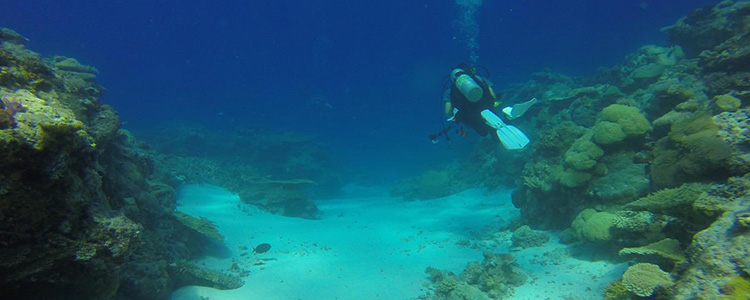
- Diving is staying underwater for a long time with an air tank on your back to be able to view the underwater world up close and personal.
- A diver breathes through his breathing apparatus, looks around through a diving mask, swims calmly through the water with fins and often wears a diving suit to stay warm.
- Diving is also called scuba diving.
- SCUBA is the abbreviation of Self Contained Underwater Breathing Apparatus. That is the international term for a compressed air device such as that used by divers.
Why would you go diving abroad?
- Distraction: only a few things work better as a distraction than making a deep sea dive.
- Relaxation: once underwater you end up in a rare quiet environment, at a slow pace you swim through a completely different inhabited world.
- Adrenaline: some dives can provide encounters with special fish species or large coral inhabitants. You will never forget the thrill of swimming quietly past or through them.
- Love of nature: you will encounter so much beauty that you will often put protecting the underwater world higher on your list.
What do you need when you go diving abroad?
- Good health: diving can involve risks if you are not fit enough or suffer from certain ailments.
- Respect for the underwater world: as a diver you can destroy more than you would like.
- A bag with useful items for diving, for before and after the dive (water, sunscreen, etc.).
To what extent are you insured for the risks of diving abroad?
- On average, diving is no more dangerous than most other sports.
- However, preparation and learning about the dangers of diving are more important, so you are well prepared when you face challenges.
- It is not without reason that the diving schools first require you to obtain your diving certificate (for example PADI) before you can go out on your own. But even with your diving certificate in your pocket, it is often wise to go out with a local dive master.
What are the consequences if something goes wrong while diving?
- If you end up in hospital, you may have to pay the costs yourself if you have not taken out insurance that covers your activities.
- If you are insured for diving abroad is generally subject to restrictions by regular insurance.
- You usually also run a greater risk of having an accident or bad luck.
- Read more: Travel insurances and insurances for backpacking abroad
- Read more: Verzekeren van duikactiviteiten in het buitenland (NL)
What are the best dive destinations?
- Micronesia: Palau
- Red Sea: Egypt, Djibouti
- Indian Ocean: Maldives, Pemba & Zanzibar
- Caribbean: Bonaire, Cayman Islands
- Indonesia: Sulawesi (Bunaken!), Lombok (cheap) Raja Ampat
- Malaysia: Borneo (Sipadan!)
- Papua New Guinea: multiple options
- Australia: Great Barrier Reef, if in the right location
- Central America: Honduras, Cozumel (Palancar reef), Panama (Bocas del Torro), Belize
- India: Andaman Islands, Ladakshadweep Islands
- Oman
Mountain biking and cycling abroad: what is it, why do it, and where is the best place to go?
Mountain biking and cycling abroad: what is it, why do it, and where is the best place to go?
Mountain biking and cycling abroad: what is it, why do it, and where is the best place to go?
What is cycling abroad?
- Cycling is riding a bike or bicycle, either with or without electrical support.
- Cycling can be done as a sport or as a way of transportation.
- Depending on the terrain, you can use a mountain bike, a city bike, a racing bike or gravel bike.
Why should you go cycling abroad?
- Cycling can be practiced as a sport, as a means of transportation, or as an experience in its own right.
- By choosing a bike over a car or bus to discover the landscape or city you will become more aware of your surrounding.
- By choosing a bike over walking or hiking, you will be able to cover a larger area in the same time.
- Cycling is a healthy way of traveling, only under very hot or smoggy conditions it might be healthier to choose another way of transport.
- When cycling you have a higher chance to get in contact with locals then when you use motorized transportation.
What do you need and what should you take into account when you go cycling?
- Per country and per city there is a big difference in the way people treat cyclists both when riding as when you're having a rest or are looking for a place to sleep.
- Cycling infrastructure may be great (the Netherlands, Denmark), reasonable (Austria, Belgium) or absent (most countries).
- In mountainous regions, infrastructure for mountain bikes is sometimes better than for road cycling.
- When renting a bike, your equipment can be far from optimal, but when something breaks, someone will be there to fix the bike.
- When you travel long distances on your own bike, you will probably be self-dependent for repairing your bike. Bike repair stores can be a long way out in many countries.
- Bring a good lock; don't leave important or valuable goods on your bike when your bike is out of your sight.
What are the risks when cycling abroad?
- Cars and other motorized vehicles are the biggest danger in traffic when cycling.
- On the countryside, dogs and stray dogs can be aggressive towards cyclists.
- In several countries in Africa and the Middle East, kids like to throw rocks at cyclists.
- Falling, because of bad roads or harsh weather conditions, can be quite dangerous.
- Riding a bike on a long sunny road without enough shade holds the risk of overheating or heavy sun burn.
- Smog and traffic exhaust fumes can ruin some of the fun of cycling in the city, a face mask can lower health risks, but some days not-cycling is a wiser choice.
Where is the best place to go cycling abroad?
Some of the most famous or challenging cycling routes:
- Apache Trail (Arizona, 300 km)
- Belgian & Luxembourg Ardennes (many options)
- North Vietnam (mountain tribe route)
- Malawi (along Lake Malawi)
- Country house tour (Poitiers, France)
- Tour de France stages
- Pilgrimage to Santiago de Compostela
- Around Iceland
- From Java to Bali in Indonesia
Some popular cities that can be visited by bike for an alternative experience:
- Taipei, Taiwan
- Singapore
- Kyoto, Japan
- Hoi An, Vietnam
- Fez and Marrakech, Morocco
- Bogotá, Colombia; at 2,600 meter, so take some time to acclimatize before riding a bike
- Buenos Aires, Argentina
- Santiago, Chile
- Barcelona, Valencia and Sevilla, Spain - better avoid hot summer days
- Porto, Portugal
- Italian cities like: Milan, Torino and Verona
Mountaineering and hiking abroad: what is it, why do it, and where is the best place to go?
Mountaineering and hiking abroad: what is it, why do it, and where is the best place to go?
Mountaineering abroad: what is it, why do it, and where is the best place to go?
What is mountaineering?
- Mountaineering can range from hiking in the Alps to alpine climbing in the Andes, from free climbing in the Ardennes to a multi-day trek in the Himalayas. For centuries, people have been fascinated by the mountains, reaching mountain peaks, and being active in mountainous areas. There are dozens of types of mountaineering, including mountaineering, mountain climbing, fat biking, free climbing, rock climbing, zip lining, ski touring, winter sports, ice diving, and ice climbing. In the last century, you have also seen more and more sports in which descending the mountain in an original way has become central. You can go abseiling, base jumping, hang gliding, but also skiing or sledding.
What is abseiling (rappel)?
- Abseiling is independently descending a steep wall using a climbing rope. In climbing it is used as a technique to descend, but in canyoning it has also become part of the sport
What is alpinism?
- Alpinism is mountain climbing in terrain consisting of rock, snow and ice. The emphasis is on 'vertical' ascent, using arms and hands to get up. Rock climbing and ice climbing are forms of alpinism.
- Alpinism originated more than three centuries ago during a scientific expedition that climbed the summit of Mont Blanc. Today's alpinism is more about climbing technique, the level of difficulty or the beauty of the route, than about reaching the top of the mountain.
What are trekking and mountain hikes?
- This means that you walk along paved and unpaved paths through the mountains. When you also need your arms and hands, people quickly speak of mountain climbing. Simple glacier walking is also considered mountain hiking.
- 'Rambling' is a simple way of trekking, and 'scrambling' is a simple way of climbing where one occasionally needs the help of hands or knees.
What is free climbing and wall climbing?
- Free climbing is a form of rock climbing where you climb up using your hands and feet. It does not mean that you do not have any form of protection (that is known as free solo climbing), but it does mean that you are not allowed to use any aids for the climbing itself. Wall climbing: is climbing in a covered area on a climbing wall without aids.
What are other mountain and climbing sports?
- Bouldering is a climbing sport where you climb unsecured to a height of about 4/5 meters. If you fall, you basically fall on a thick mat. Bouldering is very similar to life and often revolves around finding the right route.
- Hang gliding is an air sport where a pilot flies a hang glider. It is a lightweight, non-motorized, fixed-wing aircraft.
- Death riding or ziplining is an outdoor activity where you glide down a suspended steel cable from a high point to a lower point.
- Skiing or sledding: see winter sports
What do you gain from mountaineering?
- Better health: from respiratory tract to fitness.
- A sense of humility and the world around you.
- An adrenaline rush or an ultimate feeling of peace.
What do you take with you when you go mountaineering?
- Bring a good basic condition.
- Bring sufficient water and food for the journey and for the duration of the trip.
- Good clothes and gear can make a great difference when doing any mountain sport.
- Use your common sense (so as not to become overconfident).
- Arrange for difficult trips a guide who knows the area well.
What are the risks when practicing mountain sports abroad?
- With every form of mountain sports, you also run more or less risk of having an accident or breakdown.
- You can get lost.
- You can have an accident (slip, trip).
- You can be faced with rapidly changing weather.
- Your equipment can break.
To what extent are you insured during mountain sports?
- The consequences if something goes wrong during mountain sports are, if you need help and have to be taken down a mountain, or repatriated from a remote area, the costs can be quite high. The costs of deploying a rescue helicopter alone are around 5,000 euros per hour! In addition, you can be faced with the costs of a rescue team.
- If you also end up in the hospital, you may have to pay the costs yourself, if you have not taken out insurance that covers your mountain sports activities.
- Mountain sports abroad are generally limited by regular insurance. Usually, you also run a greater risk of having an accident or breakdown of gear.
- Read more: Travel insurances and insurances for long term abroad - Theme
- Read more: Verzekeren en sportieve activiteiten (NL)
Where is the best place to go for mountain sports?
Where can you go for the most beautiful mountain walks and treks?
- The Inca Trail (the route to Machu Picchu) in Peru
- Mount Rinjani (beautiful volcano on Lombok, Indonesia)
- Mount Kailash (Tibet, famous pilgrimage route, high and difficult)
- Resurrection Pass Trail (Alaska, through Chugach National Forest)
- Dogon Valley (Mali, very traditional area)
- The South Downs Way (South-East England, Sussex)
- Trollheimen (Norway, several options)
- Western Way (ancient pilgrimage route in Ireland)
- Taquesi (Bolivia, from Andes to Yungas)
- Hiking route E5 (Austria, runs from Swiss to Italian border)
- Gr 11 (Grande Randonnée)(Long distance hiking route through the Pyrenees, runs from the Mediterranean to the Basque Gulf)
- Neltner/Toubkal (Morocco, in the high Atlas Mountains)
- Leh (North-East India/Himalaya, beautiful dry trekking area)
- Darjeeling/Sikkim (North-West India/Himalaya, beautiful green trekking area)
- Retezat (Transylvania, Romania)
- Wildcoast Coffeebay Trail (Transkei, South Africa, coastal area)
- Milford track (South of New Zealand)
- Annapurna (Nepal, well-known but still beautiful)
- Chang Mai Hill Tribes trek (Thailand, multiple routes)
- The Bear Route (Oulanka, Finland)
- Fish River Canyon (Namibia, desert area and oases)
- Patagonia (Traveler's paradise with Torres de Paine)
- Great South West Walk (Australia, along the coast of Victoria)
- Overland track (Tasmania, lots of wild and varied landscape)
Snorkeling abroad: what is it, what is the best place to go, and are you insured?
Snorkeling abroad: what is it, what is the best place to go, and are you insured?
Snorkeling abroad: what is it, where is the best place to go, and are you insured?
- What is snorkeling abroad?
- Why should you go snorkeling abroad?
- What do you need and what should you take into account when you go snorkeling?
- What are the risks when practicing diving abroad?
- What are the consequences if something goes wrong while snorkeling?
- Where is the best place to go if you want to snorkel and have an unforgettable experience?
- Where else in the world can you snorkel really well?
What is snorkeling abroad?
- Snorkeling is swimming with a windpipe and diving goggles to be able to view the underwater world from above.
- You usually wear flippers to make it easier to move or to be able to dive a few meters deep.
- A snorkeler breathes through a snorkel and looks down through diving goggles.
Why should you go snorkeling abroad?
- Experience: expect unforgettable impressions. The first time you snorkel among the many colorful fish is an unforgettable experience for everyone. In real life it is much more intense than you would have expected.
- Involvement: snorkeling increases your awe for nature underwater, whether you go snorkeling with dolphins, come face-to-face with enormous manta rays, or encounter a sea turtle while snorkeling, your view of nature will never be the same again!
- Stability and stress reduction: snorkeling is not only the ultimate relaxation, but it is also fantastically beautiful to float among thousands of fish and coral species, to let yourself be carried by the current along a rock wall with bright red fan corals and parrot fish that calmly look at you.
What do you need and what should you take into account when you go snorkeling?
- Environmental awareness: for example, by using coral-friendly sunscreen, by not standing on corals, and by touching as little coral or fish as possible.
- Health: snorkeling can sometimes involve risks if you are not fit enough and there is a strong current.
What are the risks when practicing diving abroad?
- Snorkeling is relatively harmless.
- Do inquire well about the local dangers such as currents and certain dangerous fish species.
- To have a pleasant night's sleep afterward, you better make sure that you do not burn your back and legs; that happens quickly!
What are the consequences if something goes wrong while snorkeling?
- If you end up in the hospital, you may have to pay the costs yourself when you do not have insurance that covers your activities.
- Snorkeling abroad is generally not restricted by regular insurance.
- Be careful not to take unnecessary risks. If there is a red flag in connection with the visit of a white shark or dangerous jellyfish, skip a day of snorkeling because your insurance will not cover you if you are careless.
- Read more: Travel insurances and insurances for long term abroad - Theme
- Read more: watersport en duikactiviteiten verzekeren (NL)
Where is the best place to go if you want to snorkel and have an unforgettable experience?
- Australia: top locations include the Great Barrier Reef
- Bonaire: check the right places
- Egypt: top locations you will find in the south and in the Sinai
- Philippines: besides Palawan and Bohol there are several top locations
- Honduras: for example around Roatan and Utila
- Indonesia: such as on Lombok (cheap), Sulawesi (Bunaken!) and Pulau Weh (Aceh)
- Maldives: on many of the islands you can snorkel superb
- Malaysia: the Perhentians and Sipidan (on Borneo)
- Panama: for example on Bocas del Torro
- Tanzania: on Pemba and Zanzibar
Where else in the world can you snorkel really well?
Surfing, kitesurfing and windsurfing abroad: what is it, why do it, and where is the best place to go?
Surfing, kitesurfing and windsurfing abroad: what is it, why do it, and where is the best place to go?
Surfing, kitesurfing and windsurfing abroad
What is surfing abroad?
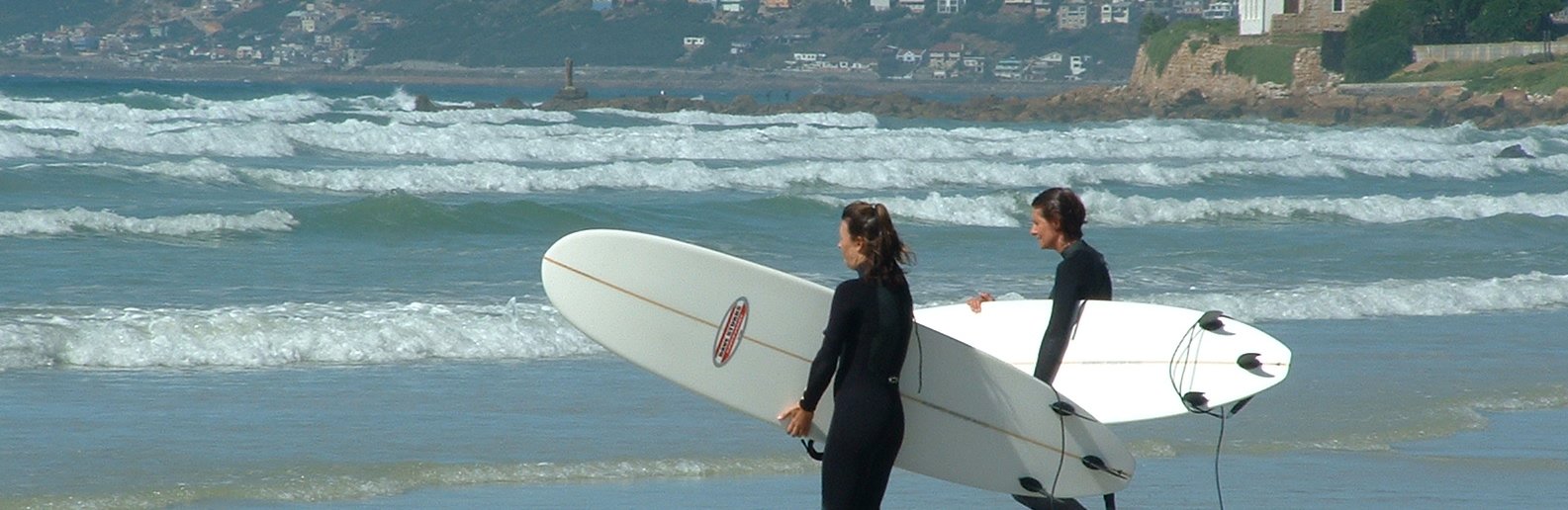
- Surfing involves moving across the water on a surfboard.
- There are several sub-disciplines within surfing:
- Wave surfing: when wave surfing, you balance on your surfboard while moving across a wave. Wave surfing is done at sea.
- Windsurfing: when windsurfing, a sail is mounted on the board, which the windsurfer controls while standing on the board. Windsurfing does not necessarily require waves (but it does require wind), so it can be done both at sea and on larger lakes.
- Kitesurfing: when kitesurfing, you stand on a surfboard but are pulled along by a kite that you try to keep in the air yourself.
- Stand-up paddleboarding: standing on a paddleboard, you paddle across the water, usually at a relaxed pace.
What are the dangers of surfing abroad?
- Many of the dangers of surfing are similar to those of other water sports at sea: drowning, exhaustion, and hypothermia are always a risk, especially if you are poorly prepared.
- Take the time to ‘read’ the sea. Where do the waves break? Where does the water flow back (rip currents)? How do other beachgoers and surfers behave?
- Don't go out into the sea alone; make sure there are people around you who can help you or call for help if you get into trouble.
- Read more about the risks of surfing and how to mimimize it
Where are the best places to go when you want to surf and have an unforgettable experience?
- Portugal: not far from Lisbon, there are several surf spots for beginners and advanced surfers, such as Costa da Caparica, Peniche, and Baleal.
- Spain: for example, Oyambre and Zarautz on the north coast.
- Ecuador: combine surfing in pleasantly warm water with lively parties in Montañtia.
- Sri Lanka: take a look at Midigama or Unawatuna.
- Costa Rica: practice your Spanish lessons from a surfboard in Puerto Viejo.
- Morocco: in and around Taghazout, you can spend the winter surfing between September and May. In Dakhla, kitesurfing/windsurfing is great.
- South Africa: ideal conditions can always be found somewhere, but don't forget to check whether the local waves suit your level.
- Brazil: Jericoacoara is a former hippie village with good conditions for kite surfing and wind surfing.
- Dominican Republic: Caribbean vibes and all kinds of surf options around the island.
Visiting nature reserves abroad: what is it, why would you do it, and where is the best place to go?
Visiting nature reserves abroad: what is it, why would you do it, and where is the best place to go?
Visiting nature reserves abroad: what, why, and where is the best place to go?
- What does visiting nature reserves abroad entail?
- What are reasons to visit nature reserves abroad?
- What skills and motivations do you need to visit nature reserves?
- What are good countries and locations to visit nature reserves?
- What are the risks of visiting nature reserves abroad and are you insured against those risks?
What does visiting nature reserves abroad entail?
- Visiting nature reserves abroad means traveling to protected or special nature areas to experience ecosystems, landscapes, and wildlife. Think of national parks, nature reserves, mountain regions, jungles, deserts, or marine areas.
- This is not just about “seeing beautiful places,” but also about consciously experiencing nature and interacting with vulnerable ecosystems. In many cases, this falls under ecotourism: travel that takes nature conservation and local communities into account.
Examples of activities in nature reserves may include:
- Safaris and wildlife spotting.
- Hiking or trekking in mountains, forests, or jungles.
- Diving or snorkeling in coral reefs.
- Visiting national parks or protected areas.
- Participating in nature or volunteer projects or environmental and nature education activities.
- In practice, the experience varies greatly by location. Some areas are easily accessible and organized, while others are remote and require more preparation.
It is important to keep in mind, when you visit nature reserves:
- Nature reserves are often vulnerable and need protection.
- Visitor behavior influences animals, nature, and local communities.
- Tourism can be both positive (income, protection) and negative (disruption, pollution).
- Rules and restrictions can vary by area.
What are reasons to visit nature reserves abroad?
- To become environmentally aware: you learn to understand ecosystems and see how nature and humans influence each other.
- To be involved: you directly experience the value of nature and feel a greater connection with the world around you.
- To practice analysing: you learn to recognize patterns in nature, biodiversity, and landscapes.
- To become stress-resistant: nature helps you cope with stimuli, challenges, and physical exertion.
- To develop a vision: you form your own perspective on nature conservation, sustainability, climate change and travel.
What skills and motivations do you need to visit nature reserves?
- Environmental awareness: you take nature, animals, and local rules into account.
- Flexibility: plans change due to weather, terrain, or circumstances.
- Planning: you prepare well for routes, safety, and equipment.
- Stress resistance: you remain calm during physical exertion or unexpected situations.
- Professional conduct: you treat nature and the environment with respect and responsibility.
What are good countries and locations to visit nature reserves?
- Safari and wildlife: Kenya, Tanzania, South Africa, Namibia, Nepal, India.
- Mountains and hiking: Nepal, Peru, Switzerland, New Zealand, Japan.
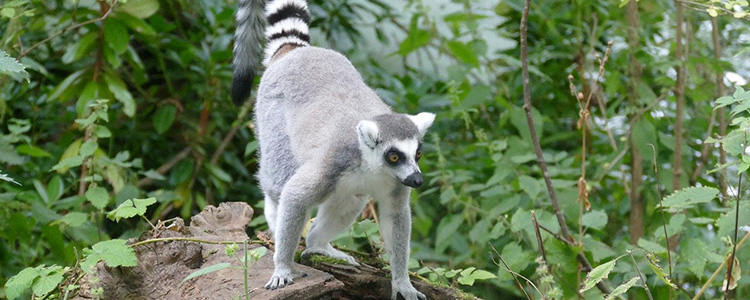
- Jungle and biodiversity: Costa Rica, Ecuador, Brazil, Indonesia, Suriname, Ethiopia, Madagascar.
- Coral reefs and sea: Australia, Philippines, Indonesia, Thailand, Caribbean.
- Rugged and remote nature: Iceland, Norway, Canada, Patagonia (Chile/Argentina).
What are the risks of visiting nature reserves abroad and are you insured against those risks?
What are the risks of visiting nature reserves abroad?
- that you are traveling to remote areas where medical assistance is limited and evacuation can be difficult.
- that you encounter wild animals or dangerous situations such as falling, getting lost, or extreme weather conditions, with often medical consequences.
- that you are insufficiently prepared for local conditions such as altitude, heat, or cold, which entails health risks.
- that activities such as hiking, diving, or safaris involve additional risks that are not covered by standard insurance.
- that costs for rescue operations or evacuation (for example, by helicopter) can run high.
Are you insured when visiting nature reserves?
- Good insurance is important for activities in nature reserves, as they come with many risks.
- During work, internships, or volunteering abroad where you receive compensation or a salary, your own health insurance coverage in your home country may lapse.
- When you are thinking of working or volunteering in nature reserves, see the pages for paid work, for internships and for volunteer work abroad.