Travel to Namibia to backpack, study, intern, volunteer, work, or live as a digital nomad, expat or emigrant?

Image

Image

Image  Namibia

Intro

Backpacking or traveling in Namibia?

  • Namibia is beautiful! The landscapes are breathtaking, the nature is diverse, you can go off the beaten path and the people are incredibly warm-hearted. It is a very sparsely populated country set up for tourism. A good first entry point to the African continent! 
  • The country lends itself to both short and long vacations. For both backpackers and travelers, although it is a bit more difficult for the former to find cheap accommodation and activities. 
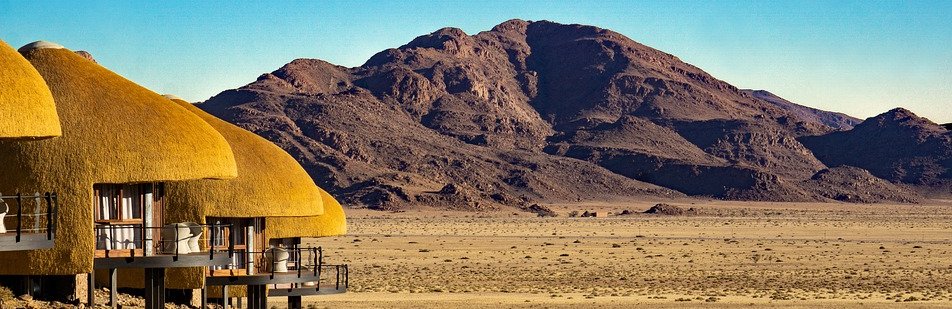
  • Activity spotting: climb the sand dunes of Sossusvlei, wander the Namib Desert, spot the big five in Etosha National Park, visit Fish River Canyon and the lurid skeleton coast, discover the history of Windhoek and Swakopmund, get to know the Himba and Herero peoples in the north, see the stars (yes really, one of the best places), go on self-organized safari.

Study in Namibia?

  • The quality of education in Namibia is okay and the choice of studies is relatively limited. It is an interesting country if you want to learn more about local development, African politics and colonial history. Further popular fields of study are business administration, engineering, social sciences and medicine. 
  • Language: Afrikaans & English.
  • Study city: Windhoek.

Internship in Namibia?

  • It is not easy to find an internship in Namibia, but if you look carefully there are opportunities, for example in the field of nature and animal protection or research, at social NGOs, in ecotourism and at universities as a researcher.
  • Competencies: do you succeed in finding an internship? Then you can develop the following competencies, among others - ecological skills, intercultural communication, adaptability and working in remote areas, independence, sustainability and environmental ethics. 

Volunteer in Namibia?

  • As a volunteer in Namibia, you can work well in conservation and wildlife protection. In fact, the country is a forerunner in Africa in this field. You can also volunteer on horse ranches, in education and health care. 

Working in Namibia?

  • Most expats were sent to Namibia by a company where they were already working. Namibia's economy has been stable for a long time and there are many jobs for expats with specific skills. Do keep in mind that the policy is to give preference to a local worker over an expat, which makes finding work a little more difficult. 
  • Work culture: learn about the Namibian handshake, a firm handshake, the crossing of thumbs before returning to a normal handshake. This happens particularly between male colleagues. Women greet each other with words, unless a woman is of higher seniority. Men and women greet each other with a simple Western handshake. Greetings are important in Namibia, as is smalltalk. 

Working as a digital nomad in Namibia?

  • Namibia is a great country for digital nomads! There is an awful lot to experience, the people are tremendously hospitable and the combination of expats and locals means that there is a lot of variety in food and goods on offer. Facilities are good, with availability of coworking cafes and relatively good wifi in the larger cities. Also, the main language is English, which makes it easier to integrate into society and make new friends. 
  • Favorite locations: Windhoek, Swakopmund. 
  • Visa: a digital nomad visa is also available in Namibia these days. 

Living in Namibia?

  • Namibia is one of the most popular countries for expats in Africa. This is mainly because of the high quality of life. The supermarkets have a lot, including Western offerings, the health centers are good, there are international schools and it is quite safe. 
  • In addition, people are tremendously open and friendly toward expats. So it is easy to get to know people and make new friends. 
  • Namibians love to chat, sometimes to the point of nonsense. Keep in mind that this “poop talk” (yes really!) and “braai” are also an important part of socializing! 
  • It does come in handy to have a car when living in Namibia. This gives you more freedom to explore the country and the roads are very good. You can also easily travel by bus and train between major cities. 
  • Make sure you arrange your health insurance well.
Namibia Country Bundle: suggestions, stories and tips

Namibia Country Bundle: suggestions, stories and tips

Image

Content about Namibia on WorldSupporter

Namibia: Updates & Travel

Namibia: Updates & Travel

Travel in Namibia?

  • Namibia is the second least populated country in the world, so this leaves plenty of room for extraordinary natural beauty. Besides the imposing Kalahari and Namib desert and views of the Atlantic Ocean, Namibia is also chock-full of ancient culture. A perfect destination for a short or longer stay.
  • Namibia has several deserts with different flora and fauna. The Namib Desert in Namib Naukluft National Park, for example, is the oldest desert in the world with immense red sand dunes.
  • Etosha National Park is one of the largest game parks in Africa, known for its diversity of wildlife and easy accessibility.
  • You can visit seals at Cape Cross, near Walvis Bay. And in the month of November, they often have pups!
  • Check out Swakopmund, with all its German influences, is an oasis of calm, after the scorching hot desert.
  • Visit the capital Windhoek, which includes German architecture from colonial times.
  • Waterberg plateau is a beautiful natural park where you can walk around on your own. Here are black and white rhinos, among others.
  • Be prepared that the temperature can soar high above 40 degrees Celsius.

Updates Namibia

  • More about Namibia, updates and contributions, see the link below.
Packing list for Namibia, travel insurance for Namibia, and taking your belongings

Packing list for Namibia, travel insurance for Namibia, and taking your belongings

What to take with you to Namibia: spotlighted

Featured items:
  • Documents: a passport with at least 6 months left until it expires.
  • Money: credit cards are accepted in many tourist areas, but for the smaller places it is best to bring some Namibian dollars.
  • Care: sunscreen with a high SPF.
  • Outdoor and practical: travel cap or safari hat and good sunglasses. Buff, scarf or bandana for more sun protection.
  • Clothing: airy, light-coloured (and neutral-coloured), loose clothing (more about clothing for when it is warm). Long sleeves and trousers are nice for protection against the sun and mosquitoes (more about insect and mosquito-repellent clothing). Warm layers (fleece or jacket) for cooler evenings. Especially from May to September.
  • Shoes: nice walking shoes for the rough landscape and sandals or slippers for your relaxing moments.
  • Medicines and travel kit: a small first aid kit with plasters, painkillers, anti-diarrhea medication and ORS (dehydration is a thing). Mosquito repellent (see also DEET mosquito repellent).
  • Technique and equipment: world plug with type D/M (see also world plug or travel plug), a power bank for camping adventures and a headlamp or flashlight for camping adventures and lodges.
  • Extra: a good sense of adventure!
What are some other options for packing as well?
  • Reusable water bottle with filter, because tap water is technically drinkable, but often tastes strange.
  • Quick-drying travel towel.
  • Mini binoculars or monocular for your safari.
  • International driving license, if you want to rent a car.
  • A raincoat if you go between December and March.

What should you keep in mind when traveling to Namibia with your belongings?

  • The activities (maybe you should take camping gear with you?).
  • The temperatures and rainfall in the season you are visiting Namibia.

Are there mosquitoes in Namibia?

  • Tropical Namibia is a paradise for mosquitoes. The “problem mosquitoes” are mainly found in the north. Malaria is common here, especially during the rainy season.
  • High-risk areas are Etosha, the Zambezi region, parts of the Kavango and the Caprivi Strip.
  • It is therefore important to protect yourself, especially in these areas.

Are there sandflies in Namibia?

  • Sand flies – the tiny stinging insects that can transmit leishmaniasis, among other things – are found in parts of southern Africa, but are quite rare in Namibia and are almost never reported as a risk to travellers.
  • Your set of mosquito repellents with DEET can provide a solution in combination with covering clothing, good spray, and not sleeping on the beach without protection.

Can you buy DEET, or other mosquito repellents, in Namibia?

  • There are mosquito repellents for sale in Namibia, although the choice will be smaller than at home.
  • Popular products are “Peaceful sleep” and “Tabard”. You can get these in pharmacies and supermarkets.

Can you buy a joint or weed in Namibia, or take it with you to Namibia?

  • In Namibia, things are going backwards rather than forwards when it comes to Cannabis. Cannabis is illegal and the penalties have increased in recent years.
  • The use of cannabis, or possession of cannabis, carries a prison sentence of around 20-40 years. So that will be a very long (or expensive, if you talk your way out of it) holiday.
  • So you better not take it with you either.

What to take to Namibia: detailed

Image

Why get specific insurance when going abroad: per activity abroad
Why should you take out specialized travel insurance for a long trip abroad?

Why should you take out specialized travel insurance for a long trip abroad?

What is round the world travel insurance or long-term travel insurance?

  • Round the world travel insurance means that you take out insurance that continues to provide coverage during all your activities abroad, and which is specifically intended for those who travel for long periods of time, such as world travelers, globetrotters, and nomads.

Why should you take out specialized travel insurance for a long trip abroad?

  • Round the world travel insurance provides coverage for a much longer trip than regular travel insurance.
  • World travel insurance is specifically intended for longer trips, whereas regular travel insurance may offer coverage on paper, but in practice handles it differently.
  • World travel insurance is suitable for many types of activities, ranging from high-altitude trekking to more risky sports.
  • World travel insurance continues to provide coverage if you start working during your trip, whether planned or unplanned. If you did not take out insurance before departure that allows you to work, there is no guarantee that you will be able to take out insurance that provides coverage while abroad.
  • Long-term travel insurance continues to provide coverage when your home country's health insurance no longer does.
  • Worldwide travel insurance also covers your medical expenses up to the actual cost, and not just for the standard costs. The costs per medical treatment vary greatly between countries.
  • Worldwide travel insurance can also continue to provide coverage if negative travel advice is issued.

What is important to insure when you are going to travel around the world?

  • That you have insurance that is valid in the countries where you are going to travel and posibly work.
  • That you are adequately insured for the sports and activities you are going to participate in during your full period abroad
  • That you are insured for emergency assistance and early return if something happens to you or your immediate family.
  • That your medical expenses are insured up to the actual cost and not just for the standard costs. The costs per medical treatment vary greatly between countries.
  • That you insure your luggage and take sufficient precautions against theft or damage.
  • That you are well insured against personal liability.
  • That you are well insured in case of accidents.
  • That you only insure yourself for legal assistance if there is an immediate reason to do so, unless coverage is already automatically included in the insurance.
  • That you pay close attention to choosing the right coverage when performing work or voluntary work during your world trip.

Check out more about

Why should you take out specific insurance when you go on a trip or vacation?

Why should you take out specific insurance when you go on a trip or vacation?

What is insurance for traveling abroad?

  • Travel insurance is insurance that provides coverage for risks during a trip or vacation abroad. This mainly concerns loss of or damage to your luggage, medical assistance, or repatriation costs if you need to be transported back home urgently. In some cases, travel insurance coverage also applies on domestic trips.
  • With annual travel insurance or multi-trip travel insurance, you are insured for all your trips throughout the year.
  • With temporary travel insurance or single-trip travel insurance, you take out insurance for each trip for the duration of the trip.
  • Cancellation insurance reimburses (all or part of) the travel sum, cancellation or accommodation costs if you have to cancel or interrupt your vacation.

Why should you take out travel insurance for a short trip, vacation, or long-distance trip?

  • Travel insurance can provide coverage in the event of an accident or emergency while you are abroad.
  • Travel insurance can provide coverage for damage and accidents during the adventurous or sporting activities you plan to do.
  • Travel insurance can continue to provide coverage if your health insurance no longer provides coverage, or if the damage is only reimbursed at cost price of your home country.
  • Travel insurance can provide coverage in the event of damage, loss, or theft of your luggage.
  • Travel insurance can provide coverage if you are held liable for damage you cause to other people or their property.
  • Travel insurance can provide coverage if you have to return home early because something has happened to you or your immediate family.

What is important to insure when you are going to travel abroad?

  • That you have insurance that is valid in the country or countries that you are going to visit.
  • That you are adequately insured for the sports and activities you are going to participate in during your period abroad.
  • That you are insured for emergency assistance and early return if something happens to you or your immediate family.
  • That your medical expenses are insured up to the actual cost and not just for the standard costs. The costs per medical treatment vary greatly between countries.
  • That you insure your luggage and take sufficient precautions against theft or damage.
  • That you are well insured against personal liability.
  • That you are well insured in case of accidents.
  • That you only insure yourself for legal assistance if there is an immediate reason to do so, unless coverage is already automatically included in the insurance.
  • That you pay close attention to choosing the right coverage when performing work alongside your travels.

Check out more about international insurances

Why should you take out specialized travel insurance for working abroad?

Why should you take out specialized travel insurance for working abroad?

Why should you take out specialized travel insurance for paid work, voluntary work or an internship abroad?

  • There may be several reasons why you need separate insurance when working abroad.
  • During work, internships, or volunteer work abroad where you receive financial compensation (or, for example, food or housing), your national health insurance coverage may expire. You will then need special insurance to remain insured for illness and accidents.
  • During specific work abroad, additional requirements may apply if your work involves additional risks. Only specific insurance policies offer coverage during this type of work.
  • During your work, the risk of accidents is sometimes greater, for example because you are doing work with which you have little experience or because of the nature of the work.
  • During your work, local employers generally offer no or limited insurance that provides insufficient coverage.

What is important to insure when you are going to work abroad?

  • That you have insurance that is valid in the country or countries where you are going to travel and work.
  • That you are adequately insured for the sports and activities you are going to participate in during your period abroad
  • That you are insured for emergency assistance and early return if something happens to you or your immediate family.
  • That your medical expenses are insured up to the actual cost and not just for the standard costs. The costs per medical treatment vary greatly between countries.
  • That you insure your luggage and take sufficient precautions against theft or damage.
  • That you are well insured against personal liability.
  • That you are well insured in case of accidents.
  • That you only insure yourself for legal assistance if there is an immediate reason to do so, unless coverage is already automatically included in the insurance.
  • That you pay close attention to choosing the right coverage when performing work.

Check out more about international insurances

Why should you take out specialized travel insurance for volunteering abroad?

Why should you take out specialized travel insurance for volunteering abroad?

What is insurance for volunteering abroad?

  • Insuring volunteer work abroad means taking out insurance that continues to provide coverage while you are working as a volunteer abroad

Why should you take out specialized travel insurance for voluntary work abroad?

  • There may be several reasons why you need separate insurance when volunteering abroad.
  • During specific activities abroad, additional requirements may apply if your work involves extra risks. Only specific insurance policies offer coverage during these activities.
  • The risk of accidents is sometimes higher during your work, for example because you are doing work you have little experience with or because of the nature of the work.
  • Local projects or employers generally offer no or limited insurance that provides insufficient coverage during your work.
  • When volunteering abroad and receiving minor financial compensation (or, for example, food or housing), your home country's health insurance coverage will potentially lapse. You will then need special insurance to remain insured for illness and accidents.
  • Regular travel insurance policies generally provide coverage for trips of a limited number of days. If your trip or stay abroad exceeds the maximum number of days, this generally means that for the entire travel period, you will not be covered.
  • Regular travel insurance policies generally only provide coverage for recreational travel without voluntary work activities. If you engage in activities other than recreational activities (such as volunteer work), this generally means that for the entire travel period, you will not be covered.

What is important to insure when you are going to work as a volunteer abroad?

  • That you have insurance that is valid in the country or countries where you are going to travel and volunteer.
  • That you are adequately insured for the sports and activities you are going to participate in during your period abroad
  • That you are insured for emergency assistance and early return if something happens to you or your immediate family.
  • That your medical expenses are insured up to the actual cost and not just for the standard costs. The costs per medical treatment vary greatly between countries.
  • That you insure your luggage and take sufficient precautions against theft or damage.
  • That you are well insured against personal liability.
  • That you are well insured in case of accidents.
  • That you only insure yourself for legal assistance if there is an immediate reason to do so, unless coverage is already automatically included in the insurance.
  • That when performing work in healthcare, with wild animals, and with dangerous (agricultural) machinery, you take care to choose the right coverage.

Check out more about international insurances

Why should you take out specialized travel insurance for an internship abroad?

Why should you take out specialized travel insurance for an internship abroad?

What is insurance for an internship abroad?

  • Insuring an internship abroad means taking out insurance that continues to provide coverage during your internship abroad
  • Insurance for internships abroad are also referred to as internship insurance. This internship insurance is specifically for when you go abroad for a long period of time to work as an intern, take courses, or conduct research abroad.

Why should you take out specialized travel insurance for an internship abroad?

  • There may be several reasons why you need separate insurance for an internship abroad.
  • During internship activities abroad, additional requirements may apply as soon as you start performing work that involves additional risks. Only specific insurance policies offer coverage during these activities.
  • During your internship, the risk of accidents is sometimes greater, for example because you are doing work with which you have little experience or because of the nature of the work.
  • During your internship, local employers generally do not offer insurance, or offer limited insurance that does not provide sufficient coverage.
  • During an internship abroad where you receive financial compensation (or, for example, food or accommodation), your home country's health insurance coverage will potentially lapse. You will then need special insurance to remain insured for illness and accidents.
  • Regular travel insurance policies generally provide coverage for trips of a limited number of days. If your trip or stay abroad exceeds the maximum number of days, this generally means that for the entire travel period, you will not be covered.
  • Regular travel insurance policies generally only provide coverage for recreational trips without work activities.

What is important to insure when you are going to be an intern abroad?

  • That you have insurance that is valid in the area where you will be traveling and doing your internship.
  • That you are adequately insured for the sports and activities you will be participating in.
  • That you are insured for emergency assistance and early return in case something happens to you or your immediate family.
  • That your medical expenses are insured up to the actual cost (what it actually costs), and not just for the standard costs. The costs per medical treatment vary greatly between countries.
  • That you insure your luggage and take sufficient precautions against theft or damage.
  • That you are well insured against personal liability and, preferably, also for liability during your internship.
  • That you are well insured in case of accidents.
  • That you insure yourself for legal assistance if there is an immediate reason to do so, unless the coverage is already automatically included in the insurance.
  • Make sure you choose the right coverage for internship work in healthcare, with wild animals, or with dangerous machinery!

Check out more about international insurances

Why should you take out specialized travel insurance for studying abroad?

Why should you take out specialized travel insurance for studying abroad?

What is insurance for studying abroad?

  • Insurance for studying abroad means that you take out insurance that continues to provide coverage during your studies, your education, and your related activities abroad.
  • Insurance for studying abroad is also referred to as study insurance. This study insurance is specifically for when you go abroad for a long period of time to take courses, study, or conduct research abroad.

Why should you take out specialized travel insurance for a study abroad?

  • Study insurance is specifically designed for studying abroad, whereas regular travel insurance policies may offer coverage on paper but handle this situation differently in practice.
  • Study insurance offers coverage for longer stays than regular (vacation) travel insurance.
  • Study insurance is also suitable for many types of activities, ranging from various sports to hiking at high altitudes.
  • Study insurance continues to provide coverage if you start working during your trip, whether planned or unplanned. If you have not taken out insurance before departure that allows you to work, there is no guarantee that you will be able to take out insurance abroad that provides coverage.
  • Study insurance continues to provide coverage if your own country's health insurance no longer provides coverage.
  • Student insurance also covers your healthcare costs above the rates in your own country; with regular insurance, you have to pay the extra costs yourself.
  • Student insurance can also continue to provide coverage if (study) visa issuers impose additional requirements on how you insure yourself, for example if you are going to the US and applying for a J-1 visa.
  • Student insurance continues to provide coverage if you are staying abroad for a longer period of time and want to visit your own country in between.

What is important to insure when you are going to study abroad?

  • That you have insurance that is valid in the country or countries where you are going to travel and work.
  • That you are adequately insured for the sports and activities you are going to participate in during your period abroad
  • That you are insured for emergency assistance and early return if something happens to you or your immediate family.
  • That your medical expenses are insured up to the actual cost and not just for the standard costs. The costs per medical treatment vary greatly between countries.
  • That you insure your luggage and take sufficient precautions against theft or damage.
  • That you are well insured against personal liability.
  • That you are well insured in case of accidents.
  • That you only insure yourself for legal assistance if there is an immediate reason to do so, unless coverage is already automatically included in the insurance.
  • That you pay close attention to choosing the right coverage when performing work alongside your studies.

Check out more about international insurances

Why should you take out specialized insurance for moving abroad as an emigrant or an expat?

Why should you take out specialized insurance for moving abroad as an emigrant or an expat?

What is an emigration insurance and what is an expat insurance?

  • Emigration insurance is an insurance that continues to provide coverage if you move abroad permanently or for an indefinite period of time.
  • Emigration insurance is not only intended for emigrants, but for anyone who leaves their home country for an extended period of time and does not intend to return in the foreseeable future.
  • Expat insurance is insurance that continues to provide coverage if you go to work abroad for a local or international employer for an extended period of time.
  • Expat insurance is not only intended for expats, but for anyone who has a more permanent job abroad.

Why should you take out specialized insurance for emigration or working as an expat abroad?

  • Emigration or expat insurance not only provides coverage for acute assistance in the event of illness or accident abroad, such as travel insurance, but can also provide coverage for existing conditions and ailments or non-urgent care.
  • Emigration or expat insurance does not require you to maintain valid health insurance in your home country.
  • Emigration or expat insurance provides coverage for preventive care or costs related to pregnancy and childbirth.
  • Emigration or expat insurance also provides coverage for long-term treatments and chronic conditions without you having to return to your home country.
  • Emigration or expat insurance often has no restrictions on the duration of the insurance, unlike travel insurance.
  • Emigration or expat insurance usually maintains coverage in cases such as negative travel advice or acts of war.
  • Emigration or expat insurance offers various solutions in the areas of disability, home and household insurance, goods transport, and liability.

What is important to insure when you are going to move abroad?

  • That you have insurance that is valid in the country or countries where you are going to live and/or work.
  • That you are adequately insured for the sports and activities you are going to participate in during your period abroad
  • That you are insured for emergency assistance and early return if something happens to you or your immediate family.
  • That your medical expenses are insured up to the actual cost and not just for the standard costs. The costs per medical treatment vary greatly between countries.
  • That you are well insured against personal liability.
  • That you are well insured in case of accidents.
  • That you pay close attention to choosing the right coverage when performing work with additional health risks

Check out more about international insurances

Why should you take out travel insurance and why through the JoHo Foundation?

Why should you take out travel insurance and why through the JoHo Foundation?

Why Insurances through JoHo

  • Specialized: in emigration, work, internships, study and travel abroad.

  • Service: JoHo offers multiple travel insurances by multiple companies. Thanks to JoHo's extensive experience, it can offer support in case of problems with insurers, as well as advice and fast and personal handling.

  • Safe: JoHo is recognized as a trustworthy intermediary for insurances.

  • Social: by purchasing an insurance through JoHo you provide a talented student in The Philippines with health insurance

Why Should You Take Out A Travel Insurance?

  • The chance of getting injured or ill is generally higher than when you would have stayed at home. The medical care you will need can be very expensive, even more so if you are treated in a private clinic.

  • If you have to fly back because of family circumstances, the flights might be more expensive than your original flight because you have to fly on short notice.

  • You might have to deal with the damage, loss or theft of your luggage.

  • In case of emergency it can be difficult to figure out what to do. A good travel insurance will have an assistance team on standby for you 24/7 and will be able to tell you what steps to take.

Why Should You Specifically Take Out A Travel Insurance For A Long Trip Abroad?

  • Often regular travel or health insurances only cover trips for a maximum number of days (for example 60, 90 or 180 days).

  • Depending on your home country, your health insurance might not offer any coverage for treatment abroad.

  • During a long trip you might consider specific activities, like paid work or volunteering. Regular travel insurances often don’t cover these kind of activities. The same goes for adventurous/ hazardous sports like skydiving, scuba-diving and bungee jumping.

More on why to use JoHo

  • JoHo is one of the few organizations where you can directly purchase a comprehensive range of foreign insurances from a variety of insurers. As with our other products and services, we believe that you should be able to choose between the best, the most cost effective and the most specialized insurance.

  • JoHo offers various possibilities from combining insurances to assisting in transferring from one insurer to another.

  • When you purchase an insurance policy through JoHo, you will not pay more than if you had purchased it directly from the insurer. Sometimes (through special collective agreements) you will even pay less.

  • JoHo offers support with problems that may arise with the insurer. Sometimes disagreement with claims, cancellation notice or insurance premiums can occur. In this situation it helps if you have the assistance of an organization who has an established relationship with the insurer.


Read more about JoHo and JoHo Insurances

Image

Safety, insurances and packing list for Namibia

Packing list for Namibia, travel insurance for Namibia, and taking your belongings

Packing list for Namibia, travel insurance for Namibia, and taking your belongings

What to take with you to Namibia: spotlighted

Featured items:
  • Documents: a passport with at least 6 months left until it expires.
  • Money: credit cards are accepted in many tourist areas, but for the smaller places it is best to bring some Namibian dollars.
  • Care: sunscreen with a high SPF.
  • Outdoor and practical: travel cap or safari hat and good sunglasses. Buff, scarf or bandana for more sun protection.
  • Clothing: airy, light-coloured (and neutral-coloured), loose clothing (more about clothing for when it is warm). Long sleeves and trousers are nice for protection against the sun and mosquitoes (more about insect and mosquito-repellent clothing). Warm layers (fleece or jacket) for cooler evenings. Especially from May to September.
  • Shoes: nice walking shoes for the rough landscape and sandals or slippers for your relaxing moments.
  • Medicines and travel kit: a small first aid kit with plasters, painkillers, anti-diarrhea medication and ORS (dehydration is a thing). Mosquito repellent (see also DEET mosquito repellent).
  • Technique and equipment: world plug with type D/M (see also world plug or travel plug), a power bank for camping adventures and a headlamp or flashlight for camping adventures and lodges.
  • Extra: a good sense of adventure!
What are some other options for packing as well?
  • Reusable water bottle with filter, because tap water is technically drinkable, but often tastes strange.
  • Quick-drying travel towel.
  • Mini binoculars or monocular for your safari.
  • International driving license, if you want to rent a car.
  • A raincoat if you go between December and March.

What should you keep in mind when traveling to Namibia with your belongings?

  • The activities (maybe you should take camping gear with you?).
  • The temperatures and rainfall in the season you are visiting Namibia.

Are there mosquitoes in Namibia?

  • Tropical Namibia is a paradise for mosquitoes. The “problem mosquitoes” are mainly found in the north. Malaria is common here, especially during the rainy season.
  • High-risk areas are Etosha, the Zambezi region, parts of the Kavango and the Caprivi Strip.
  • It is therefore important to protect yourself, especially in these areas.

Are there sandflies in Namibia?

  • Sand flies – the tiny stinging insects that can transmit leishmaniasis, among other things – are found in parts of southern Africa, but are quite rare in Namibia and are almost never reported as a risk to travellers.
  • Your set of mosquito repellents with DEET can provide a solution in combination with covering clothing, good spray, and not sleeping on the beach without protection.

Can you buy DEET, or other mosquito repellents, in Namibia?

  • There are mosquito repellents for sale in Namibia, although the choice will be smaller than at home.
  • Popular products are “Peaceful sleep” and “Tabard”. You can get these in pharmacies and supermarkets.

Can you buy a joint or weed in Namibia, or take it with you to Namibia?

  • In Namibia, things are going backwards rather than forwards when it comes to Cannabis. Cannabis is illegal and the penalties have increased in recent years.
  • The use of cannabis, or possession of cannabis, carries a prison sentence of around 20-40 years. So that will be a very long (or expensive, if you talk your way out of it) holiday.
  • So you better not take it with you either.

What to take to Namibia: detailed

Image ACTIVITIES

Check courses, jobs, projects, recipes, suggestions and tips related to: 'Namibia'

CHECK MORE ACTIVITIES

Make a selection, to find more tips than you see below

Image Wil jij stage lopen bij een basisschool, NGO of medische instelling in Namibië?
Wil jij stage lopen bij een basisschool, NGO, advocatenkantoor of boerderij? Via deze organisatie vind je een stage in Namibië die bij jouw opleiding en wensen past.
Image Help mee bij het voorkomen van conflicten tussen mensen en woestijnolifanten in Namibië
Help mee bij het voorkomen van conflicten tussen mensen en woestijnolifanten in Namibië door drinkplaatsen van de lokale bevolking te beschermen met bijvoorbeeld muren...
Image Kom helpen bij de bescherming van wilde katten in Afrika
Kom helpen bij de bescherming van wilde katten in Afrika
Image Kom als vrijwilliger meehelpen op een boerderij in Namibië
Kom als vrijwilliger meehelpen op een boerderij in Namibië.
Image Help mee op een paardenranch, volg trainingen over paardenverzorging en ontdek de Afrikaanse natuur per paard
Help mee op een paardenranch, volg trainingen over paardenverzorging en ontdek de Afrikaanse natuur per paard. Werkzaamheden met de paarden verschillen per locatie: Zuid...
Image Help mee op een opleidingscentrum voor jongeren en draag bij aan een wereld van gelijkheid en gedeelde welvaart
Help mee op een opleidingscentrum voor jongeren en draag bij aan een wereld van gelijkheid en gedeelde welvaart.
Image Loop stage of doe (afstudeer)onderzoek bij een opleidingscentrum voor jongeren in Afrika
Je loopt stage of doet onderzoek bij een internationale organisatie die opleidingscentra in onder andere Zimbabwe en Mozambique heeft, waar jongeren worden opgeleid tot...
Image Afhankelijk van je vaardigheden kun je bijdragen aan verschillende activiteiten gericht op natuurbehoud om zo het jachtluipaard te beschermen
Afhankelijk van je vaardigheden kun je bijdragen aan verschillende activiteiten gericht op natuurbehoud om zo het jachtluipaard te beschermen
Image Werk als docent op de universiteit van Namibië
Werk als docent op de universiteit van Namibië.
Image Ga in Windhoek, Namibië, aan de slag als marketing assistent bij een organisator van safari tours
Ga in Windhoek, Namibië, aan de slag als marketing assistent bij een organisator van safari tours. Je assisteert bij het maken van PR en marketing materialen voor...
Activities abroad: home bundle

Main content and contributions for activities abroad

,,,accommodations, adventure activities, courses, internships, jobs and volunteer projects

...to help another, travel with care, work together , learn to share and inspire with your experience


Activities abroad: home page

Activities abroad: home page

From language courses to gap year abroad, from work experience to volunteering abroad, from paid work to internship abroad, from mountaineering to diving and from backpacking to travel around the world

    What social activities can you do abroad?

    • Opportunities are found in the areas of helping, learning or studying. You can get involved to volunteer in a social project at a school in Africa, Asia or Latin America. You can get involved in nature, in a project with animals or cleaning the sea or beaches. Those who want to learn more can choose for example a language course in Latin America, Spain or South Africa.

    What work related activities can you do abroad?

    • If you want to gain work experience, and/or also earn money, go and work abroad. You can combine backpacking in Australia with temporary work. You can work on campsites in Europe or bush camps in Africa. You can pretty much go all over the world to work in the hospitality industry, hotels and hostels, in the healthcare sector or for example at a diving school.

    What sports activities to do abroad?

    • Have you ever thought of mountain biking, rafting (going down a wild river on a raft or rubber dinghy, climbing or canoeing), survival (which involves building rafts, climbing or canoeing), abseiling (descending a rock face while secured to ropes), zip-lining (whizzing down a cable), canyoning (starting at the top of a river and then climbing, swimming, diving down the bed) or caving (scrambling, wriggling and crawling through caves and crevices)?
    • Maybe you feel more comfortable on a bodyboard (on a half-wave surfboard, you surf the high waves lying down-with flippers), on a hang glider or while paragliding (with a parachute you float down a mountain or dune), hydrospeeding (on a bodyboard with flippers and a wetsuit on you go down a wild river via rapids) or Tiefschneeskiing (racing down through powder snow)?

    Check the pages below for more activities and inspiration and where to go and how to arrange it

      Activities abroad: for gap year, sports, travel and outdoor abroad

      Activities abroad: for gap year, sports, travel and outdoor abroad

      Bundled content for gap year, sports, travel and outdoor abroad

      Access: 
      Public

      Image STORIES

      Check blogs, experiences and information related to: 'Namibia'

      CHECK MORE STORIES

      Make a selection, to find more blogs and contributions than you see below

      Image Packing list for Namibia, travel insurance for Namibia, and taking your belongings
      To pack and bring to Namibia What to take with you to Namibia: spotlighted What should you keep in mind when traveling to Namibia with your belongings? Are there...
      Image Goats abroad and while traveling: are they dangerous, where do you encounter them, where can you see them?
      What are goats? Where can you encounter wild goats in the wild when travelling and abroad? Are (wild) goats dangerous? What to do if you encounter a goat in the wild?...
      Image Welk visum regelen voor een reis of vrijwilligerswerk naar Namibië?
      Toeristenvisum Een toeristenvisum is niet verplicht voor Namibië voor een verblijf tot 90 dagen. Deze kan nog eens met 90 dagen verlengd worden bij het Ministerie van...
      Image Namibia: Updates & Travel
      Travel in Namibia? Namibia is the second least populated country in the world, so this leaves plenty of room for extraordinary natural beauty. Besides the imposing...
      Image Peri Peri Reizen
      Peri Peri Reizen Oprichters Nelleke Priem en Kees Quist startten Peri Peri Reizen in 2011, na vakantiereizen en vrijwilligerswerk in diverse zuid-Afrikaanse...
      Countries & Destinations: home bundle

      Bundled content, suggestions, stories and tips about the countries and destinations in the world

      ...to help another, travel with care, work together , learn to share and inspire with your experience

      Africa: country bundles

      Africa: country bundles

      Access: 
      Public
      Asia: country bundles

      Asia: country bundles

      Country bundles of Asian countries

      Access: 
      Public
      Europe: country bundles

      Europe: country bundles

      Country bundles of European countries

      Access: 
      Public
      The Caribbean: country bundles

      Image ORGANIZATIONS

      Check sectors and organizations related to: 'Namibia'

      CHECK MORE ORGANIZATIONS

      Make a selection, to find more or other organizations than you see below

      Image Kaya Responsible Travel
      Kaya Responsible Travel offers volunteering and internship programs abroad. Based in the USA and UK they offer internships, volunteer projects and gap year programs in...
      Image The University Centre for Studies in Namibia (TUCSIN)
      Educational institution with several relatively small locations throughout Namibia. In addition to bachelor's degrees, secondary education is also offered, focusing on...
      Image The Naankuse Foundation
      This wildlife organization is committed to protecting wildlife in Namibia, both through wildlife conservation and caring for animals in need. Education and social...
      Image Cheetah Conservation Fund
      Cheetah Conservation Fund (CCF) is an organization dedicated to researching and rescuing cheetahs in the wild. The organization is based in Namibia and has a second...
      Image African Travels
      African Travels biedt verantwoorde en duurzame reizen aan naar Botswana, Congo, Kenia, Madagascar, Malawi, Mauritius. Mozambique, Namibie, Oeganda Rwanda, Seychellen,...
      Image Oak Travel
      Oak Travel biedt, taalcursussen, avontuurlijke groepsreizen en vrijwilligerswerk voor jongeren naar unieke bestemmingen wereldwijd. Van een surfkamp in Costa Rica tot...
      Image Explore Namibia
      Explore Namibia is een organisatie in Namibia, opgericht in 2006 door een Nederlands stel. Ze bieden tours, informatie en routebeschrijvingen aan en verhuren auto's met...
      Image Elonga Internship CC
      Elonga Internship CC is an agency that arranges internships and volunteer work in Namibia. The organization finds a suitable internship or volunteer position based on...
      Image Go with Khaya
      Through Go with Khaya (formerly Khaya Volunteer), you can participate in a variety of volunteer projects in Malawi, Namibia, Tanzania, Zanzibar, and South Africa. These...
      Image Let's Go Africa: Stages en Vrijwilligerswerk
      Let's Go Africa is een Nederlandse bemiddelingsorganisatie voor stages en vrijwilligerswerk in Afrika. Het doel van de organisatie is om studenten, vrijwilligers en...
      Organizations & Services: home bundle

      Bundled content, suggestions, stories and tips about organizations and their products and services

      ...to help another, travel with care, work together, learn to share and inspire with your experience

      Organizations: home page
      Organizations: for administrative, tax and legal work and consulting
      Organizations: for agriculture, grape picking, farming and vineyards
      Organizations: for animal protection, animal care and working with wildlife abroad
      Organizations: for au pairs, youth work and child care abroad
      Organizations: for bush camping and working at a campsite abroad
      Organizations: for catering, hospitality and entertainment abroad
      Organizations: for civil society and social work abroad
      Organizations: for corporate business services
      Organizations: for customer services abroad and help desks
      Organizations: for diving, snorkeling and water sports abroad
      Organizations: for education and schools abroad
      Organizations: for expatriate insurances, travel insurances, and emergency call centers
      Organizations: for gap year activities abroad and sabbaticals
      Organizations: for internship placement abroad
      Organizations: for insurances and finance abroad
      Organizations: for IT, engineering and construction
      Organizations: for language travel and language teaching abroad
      Organizations: for marketing, communication and PR
      Organizations: for mediation in au pairs, childcare and elderly care in the Netherlands
      Organizations: for moving, international relocation and transport abroad
      Organizations: for nature conservation, environmental protection and working in nature abroad
      Organizations: for nonprofit projects, development work and international cooperation
      Organizations: for online work as digital nomad, freelancer, or independent entrepreneur from abroad
      Organizations: for outdoor activities and sports
      Organizations: for providing accommodation and hospitality work in hotels, guesthouses, ecolodges and hostels abroad
      Organizations: for providing healthcare and working in medical care abroad
      Organizations: for psychological assistance and mental health care abroad
      Organizations: for real estate, brokerage abroad and property rental abroad
      Organizations: for research and scientific work abroad
      Organizations: for student support and student associations
      Organizations: for tour guidance and adventure tours abroad
      Organizations: for tourism and organized travel and leisure work abroad
      Organizations: for voluntary work mediation and project placement abroad
      Organizations: for yacht and shipping crew and working on a cruise ship abroad

      Image SUMMARIES

      Check summaries and study assistance related to: 'Namibia'

      CHECK MORE SUMMARIES

      No results found.

      Image

      SPOTLIGHT & FAVORITES

      SPOTLIGHT
      Een weekje Kanaan; Mooi en levensgevaarlijk

      Oké, ik heb het waarschijnlijk over mezelf afgeroepen toen ik in mijn vorige blog schreef dat ik niet begreep waarom iedereen gillend weg rent wanneer ik een machete oppak. Maar de huidige status is: een pink die dik en geel is, door een of andere contra beweging; een geel, groen, blauw en pa...

      FAVORITES
      Image

      Wie?

      • Peri Peri Reizen

      Door wie?

      • Oprichters Nelleke Priem en Kees Quist startten Peri Peri Reizen in 2011, na vakantiereizen en vrijwilligerswerk in diverse zuid-Afrikaanse landen
      • Nelleke kwam voor het eerst op het Afrikaanse continent in 2005, toen zij voor 3 ma...

      Let's Go Africa

      Let's Go Africa is een Nederlandse bemiddelingsorganisatie voor stages en vrijwilligerswerk in Afrika. Het doel van de organisatie is om studenten, vrijwilligers en jonge professionals wereldwijd in contact te brengen met lokale projecten en organisaties in Afrika.

      Image

      Toeristenvisum Een toeristenvisum is niet verplicht voor Namibië voor een verblijf tot 90 dagen. Deze kan nog eens met 90 dagen verlengd worden bij het Ministerie van Binnenlandse Zaken en Immigratie in Windhoek. Er zijn ook veel mensen die het land verlaten en dan weer terugkomen op zo opnieuw...

      Image ALL CONTENT

      Search all related content within the topic: 'Namibia'

      ALL CONTENT WITHIN TOPIC

      Select any filter and click on Apply to see results

      Image

      TOPICS : check associated topics and more activities

      Check more: activities in WorldSupporter
      Go abroad!
      Page topic

      Stories, tips and experiences from Namibia

      Submenu & Search

      Search only via club, country, goal, study, topic or sector